
Last updated October 31, 2026
 Metal roofing
 Architectural shingles
 Tile roofing
 GAF
 Owens Corning
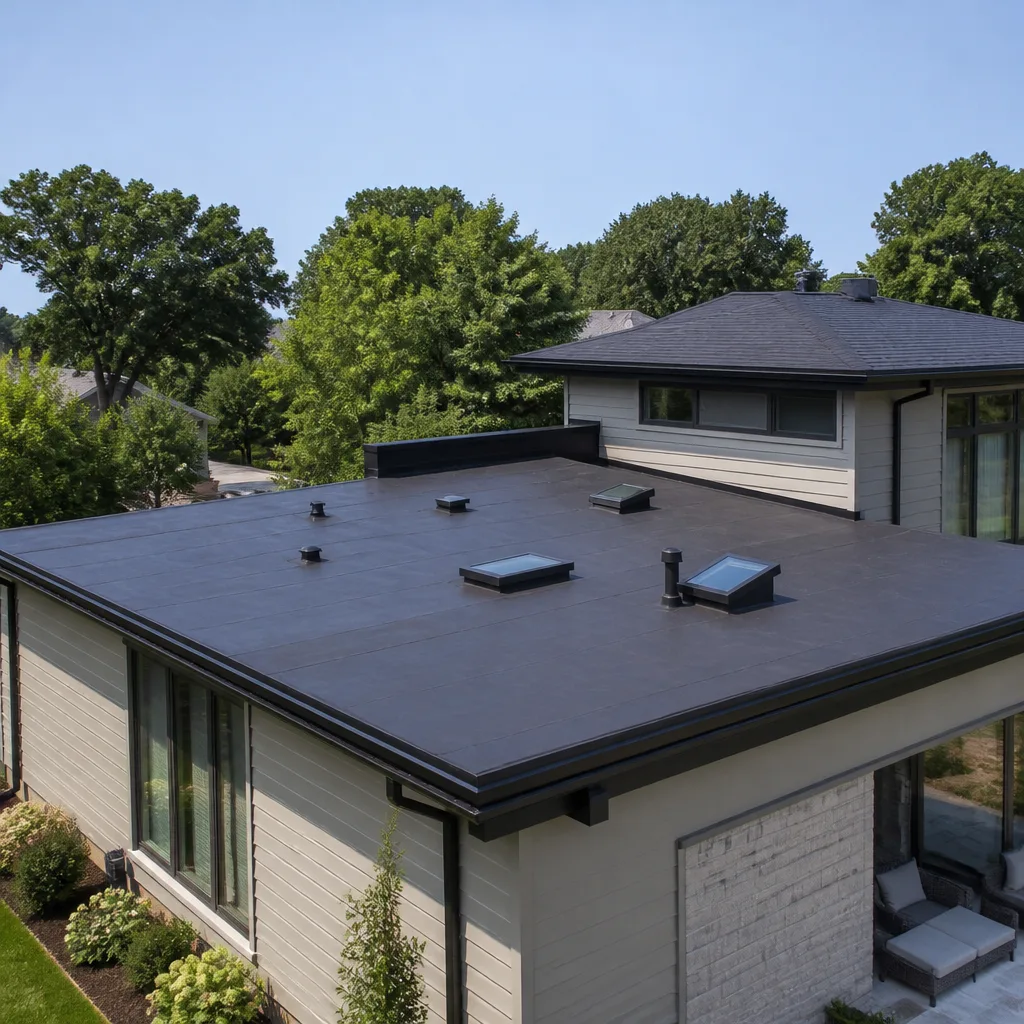 Flat & low-slope
Free roof inspection with deck photos before we talk money - GAF and Owens Corning certified installation
Roofing Warning Signs: A Temecula Homeowner’s Reference Guide
Granule loss in your gutters isn’t a warning sign. It’s a late-stage report. By the time mineral granules are washing into your downspouts in visible quantities, the shingle mat underneath has already begun oxidizing, and you’re likely 12 to 24 months from a leak. The real warning signs in Temecula show up on the underside of your sheathing, in your attic temperature, and in places most homeowners never look until a ceiling stain forces the issue. This guide covers the early-stage indicators specific to Temecula’s climate, the ones that appear 18 to 36 months before visible failure, when a repair bill reads in hundreds of dollars instead of a full replacement quote. If you own a home in Temecula, these are the signs that matter before the rain finds them for you.
Quick Answer
The earliest roof warning signs in Temecula are rarely on the shingle surface. Homeowners should look for attic-side indicators first: rafter discoloration, insulation compression, and sheathing stains that confirm active or historical moisture intrusion. From the ground, look for wind-lifted shingle tabs, fascial separation caused by clay soil movement, and uneven granule retention. Most of these conditions are repairable when caught early, which is why an inspection-led approach, rather than an immediate replacement quote, protects your budget.
Styles & brands we work with
Table of Contents
- The Attic Indicators Most Guides Skip
- Wind-Lifted Tabs: What to Look For From the Ground
- Temecula’s Clay Soil and What It Does to Fascia and Soffit
- Thermal Cracking vs. Stress Cracking: The Difference That Matters
- How to Read a Manufacturer’s Granule Loss Spec Against Your Downspouts
- Roof Penetrations: Where Temecula Leaks Actually Start
- Shingle Options When Repair Turns Into Replacement
- Common Mistakes to Avoid
- When to Call a Professional
- Frequently Asked Questions
The Attic Indicators Most Guides Skip
Every roofing guide tells you to look for curled shingles and missing granules. Almost none tell you to grab a flashlight and look up inside your home. That’s a significant oversight because in Temecula’s climate, particularly during the hot, dry months when shingle damage stays visually subtle, your attic is where moisture problems announce themselves first. We’ve inspected hundreds of Temecula attics where the shingle surface looked passable from the ground, but the sheathing underneath told a different story entirely.
Here’s what to look for, in order of how early each sign appears:
- Rafter discoloration. Dark streaking or water staining along the top edges of rafters where they meet the roof deck. This indicates historical water entry that may have dried, but the entry point may still be active. In Temecula, where rainfall is seasonal and infrequent, a leak can dry completely between events, leaving only this stain behind.
- Insulation compression. Wet insulation mats down and loses its loft. If your attic insulation looks flat and dense in patches, especially under roof penetrations like vents or skylights, water has been pooling or dripping there. Compression from water is different from normal settling: it’s patchy, not uniform.
- Sheathing swelling or delamination. OSB and plywood both swell when wet. Look for raised edges, soft spots, or a chalky white residue where the adhesive has begun to break down. By the time you see this, the leak has been active for at least one winter season in Temecula.
- Rust on nail heads. The nails that secure shingles penetrate into the attic. Rusty nail tips, or rust-colored rings around nail heads on the underside of the sheathing, mean moisture has been traveling along the fastener for months.
- Daylight through the decking. This is the latest and most severe attic-side indicator. If you can see light through a gap in the roof deck from inside the attic, water can get through that same gap. This is almost always a replacement-level condition.
Here’s the point we want Temecula homeowners to understand: these five indicators can be present for a year or two before ceiling damage appears inside your living space. The leak starts at the shingle layer, works through the underlayment, saturates the sheathing, and only then shows up on your ceiling drywall. By the time you see the brown ceiling ring, the repair has become more expensive and more invasive. An attic check during the fall, before Temecula’s winter rain season, is the single highest-value hour you can spend on roof maintenance.
If any of these attic indicators sound familiar, your next step is a professional roof inspection in Temecula that includes both the exterior surface and the attic interior. Not every roofer does both sides of the deck. We do, because the attic tells you what the shingles are hiding.
Wind-Lifted Tabs: What to Look For From the Ground
Temecula gets real wind. The Santa Ana events in fall and the gusty afternoons through the Temecula Valley corridor put consistent uplift pressure on shingle tabs, especially on west-facing slopes and ridges. Wind damage doesn’t always tear shingles off completely. More often, it breaks the seal strip, lifts the tab, and leaves it vulnerable to repeated flexing that eventually cracks the shingle at the bend.
From the ground, here’s how to spot wind-lifted tabs without putting a ladder against your house:
- Shadow asymmetry. On a sunny day, look at your roof plane at a shallow angle. Healthy shingle tabs lie flat and cast the same uniform shadow. Lifted tabs cast a wider or angled shadow due to the gap underneath. You’ll notice a patch of roof that looks “fuzzy” or uneven compared to the surrounding area.
- Wavy ridge lines. The ridge caps take more wind exposure than any other part of the roof. If the ridge line looks uneven or slightly undulating from the street, several ridge caps have likely lost their adhesive bond.
- Visible edge curling on south and west planes. Temecula’s afternoon sun hits west-facing slopes hard, and UV degradation breaks down the sealant strip faster there. A shingle edge that lifts even an eighth of an inch is catching wind every time it gusts.
You can confirm wind lift from the eave without walking on the roof surface. At the gutter line, look horizontally along the roofline. Lifted tabs will show a visible air gap beneath the leading edge. If you’re not comfortable doing this from a ladder, that’s fine. It’s also the kind of check that takes a roofer under ten minutes to perform.
One thing we want to be clear about: wind-lifted tabs are a repair condition, not necessarily a replacement condition. If the shingle mat is still intact and the seal has simply released, the fix can be as straightforward as re-adhering the tab. The problem compounds only when the lifted tab has been flexing long enough to crack. Which is why this is a spring inspection item for Temecula homeowners, after the winter rain and before the summer heat accelerates the cracking. Our roof repair in Temecula work often starts with questions like this one: is it just a lifted tab, or has the shingle already fractured? The answer changes the bill substantially.
Temecula’s Clay Soil and What It Does to Fascia and Soffit
This is the section most roofing guides don’t have, because most roofing guides aren’t written about Temecula specifically. Temecula sits on expansive clay soil. It swells when wet, shrinks when dry, and moves your foundation seasonally. That movement doesn’t stay at the foundation line. It translates up through the framing and shows up at the roofline in ways that predict gutter and flashing problems before leaks begin.
Here’s what happens, step by step:
- Seasonal soil movement shifts the exterior walls by small fractions of an inch. In neighborhoods across Temecula, from Redhawk to Paseo del Sol to Harveston, the clay soil’s expansion and contraction cycle follows the irrigation and rain calendar.
- The fascia board, which anchors your gutters, follows the wall movement. Fascia is nailed to the rafter ends. When the walls settle, the rafters settle, and the fascia moves with them.
- Gutter seams and downspout connections pull apart. This is where you see the visible symptom: gaping at the mitered corners, water running behind the gutter instead of through it, and stains on the fascia paint.
- Flashing at the roof-to-wall transition begins to separate. This is the roofing-specific consequence. The step flashing and counterflashing along sidewalls and chimneys gets pulled by the same structural movement. A gap of even a quarter inch is enough for wind-driven rain in Temecula to enter.
What to look for: inspect the fascia boards where they meet at corners. Run your eye along the gutter line and look for caulk separation, nail head backing out, or a visible split at the miter. Then look at the roof-to-wall flashings above them. If you’re noticing these conditions together, the clay soil movement is likely the root cause, and it’s worth having a roofer inspect the full flashing system before another winter.
We’ve seen this pattern enough times in Temecula that we check fascia and soffit alignment on every inspection we do, whether the homeowner called about exterior shingles or an interior stain.
Thermal Cracking vs. Stress Cracking: The Difference That Matters
Temecula’s summer temperature swings put every asphalt shingle through daily thermal expansion and contraction cycles. A 40-degree spread between overnight low and afternoon roof-surface temperature is normal here. That cycling causes thermal cracking, which is expected, cosmetic, and built into how asphalt shingles behave. Stress cracking is different. Learning to tell them apart saves homeowners from either overreacting to normal wear or underreacting to a manufacturer or installation defect.
Here’s the distinction:
- Thermal cracking appears as fine, shallow surface cracks that run parallel to the shingle’s granule pattern. They’re narrow, uniform, and don’t penetrate the mat. On an Owens Corning or IKO shingle, you’ll see this within the first two or three Temecula summers. It’s cosmetic. It doesn’t leak. It doesn’t shorten the shingle’s service life meaningfully.
- Stress cracking is wider, deeper, and often runs perpendicular to the shingle’s length. The crack opens visibly when you look at the shingle edge. You can sometimes see the asphalt mat through the crack. Stress cracks are the result of either a product formulation issue, improper fastening at installation, or inadequate attic ventilation driving roof-deck temperatures too high.
Why this matters in Temecula specifically: the valley’s heat load stresses under-ventilated attics hard. If your attic isn’t moving air properly, the roof deck temperature climbs well past what the shingle manufacturer intended, and the shingle’s underside bakes. The result is premature stress cracking, and it often shows up first on south-facing roof planes within three to five years, while the north slopes still look new.
What we tell Temecula homeowners: if you’re seeing cracks on your south plane that look different from the north plane, that’s a pattern worth investigating. It points to either a ventilation deficiency or a product-specific issue. Some brands handle Temecula’s heat profile better than others, and if repair or replacement becomes the conversation, the material matters. Atlas and Tamko both produce lines engineered for high solar reflectivity, which affects deck temperature directly. The point is: the solution isn’t always “replace with the same thing.”
How to Read a Manufacturer’s Granule Loss Spec Against Your Downspouts
Every asphalt shingle loses granules over time. The manufacturers know this and they publish an acceptable granule loss specification. The problem is that almost no homeowner reads it, and almost no roofing guide translates it into something you can actually check in your own gutters.
Here’s how the spec works: most asphalt shingle manufacturers warranty against “excessive granule loss,” which they define as granule loss that exposes the asphalt mat beneath. That’s the line. Granules settling in your gutters is normal. Exposed mat on the shingle face is not. The gutter is a trailing indicator; the shingle face is the leading indicator.
When you’re cleaning your downspouts in Temecula, here’s how to interpret what you find:
- Fine, mixed-color granules with no visible mat. Normal. Every shingle sheds surface granules through weather cycles. You’ll see this in your gutters after every Temecula summer and winter.
- Dense, slate-gray granule accumulation that matches a single shingle color. This means a specific section of your roof is shedding at an accelerated rate. Walk the ground perimeter and look for a plane that appears lighter or patchy compared to the rest. That plane is your candidate for closer inspection.
- Granules with visible asphalt mat exposed on the shingle face. This is the manufacturer’s threshold for “excessive,” and it’s a definable failure condition. No more interpretation needed. You’re in replacement territory for that plane.
- Bald spots, smooth patches, or shingle areas that look glossy from the ground. Same as above. The protective layer is gone and the shingle is now deteriorating at the mat level.
One nuance that’s specific to how different brands behave: entry-level shingles from IKO and Tamko use a lighter granule embedment than premium lines from Owens Corning or others in that tier. The acceptable loss rate is different. If your roof was installed with a value-tier product, you’ll see more granules in the gutters in the first three years, and that’s not automatically a defect. If your roof was installed with a premium product and you’re seeing the same volume, something else is going on, often installation-related or exposure-related.
This is where baycrest’s material-agnostic approach has direct practical value. We don’t have a single brand we’re obligated to push, which means when we assess granule loss on a Temecula roof, we’re comparing against the actual product that’s on the roof, not against a sales script. Our roof replacement in Temecula that starts with a granule loss question, the inspection determines whether that roof needs replacement at all.
Roof Penetrations: Where Temecula Leaks Actually Start
Ask any experienced roofer in Temecula where leaks actually originate and you’ll get the same answer: penetrations. The pipes, vents, skylights, and exhaust flues that puncture the roof plane are the weak points, and they fail years before the surrounding field shingles do.
Here’s the priority list of the most common failure points we see in Temecula, in order of frequency:
- Rubber pipe boot collars. The rubber gasket around plumbing vents dries out and splits under Temecula’s UV exposure, typically within 8 to 12 years. A split boot lets water run straight down the pipe and into the attic, where it stains the insulation around the penetration. This is the number one leak source on asphalt shingle roofs in this area.
- Skylight flashing. Skylights are flashed with a continuous L-shaped metal curb. Over time, the sealant between the flashing and the skylight frame fails, and the flashing itself can deform under the heat load. Skylight leaks in Temecula typically appear first as condensation or water staining on the interior drywall around the light well.
- Exhaust fan and HAVC (HVAC) vent terminations. These are often installed through the roof with minimal flashing, especially on production-built homes in master-planned Temecula communities. A gooseneck vent or a low-profile cap that’s missing its boot or has a cracked base is a direct water pathway.
- Chimney and sidewall flashing. The step flashing at chimney-to-roof and wall-to-roof junctions relies on sealant that has a service life. In Temecula’s heat, that sealant fails sooner than it would in cooler climates. The clay soil movement we discussed earlier compounds this.
The practical takeaway: if you have a leak, check your penetrations before you assume the field shingles have failed. A pipe boot replacement is a $200 to $400 repair. A full roof replacement is a different conversation entirely. Inspection first, recommendation second.
Shingle Options When Repair Turns Into Replacement
Sometimes the inspection finds conditions that repair can’t honestly address. The shingle mat is failing, the decking is compromised, or the roof has reached the end of its useful life. When that happens in Temecula, the material conversation matters more than most homeowners expect. Different shingle lines handle the valley’s specific combination of UV intensity, Santa Ana wind, and thermal cycling differently.
Here’s how we frame the conversation when a Temecula homeowner asks about shingle options:
Premium-tier manufacturers like Owens Corning and its peers in that bracket offer longer design lives, stronger wind ratings, and more refined Granule formulations designed for high-UV regions. For a homeowner planning to stay in a Temecula home for 15 years or more, these lines make financial sense even at a higher upfront cost.
Value-tier manufacturers like IKO, Atlas, and Tamko produce products that are perfectly serviceable for Southern California’s climate at a lower price point. The wild ratings and granule retention are legitimately good on several of these lines. They’re not “cheap” in the quality sense, they’re lower-cost, and the distinction matters when you’re budgeting a replacement.
What we don’t do is what single-brand roofers are forced into: recommending the same manufacturer for every house because that’s the line they carry. A two-story home on a wind-exposed ridge in Temecula’s eastern edge needs a different profile than a single-story home in a sheltered interior lot. Matching the shingle to the condition is the whole point.
If a repair has crossed into replacement territory, the roof replacement in Temecula conversation should start with an inspection of the existing deck, ventilation, and exposure, not with a product brochure.
Common Mistakes to Avoid
- Treating the gutter as the inspection point. Granules in the gutter tell you what already happened. The shingle face, attic, and flashing tell you what’s happening now. Start there.
- Sealing a wind-lifted tab with a home store adhesive. The adhesive may hold the tab down, but it won’t address the seal-strip failure or the flex fatigue that’s already occurred. You might be buying a year of delay, not a fix.
- Ignoring clay soil movement symptoms. Fascial separation is a warning sign for the flashing system above it. Fixing the fascia without checking the flashing is a half repair.
- Replacing a roof without inspecting the attic first. If the attic has active moisture, decking damage, or ventilation problems, those conditions follow you into the new roof. In Temecula’s heat, a new roof over a bad ventilation system fails early.
- Assuming a leak means a new roof. Most Temecula leaks we respond to are penetration failures: pipe boots, skylights, flashings. A $300 repair often solves it. Get the inspection before you get the quote.
- Waiting until the ceiling is stained to call. The attic indicators in this guide show up 12 to 24 months earlier. The earlier you catch it, the smaller the repair scope.
- Accepting a replacement quote without a roof inspection. As a Baycrest Roofing home philosophy, we don’t quote without inspecting. Any contractor who will quote you a replacement over the phone without looking at the roof is not doing you a favor.
When to Call a Professional
Call a roofer when you see any of the following: attic-side staining or insulation compression that indicates active moisture, wind-lifted tabs that are bending or cracking, fascia separation at corners, stress cracks that penetrate the shingle mat on south-facing planes, or excessive granule loss with exposed mat. These are not DIY-appropriate conditions, and the earlier they’re addressed, the lower the repair cost. When you’re ready for a professional assessment, Baycrest Roofing offers free estimates in Temecula. Call (866) 412-5697 to schedule one. The inspection tells both of us what the roof actually needs, not just what’s convenient to sell.
Frequently Asked Questions
Inspection pricing varies by roofer, and we provide detailed inspection reports as part of our estimate process rather than charging a standalone fee. The important thing is to choose an inspector who checks both the exterior surface and the attic interior, since Temecula’s early failure indicators often show in the attic first.
Most penetration repairs, pipe boot replacements, and wind-lift re-adherences we handle in Temecula are single-visit jobs of a few hours. Larger repairs that involve decking replacement or flashing replacement can run one to three days depending on scope. Schedule a repair to get a written scope for your specific condition.
Repair costs depend on what the inspection finds. Pipe boot replacement typically runs a few hundred dollars, while flashing replacements can range higher. We provide written line-item quotes before any work begins, so you’ll know the number before you approve anything.
We do all three: roof inspection, roof repair, and roof replacement. That full-lifecycle scope means you don’t need to find a different contractor as your roof ages. See the inspection service details to understand what’s covered.
Yes, but disclosure requirements and buyer inspection contingencies mean a failing roof becomes a negotiation point. Getting an inspection before listing gives you either a repair receipt to show buyers or a replacement plan you control, rather than one the buyer’s inspector controls.
It shouldn’t if the initial inspection was thorough. We document the existing conditions during the estimate, and our quotes are fixed at the written price unless an unseen condition is uncovered during the work, in which case we stop and discuss before proceeding.
The Bottom Line
Temecula’s roof failures are predictable, and they start earlier than most homeowner awareness. The attic indicators, wind-lift patterns, clay-soil fascia movement, and penetration flashing failures covered in this guide appear 18 to 36 months before visible shingle failure, and each one has a repair window that’s dramatically cheaper than an ignored problem. Learn to read the underside of your roof, not just the surface. Learn to watch the fascia corners, not just the shingle tabs. If you catch one of these signs early, the fix is likely a repair, not a replacement. If you’re seeing any of the conditions in this guide on your own roof in Temecula, call Baycrest Roofing at (866) 412-5697 for a free estimate. We’ll inspect the roof and tell you what it actually needs.
Written by the team at Baycrest Roofing, serving Temecula since 2013.
See the difference
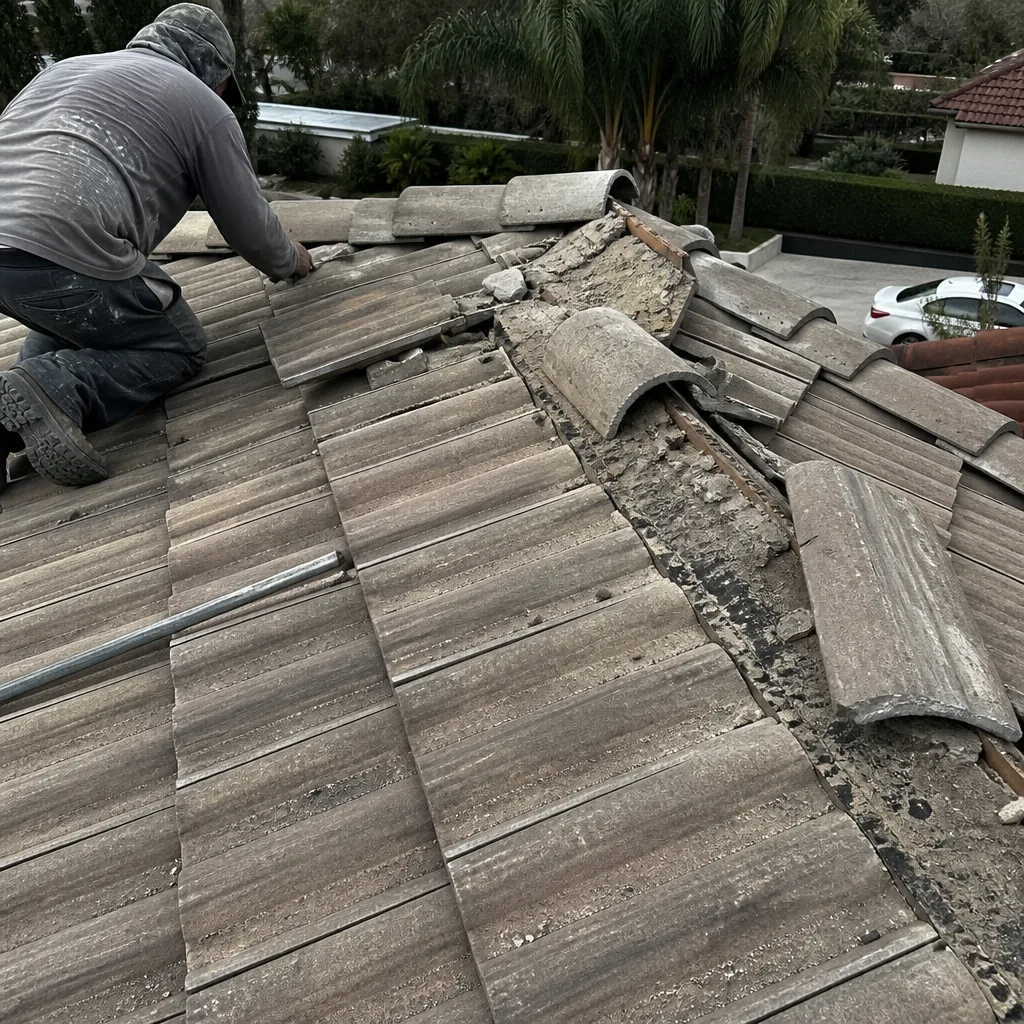 Before
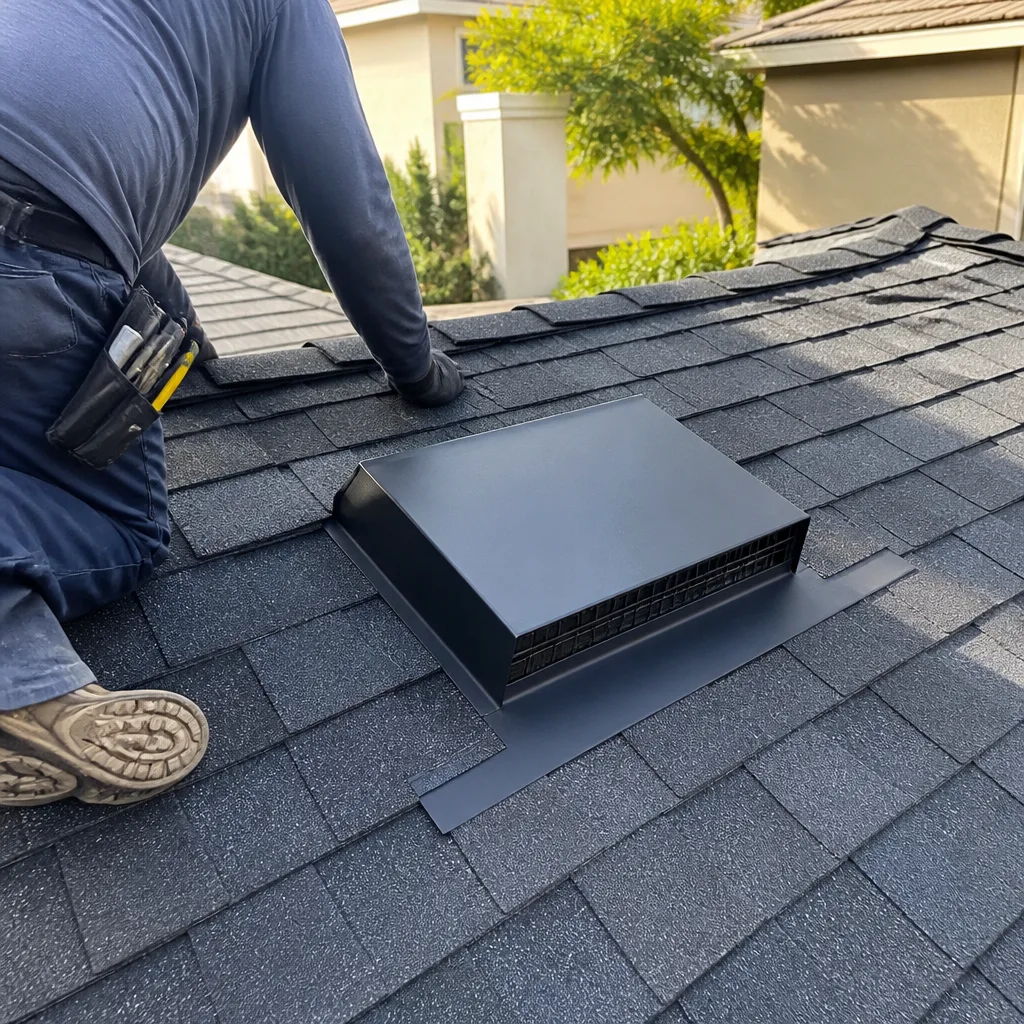 After
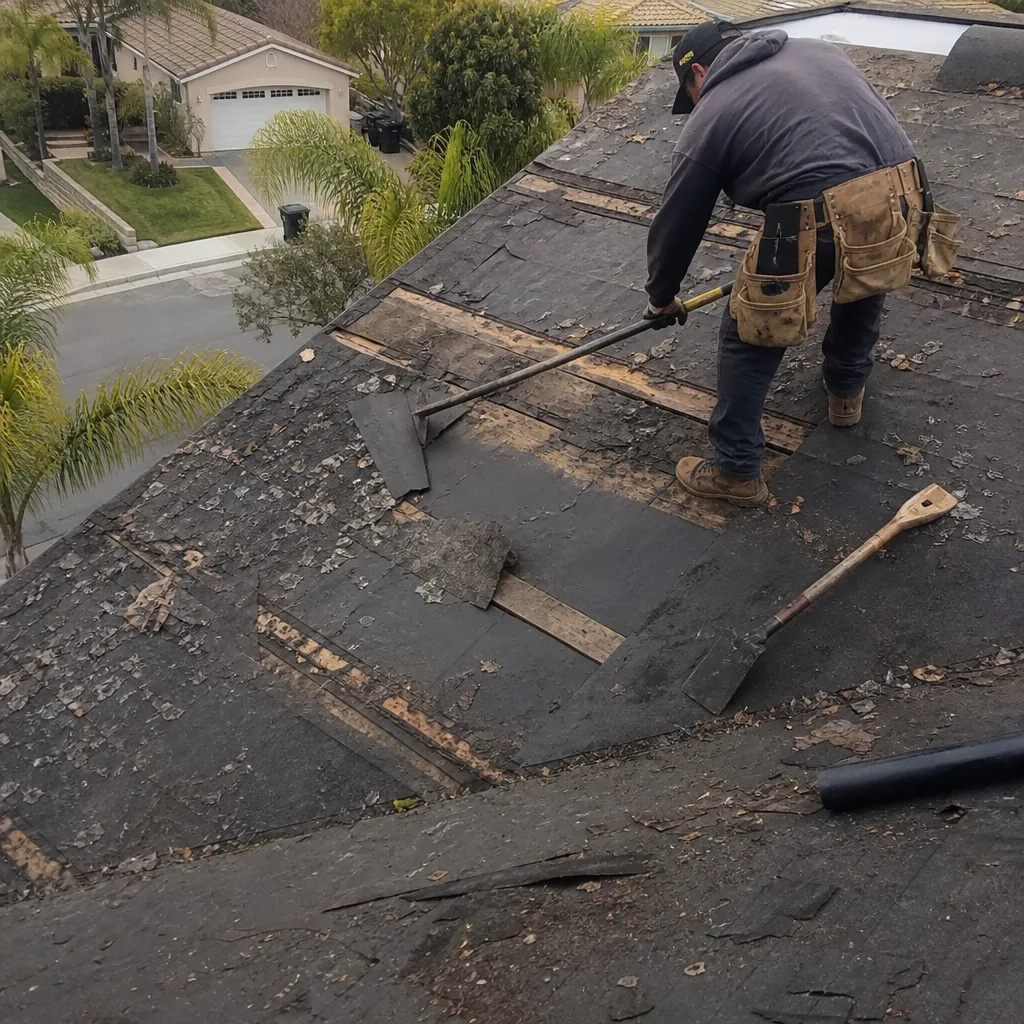 Before
 After
 Before
 After