Last updated October 31, 2026
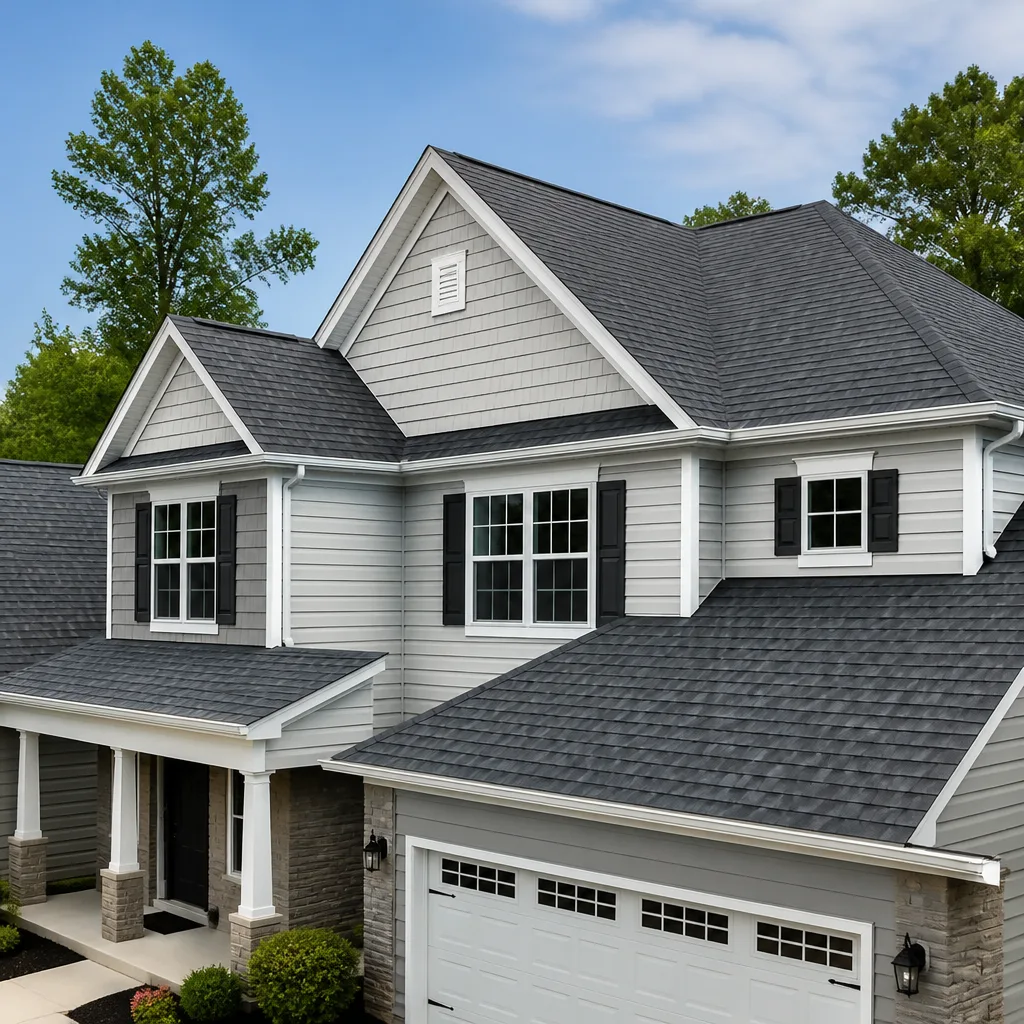 Architectural shingles
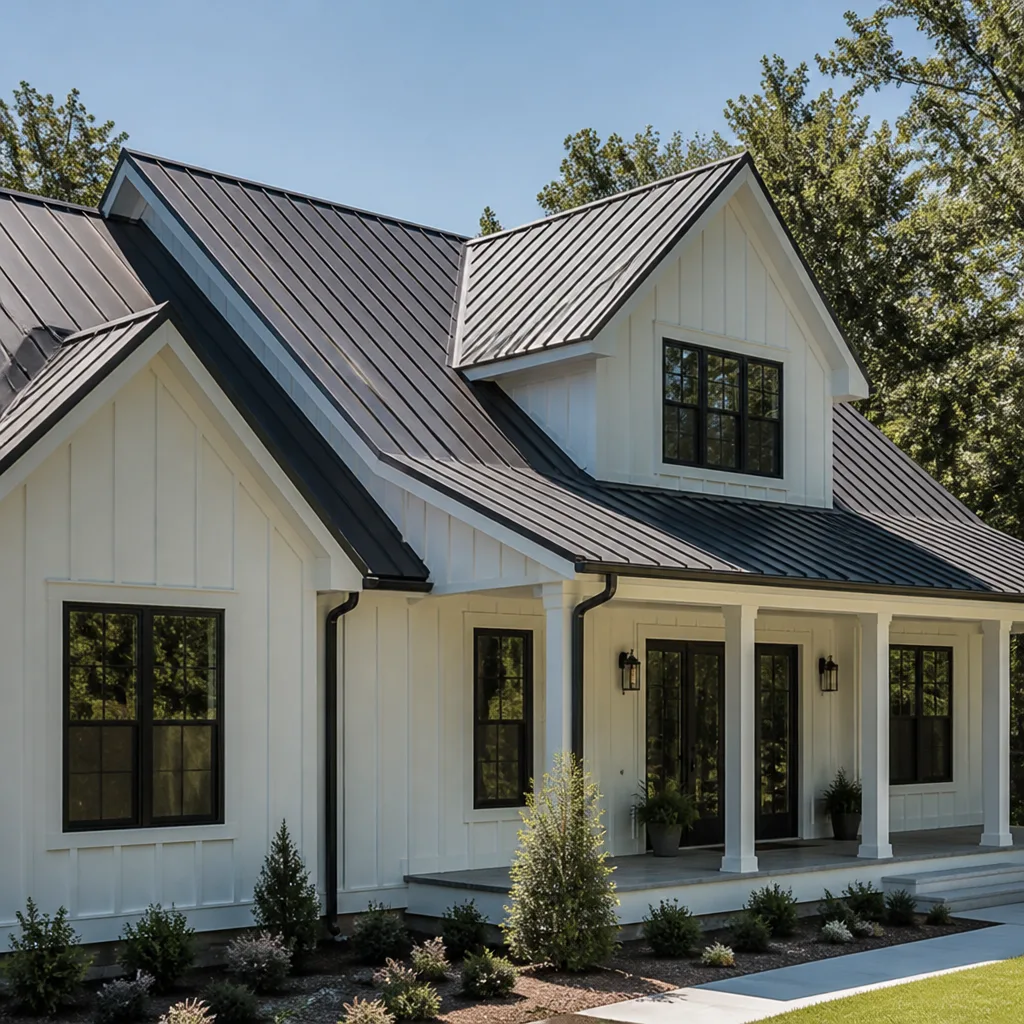 Metal roofing
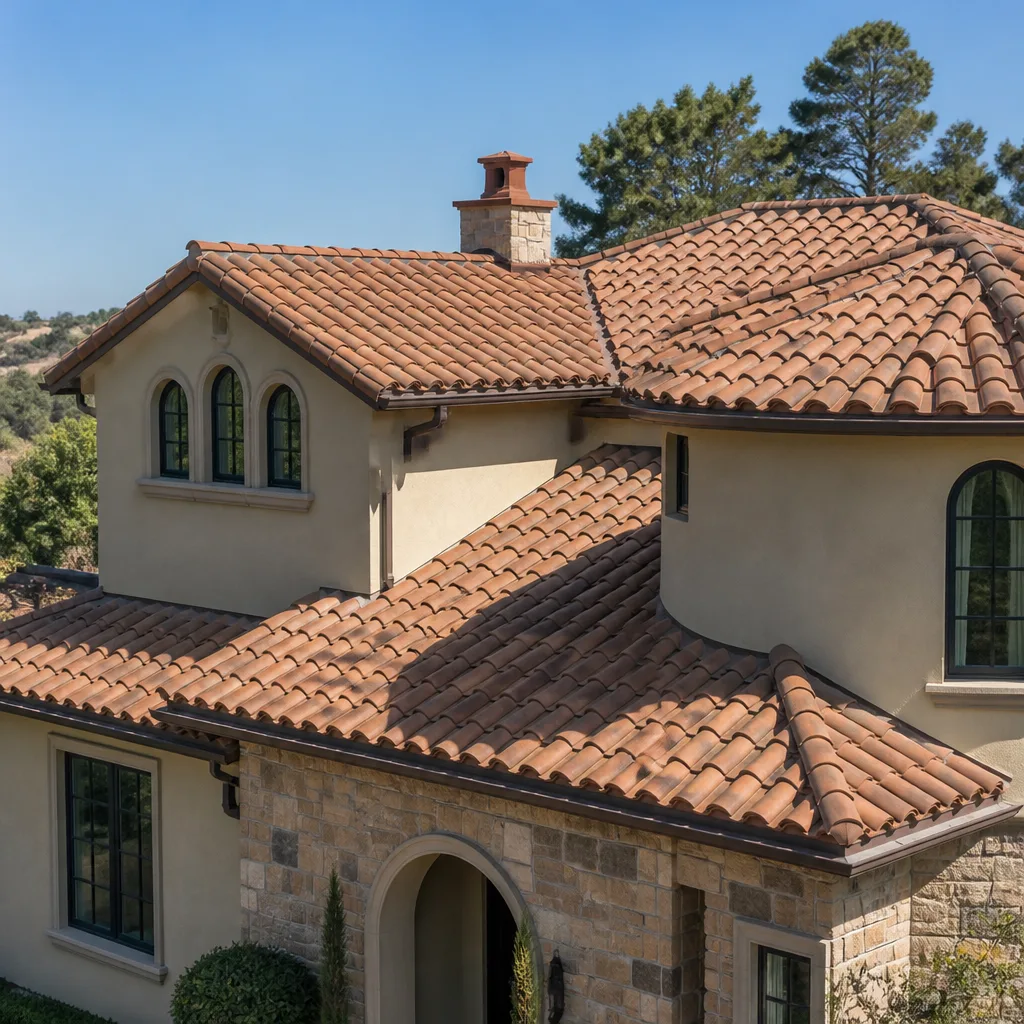 Tile roofing
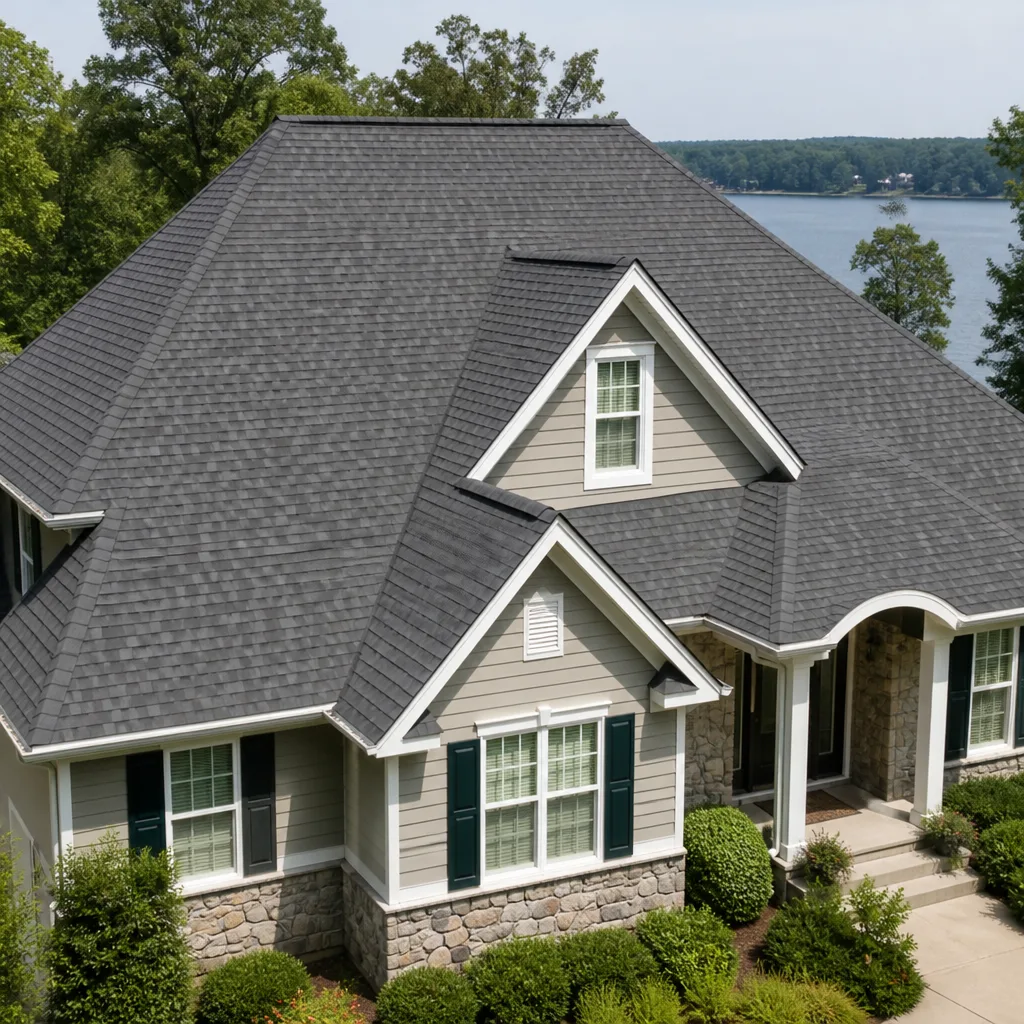 GAF
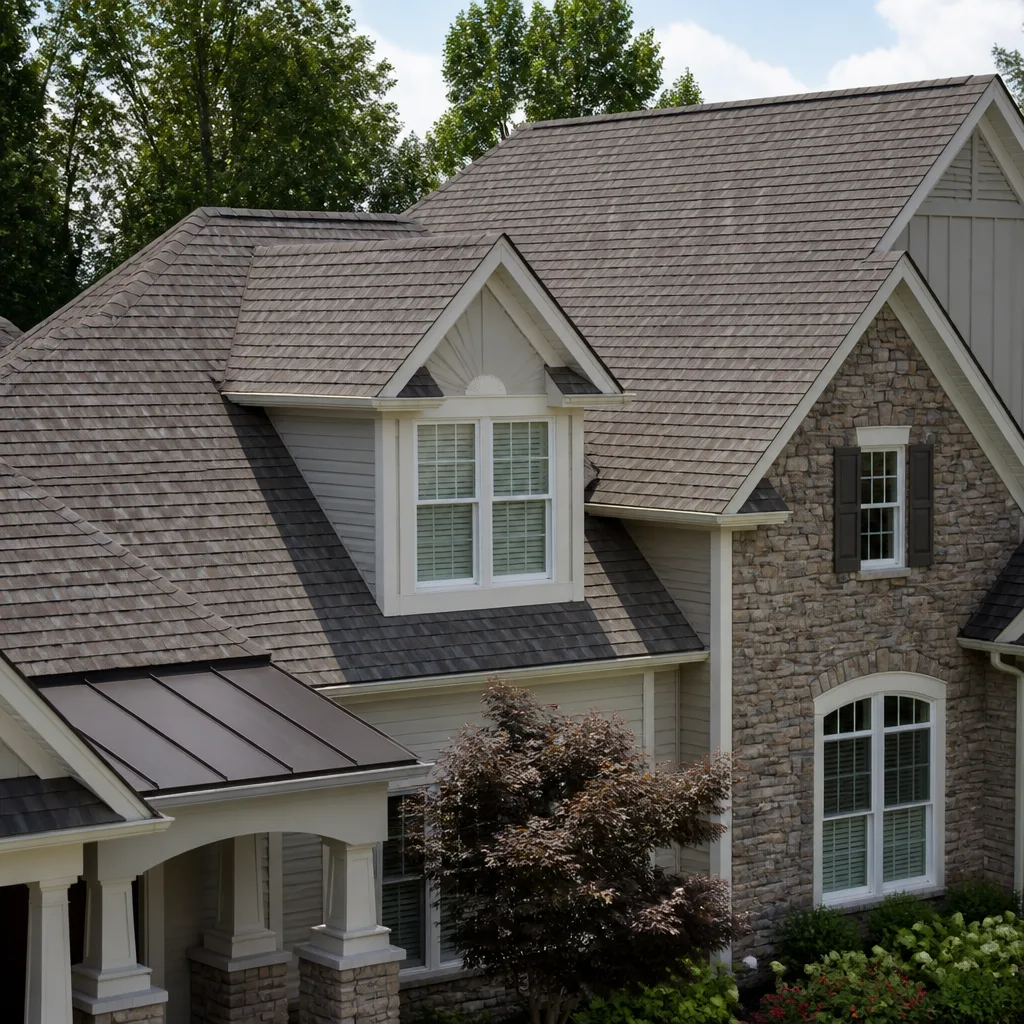 Owens Corning
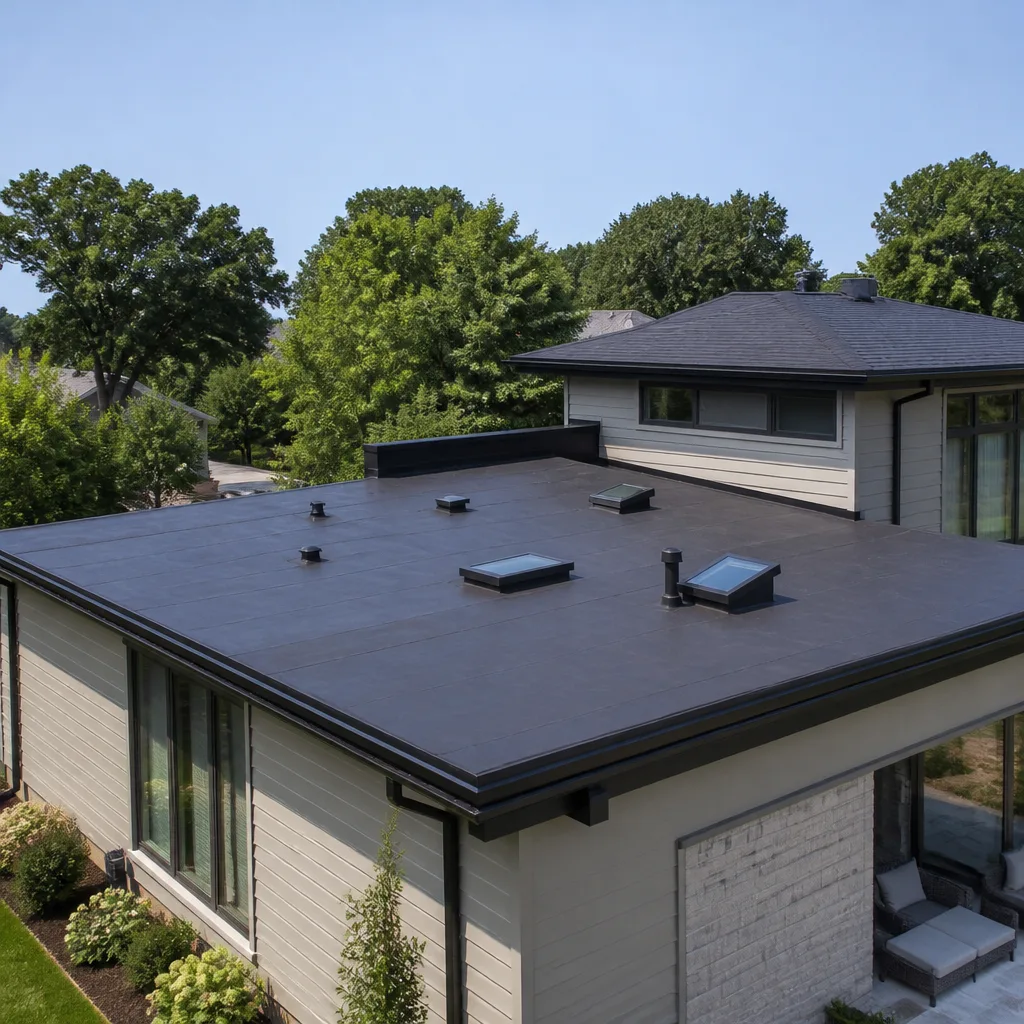 Flat & low-slope
Free roof inspection with deck photos before we talk money - GAF and Owens Corning certified installation
The Complete Roof Repair Guide for Temecula Homeowners
Most roof repair guides were written for the Pacific Northwest, where the enemy is moss and months of drizzle. Temecula gets 278 sunny days a year and wind gusts that exceed 60 mph in canyon corridors. That combination – intense UV radiation breaking down shingle granules, then Santa Ana winds exploiting every weakened spot – creates a failure sequence that generic national advice simply does not address. This guide maps Temecula’s actual roof failure patterns to the repairs that genuinely hold here, so you can make decisions based on what happens to roofs in our valley, not what happens in Seattle. You’ll learn what breaks first, what a repair estimate should actually include, when patching is smart money, and when it’s just delaying a larger bill.
Styles & brands we work with
Quick Answer
Roof repair in Temecula typically costs between $350 and $1,800 depending on the failure point, with small flashing repairs at the low end and partial decking replacement at the high end. The most common repair trigger in this valley is not rain – it’s UV granule loss combined with Santa Ana wind damage, which means a proper repair starts with a roof inspection that identifies why the failure happened, not just where. A quality Temecula repair should address the cause, use materials matched to your existing roof, and include a written warranty on workmanship.
Table of Contents
- Why UV and Low Humidity Accelerate Granule Loss in Temecula
- Santa Ana Wind Damage: The Failure Pattern Most Guides Miss
- The Repair Decision Tree: When to Fix vs. When to Replace
- Common Roof Repairs in Temecula and What They Cost
- How to Read a Roof Repair Estimate Line by Line
- Permit Requirements in Riverside County for Roof Work
- Choosing the Right Repair Material for a Temecula Roof
- Common Mistakes to Avoid
- When to Call a Professional
- Frequently Asked Questions
- The Bottom Line
Why UV and Low Humidity Accelerate Granule Loss in Temecula
The single most underrated roof killer in Temecula is the sun. Not the heat – the UV radiation. Our valley sits at roughly 1,000 feet of elevation with clear skies over 75% of the year, which means your shingles absorb a UV dose that coastal cities like Oceanside or San Diego never experience at the same intensity. Those ceramic granules embedded in your shingles are not decorative. They are the shingle’s sunscreen. They block UV from reaching the asphalt substrate underneath. When granule loss accelerates, the asphalt oxidizes, becomes brittle, and cracks. In Temecula, this happens faster than in almost any Southern California coastal market.
Low humidity compounds the issue. Asphalt shrinks as it dries. In our 15-25% average afternoon humidity, shingles dry deeper and faster than in humid climates, which creates micro-cracking along the shingle edges. Those micro-cracks are where water finds its way in during our occasional heavy winter rains. The result is a roof that can look fine from the street but has lost significant granule coverage on its south and west-facing slopes. We see it constantly in neighborhoods like Paseo del Sol, Morgan Hill, and Redhawk – the slopes that face the afternoon sun show visible balding years before the shaded north slopes do.
What this means for repair decisions is straightforward. If your roof is 10-15 years old and you’re seeing granules in your gutters after every dry month, you are not seeing normal wear. You’re seeing Temecula-accelerated wear. The repair that addresses this is not spot-patching a few shingles. It’s either a full re-granulation assessment or, more realistically, planning for replacement on a timeline that doesn’t leave you exposed during the next winter rain. Roof Inspection in Temecula should include a slope-by-slope granule assessment, because the south slope and the north slope are not aging at the same rate.
The granule-loss timeline in Temecula matters for budgeting. A 30-year architectural shingle in a coastal climate may genuinely deliver close to its rated lifespan. In Temecula’s UV environment, that same shingle often shows meaningful degradation by year 15-18. Repairing granule loss is simply not possible – you cannot reapply granules. But catching it early gives you time to budget a replacement rather than financing one under the pressure of a leak.
Santa Ana Wind Damage: The Failure Pattern Most Guides Miss
Santa Ana winds are the second half of Temecula’s roof failure equation. These offshore wind events hit our valley in the fall and early winter, funneling through the canyon corridors with gusts that regularly top 60 mph. What makes them uniquely damaging is their direction and their dryness. Unlike the prevailing onshore breeze, Santa Anas come from the northeast and hit roof edges, ridges, and hips at angles that standard roof nailing patterns were not designed for. A shingle that has been quietly losing granules to UV for a decade suddenly faces a 55 mph gust that gets under the weakened edge and folds it back like a page in a book.
We see the same damage signature after every major Santa Ana event in Temecula: lifted shingle tabs along the windward edges, creased shingles at ridge lines, and scattered shingle tabs in yards. The telltale sign is not a missing shingle – it’s a shingle hanging by one nail, creased at a 45-degree angle. That crease means the adhesive seal has failed and the shingle flexed upward. Even if it settles back down, the crease is a permanent weak point. The next wind event will tear it off completely.
Comparing this to normal wear matters. Normal shingle wear is granular loss, curling at corners, and gradual brittleness. Santa Ana damage is abrupt, localized, and directional. If one slope lost shingles but the other three are intact, that is wind damage, not roof failure. A proper repair addresses the windward slope’s nailing pattern. The standard fix is replacing the damaged shingles and hand-sealing the edges along that entire slope, not just the torn spots. In our experience, the areas around Vintage Hills and the northern reaches of Murrieta Hot Springs corridor get hit harder than the valley floor, because they sit closer to the wind funnel points.
Here is the sequence to understand: UV weakens the granule bond and degrades the shingle’s flexibility. Santa Ana winds then exploit that weakness. The shingles that fail in a wind event were almost always already compromised by sun exposure. That is why a repair that only replaces the torn shingles without assessing the overall UV condition often fails again within a season. The repair has to account for the sequence, not just the symptom.
The Repair Decision Tree: When to Fix vs. When to Replace
Every honest roof contractor in Temecula works from the same decision tree, whether they articulate it or not. The logic of that tree is simpler than most homeowners expect, and it starts with one question: will this repair stop the failure mechanism, or just patch the symptom? If the answer is symptom-patching, the repair is delaying a replacement, and paying for it is a decision you should make with open eyes.
Here is the decision tree we walk through with every homeowner:
- Determine the failure mechanism. Is the leak or damage caused by UV degradation, wind lift, flashing failure, impact, or installation error? Each has a different repair logic.
- Assess the surrounding roof condition. Is the shingle around the damage still sealing properly? Are granules still embedded? Does the slope flex or feel brittle? If the surrounding roof is compromised, the repair footprint expands.
- Check the roof’s age against the material type. A 3-tab shingle in Temecula has roughly 15-18 years of useful life. An architectural shingle lasts 20-25. If you’re past the 70% mark of the material lifespan, repairs are rarely the right financial decision.
- Count the number of failures. One isolated repair on an otherwise healthy roof is a repair. Four repairs in three years on a 16-year-old roof is a signal that replacement is the honest recommendation.
- Match the repair to the trajectory. If the roof is aging but has 5+ years left, targeted repairs make sense. If every rain season brings a new leak, you’re paying installments toward a replacement without the benefit of a new roof.
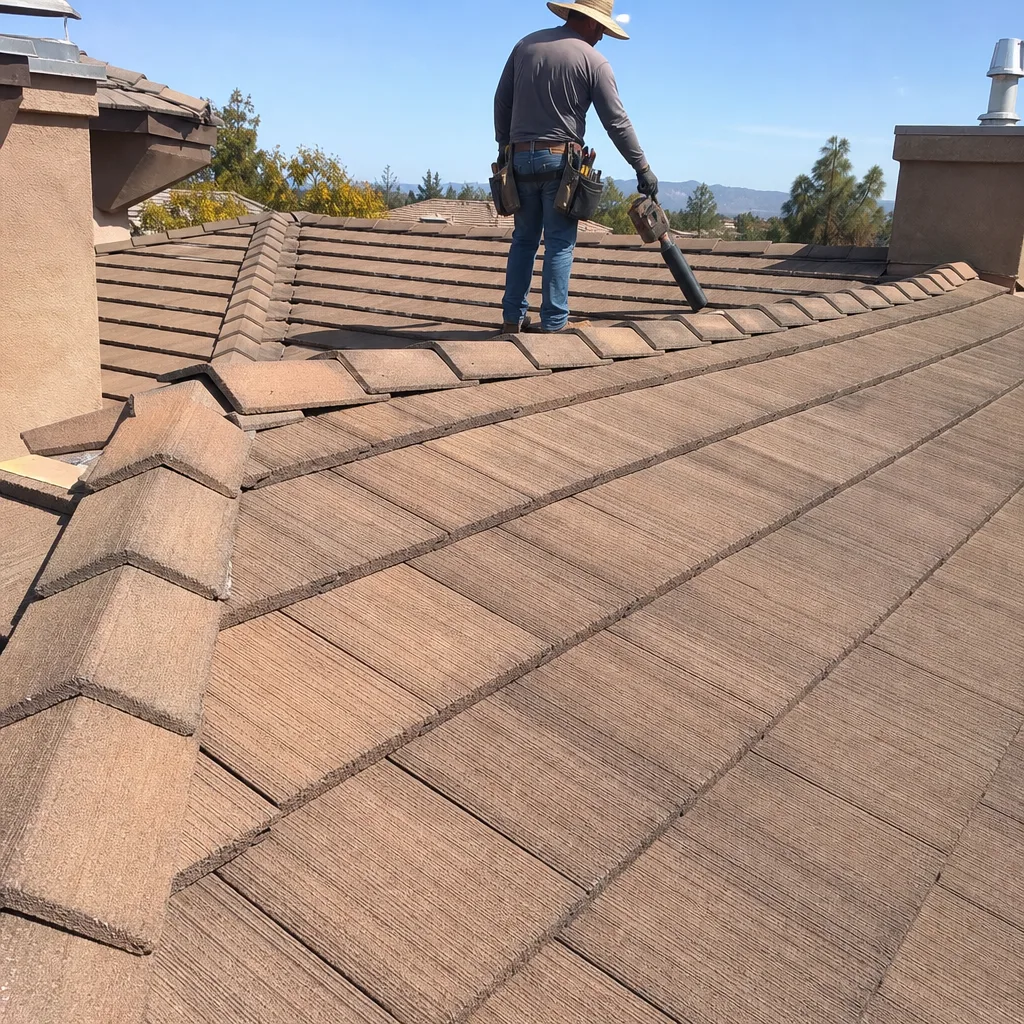
The key phrase in all of this is “inspect first, recommend second.” A contractor who quotes a replacement without putting boots on the roof is not doing you a favor. Baycrest Roofing’s position is that every recommendation should be grounded in the actual roof condition, not a sales script. When we inspect a Temecula roof, we’re looking for the failure mechanism, not just the failed shingle. That is the difference between a repair that holds and a repair that fails again.
For homeowners debating this right now: if your roof is under 10 years old with localized damage, repair is almost always the answer. If it’s over 15 years old and this is the third repair in two years, replacement is likely the better financial decision. And if you’re asking the question because of a pre-sale inspection, the math shifts again – a buyer’s inspector will flag every repaired area, and a worn but functional roof can cost you more at closing than a replacement would have cost before listing. Roof Replacement in Temecula is sometimes the more marketable path when selling.
Common Roof Repairs in Temecula and What They Cost
Roof repair costs in Temecula are driven by three factors: material cost, access difficulty, and the underlying deck condition. The prices below reflect what we see as typical for this valley’s market in 2025, but every roof is different and no honest contractor quotes without an inspection.
- Loose or missing shingle tabs: $350 to $650. Includes replacement shingles matched to the existing color, hand-sealing the surrounding tabs, and confirming the underlayment is intact. Most common after Santa Ana wind events.
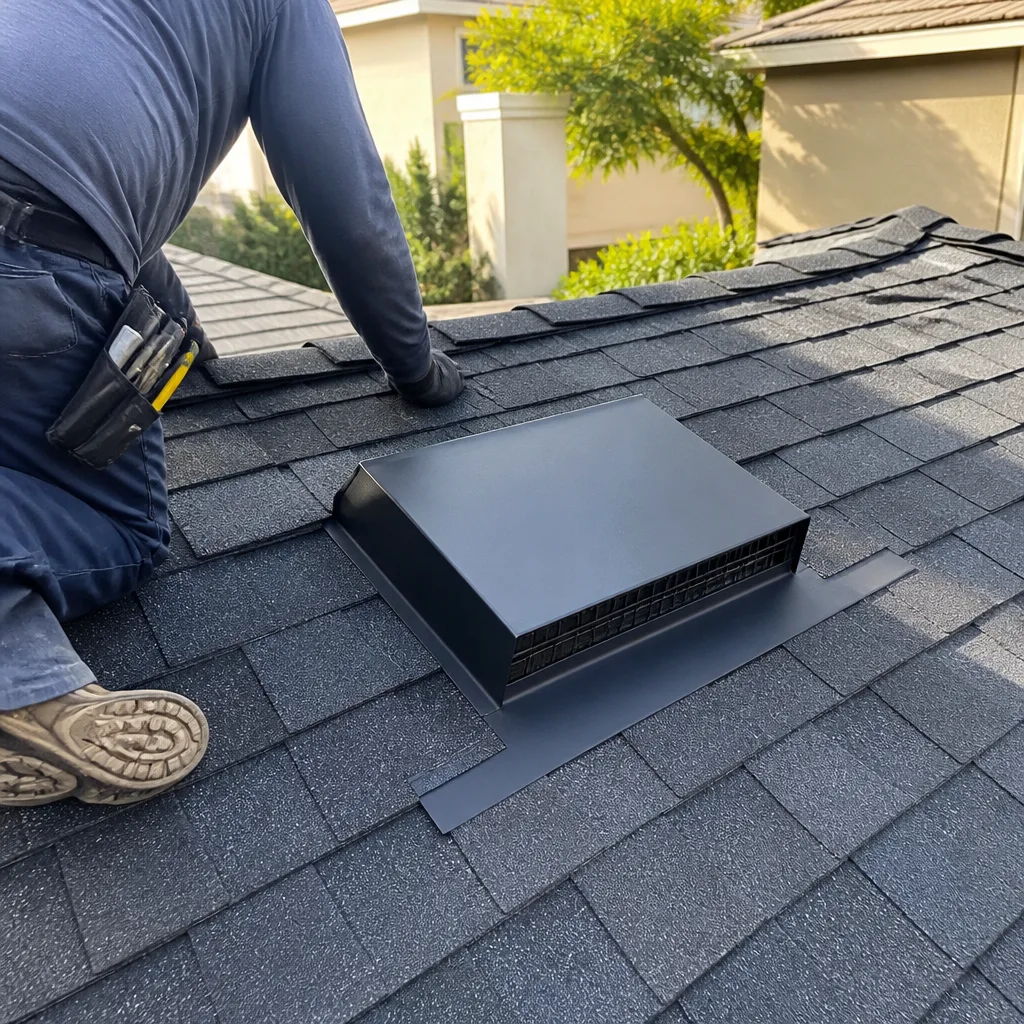
- Pipe boot or vent flash replacement: $250 to $500 per penetration. The rubber boot around plumbing vents degrades rapidly in Temecula’s UV, cracking within 8-12 years. Replacing one is cheap. Ignoring one leads to slow ceiling stains.
- Chimney flashing repair: $600 to $1,800 depending on access and whether the existing flashing can be reused. Chimney leaks in Temecula are often misdiagnosed – the issue is usually the counter-flashing installed without proper sealant, a common shortcut in production-built neighborhoods.
- Valley flashing replacement: $750 to $1,400 per valley. Valleys channel the highest water volume on the roof, and a failed valley leaks during the first heavy winter rain.
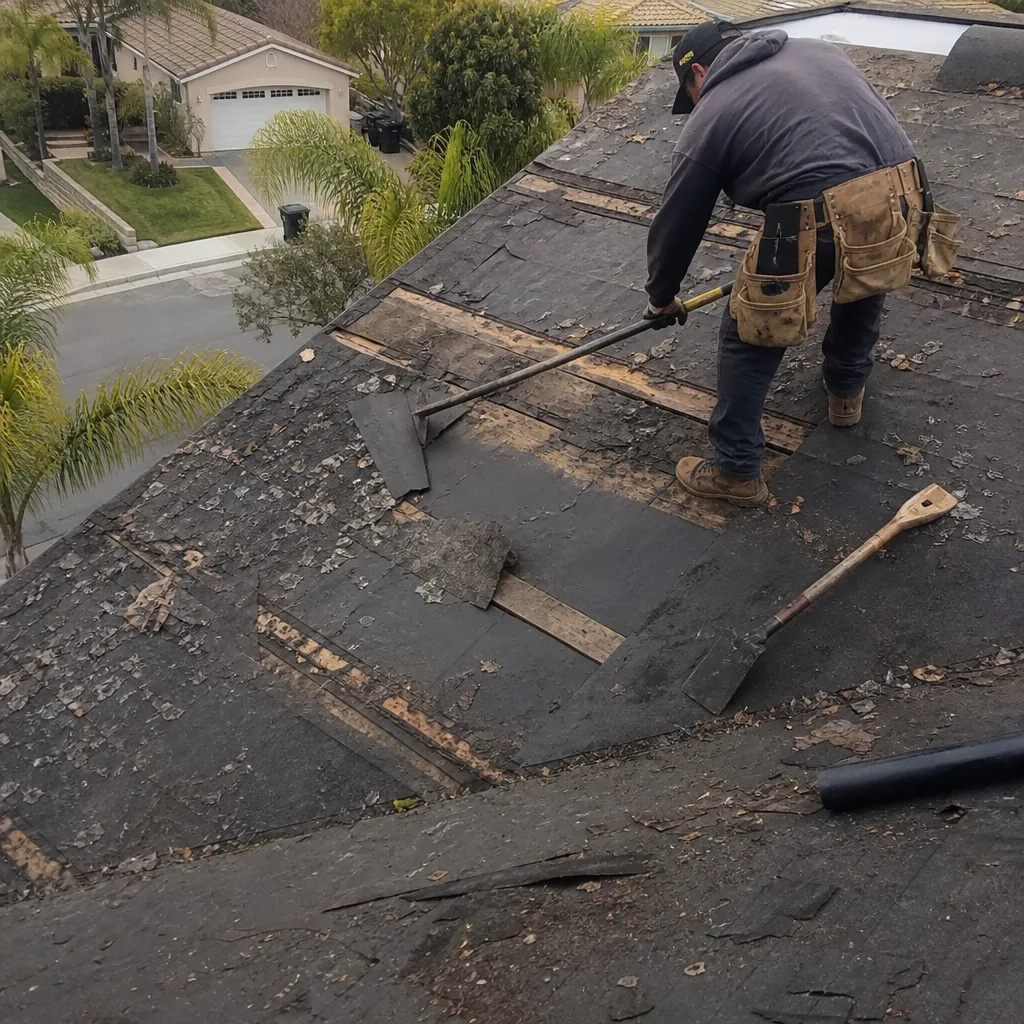
- Partial decking replacement: $450 to $900 per sheet depending on the rot extent and whether joists are affected. If the leak has been active, the deck is always suspect. The estimate should include a contingency for this – if it doesn’t, the price may change once the old shingles come off.
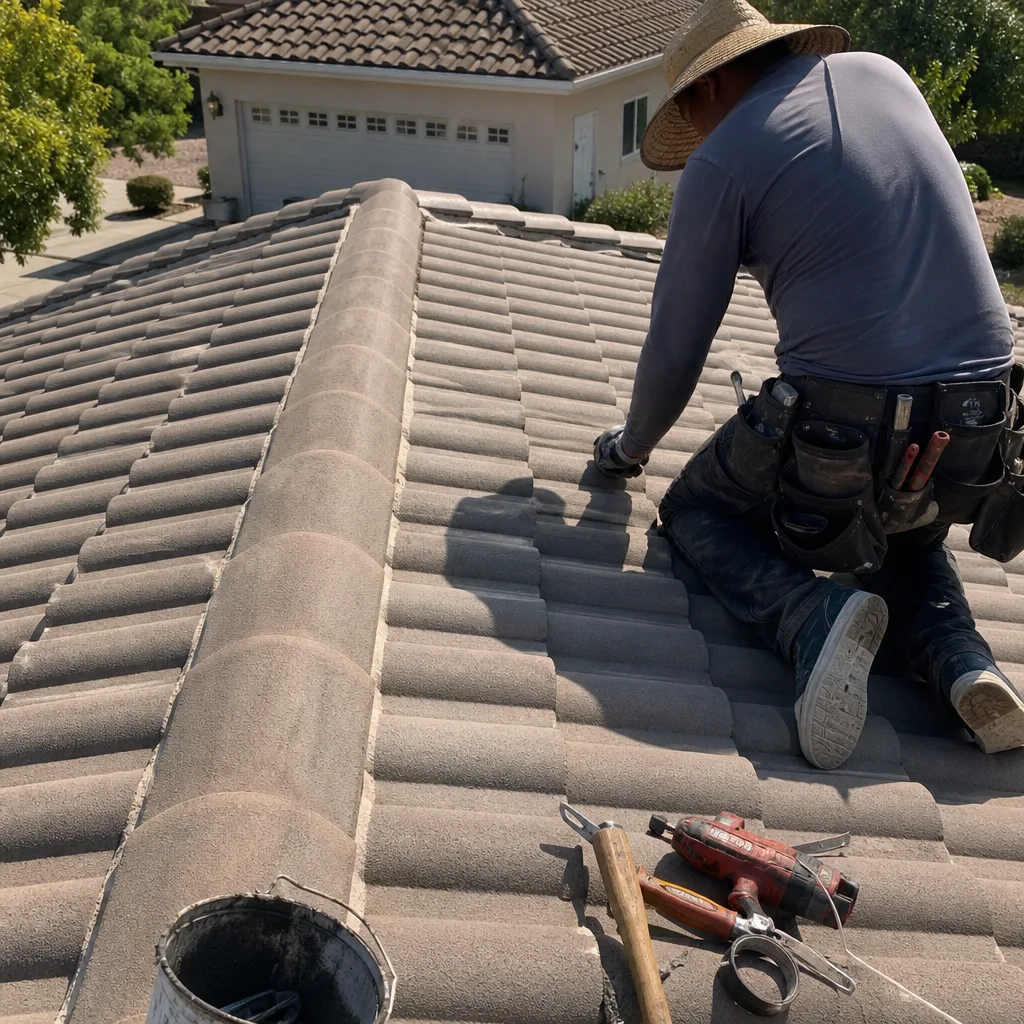
- Ridge cap replacement: $500 to $1,200. Ridge caps take the brunt of Santa Ana lift and UV exposure. A ridge failure leaks slowly along the roof’s highest point.
These are per-repair ranges, not bundled rates. Multiple repairs on the same roof often cost less per repair because the contractor is already on site with materials staged. But never accept a quote that does not itemize the work. “Bundle pricing” is how vague estimates slip in padded labor hours.
How to Read a Roof Repair Estimate Line by Line
A repair estimate in Temecula should read like a map of the work, not a single number with a handshake. What you do not see on an estimate is as important as what you do. Here is what a legitimate repair estimate includes, and what’s commonly omitted.
A complete estimate has at least five components:
- The diagnosis. One or two sentences describing the failure mechanism – not just “repair leak near chimney,” but “counter-flashing separation at the west chimney wall caused by wind-driven rain.” If the diagnosis is vague, the repair plan will be too.
- The material list. Shingle brand and color if matching, underlayment type, flashing gauge, sealant specification. In Temecula, shingles should match the existing roof’s brand where possible for warranty and appearance reasons. Baycrest Roofing home works across seven manufacturer lines – GAF, CertainTeed, Owens Corning, IKO, Atlas, Tamko, and Boral – which makes color and profile matching far easier than with a single-brand roofer.
- The labor breakdown. Hours or flat-rate per task. Not every contractor breaks this out, but the best ones do. It tells you what the work is actually costing you.
- The decking contingency. A line that reads “if decking replacement needed: $X per sheet.” Every honest Temecula roofing estimate includes this. If it’s missing, expect a change order the moment the old shingles come off.
- The workmanship warranty. Duration and scope. Most legitimate repair work carries at least a 1-5 year workmanship warranty. Material warranties vary by manufacturer.
What is commonly omitted is just as revealing. An estimate that lists only “repair roof – $900” with no material callout, no decking contingency, and no warranty language is not an estimate. It’s a guess. And a guess that hardens into a larger bill once work starts is how you end up paying $2,400 for a repair that was supposed to cost $900.
One more thing on estimates: the written line-item quote is the only version that protects you. Verbal estimates are worth the paper they’re printed on. If a contractor in Temecula will not put the price in writing with a scope of work attached, walk. The better contractors – and this is genuinely how we operate – give you the written line-item quote before any work begins, with no change orders unless the deck condition reveals something the inspection could not.
Permit Requirements in Riverside County for Roof Work
Riverside County requires building permits for roof replacements, but the rules for repairs are narrower than most homeowners realize. A repair is generally permit-exempt when it covers less than 10% of the total roof area and does not include structural decking replacement. Once you’re replacing decking or re-roofing a full slope, the work crosses into permit territory.
The practical breakdown for Temecula homeowners:
- Spot repairs: No permit required. Replacing a handful of shingles, fixing pipe boot flashing, or resealing a small valley section is considered maintenance. This is the majority of repair work.
- Repairs over 10% of roof area: Permit required through Riverside County Building & Safety for unincorporated areas, or the City of Temecula for most of the valley. This threshold applies to the total roof surface, not the single slope.
- Decking replacement: Permit required whenever structural sheathing is replaced. The inspector will want to see the deck condition, nailing pattern, and underlayment before the shingles go back on.
- Full replacement: Always permitted. This triggers the California Title 24 cool-roof requirements for reflective shingles or documented exemptions, which a legitimate contractor handles as part of the permit package.
Here is the honest thing about permits on repair work. Some contractors will tell you a repair doesn’t need a permit when it technically does, because pulling the permit adds time and cost to their bid. That puts the liability on you when the work fails or when you sell the house and the unpermitted repair shows up on the disclosure. If the work crosses the 10% threshold or involves decking, insist on the permit. The inspector’s visit is your protection against shoddy work you can’t see from the ground. A contractor who resists is telling you something about their inspection process.
For what it’s worth, the permit cost for a typical Temecula roof repair with decking runs in the low hundreds, and the inspection takes under an hour. It’s not a meaningful project burden. It is a meaningful quality checkpoint.
Choosing the Right Repair Material for a Temecula Roof
Repair material choice matters more than most homeowners think, and it’s where Temecula’s specific conditions come back into play. You are not just replacing a shingle. You are replacing a component on a roof that has to survive our UV load and our wind pattern. The wrong material choices fail quickly here.
Our approach at Baycrest Roofing is to match the material to the roof, not force the roof into whatever brand we happen to carry. Working across seven manufacturers – including CertainTeed and GAF on the premium end, and Tamko and Boral on the value side – means we can match your existing roof’s brand and color profile instead of settling for “close enough.” That matters for two reasons. First, a mismatched shingle batch on a slope that gets afternoon sun will fade at a different rate, leaving a visible patch within two years. Second, mixing brands on a repair can void the original manufacturer’s warranty in some cases.
For Temecula specifically, here is what we recommend on a repair-by-repair basis:
- Shingle replacement: Match the existing brand and color when possible. If the roof is over 10 years old, the original color may be discontinued – in that case, choose the closest available match from the same manufacturer’s current line and accept the slight variation. Sun-facing slopes will blend faster than shaded slopes.
- Underlayment: When a repair exposes the deck, use a synthetic underlayment rather than felt. Synthetics hold up to UV exposure during the repair window and resist the thermal cycling Temecula’s hot days and cold nights create. Felt degrades faster here than in cooler climates.
- Flashing: Galvanized steel or aluminum, never tin. In Temecula’s dry heat, the failure point is almost always the sealant, not the metal. Use a high-quality polyurethane sealant rated for high-UV exposure. Typical silicone caulks break down within two seasons here.
- Ridge caps: If you’re replacing ridge caps on a roof that has seen Santa Ana damage, upgrade to a brand-matched ridge system rather than cutting standard shingles. Ridge systems have better wind resistance and stay sealed longer under repeated gust loads.
The material-agnostic point matters because different Temecula homes need different products. A single-story ranch in a wind-protected cul-de-sac needs a different shingle than a two-story on a ridgeline in Crowne Hill with full western exposure. Carrying multiple brands means we can spec a value-tier product for a budget-conscious repair on a protected slope, and a premium wind-rated product where exposure justifies it. The choice should serve your roof, not our inventory.
For a full breakdown of material trade-offs, see our guide on Roof Repair in Temecula, which walks through brand comparisons in more depth.
Common Mistakes to Avoid
- Ignoring the south slope. In Temecula, the south and west-facing slopes age significantly faster than the rest of the roof. An inspection that only checks the visible street-facing slope misses the most UV-damaged section. Always insist on a full-slope assessment.
- Sealing over broken shingles. A tube of roof sealant on a cracked shingle is not a repair. It’s a band-aid that fails within one Santa Ana season and makes the eventual proper repair harder because the old sealant has to be scraped off first.
- Accepting a quote without a decking contingency. In Temecula, where leaks can develop slowly behind dry rot, the deck underneath a failed shingle is often worse than the shingle itself. If your estimate doesn’t include a per-sheet decking price, the final bill will surprise you.
- Mixing shingle brands on the same slope. Even if the color looks close on the sample board, a different brand’s granule blend will weather at a different rate in our UV. Within two years, you’ll see the patch from the street. Match brand and color when at all possible.
- Scheduling repairs for late fall thinking the rain window is short. Temecula’s rain comes in concentrated winter bursts, and the first atmospheric river usually arrives in November. A repair scheduled after the first leak is a repair scheduled under pressure. The best time to repair is August through October – before the Santa Ana winds stress the roof and before the rains test it.
- Believing a 30-year shingle lasts 30 years in Temecula. It simply doesn’t. Our UV index shortens every shingle’s functional lifespan. Budget for replacement at 70-80% of the rated warranty, not 100%. A 30-year shingle is a 20-24 year roof here.
- Skipping the inspection because “the roofer can just see the leak from the ground.” No competent roofer diagnoses from the ground. The leak point is rarely the failure point, and water travels along rafters and deck seams before it drips. A professional inspection requires walking the roof. If a contractor quotes from the driveway, that’s not inspection – that’s estimation.
When to Call a Professional
Some roof repair decisions can wait. Others cannot. Call a professional if you see daylight through the attic decking, if water stains on the ceiling are growing after rain, if you’ve lost more than three shingles on a single slope, or if the damage is at a valley, chimney, or penetration – these are the failure points where DIY repairs most often make the problem worse. If your roof is over 15 years old and you’re seeing granules in the gutters after every dry month, the issue is systemic, not isolated. Paying for a proper Roof Inspection in Temecula now is cheaper than an emergency repair during winter rain. Baycrest Roofing offers free estimates in Temecula – call (866) 412-5697 to schedule a roof assessment before the next Santa Ana event.
Frequently Asked Questions
Most Temecula roof repairs run between $350 and $1,800, with the majority of shingle and flashing repairs falling in the $400 to $900 range. The final price depends on access difficulty, deck condition, and whether the repair involves valleys, chimneys, or structural decking. Call (866) 412-5697 for an exact quote after a roof inspection – estimates are free.
Roof repairs covering less than 10% of the total roof area and not involving structural decking replacement are generally permit-exempt in Riverside County. Repairs involving decking replacement or exceeding the 10% threshold require a permit through the City of Temecula or Riverside County Building & Safety, depending on your exact location.
Yes – if the existing shingle brand and color are still manufactured. Working across seven manufacturers including GAF, CertainTeed, and Tamko means we can match most Temecula roofs rather than settling for a color that’s close enough. If the original color is discontinued, we’ll find the closest current match from the same brand and discuss the expected weathering difference before work begins.
Temecula’s UV index, low humidity, and Santa Ana wind exposure combine to stress shingles beyond the conditions that warranty ratings assume. A 30-year shingle in our valley typically shows meaningful degradation by year 18-20. Granule loss accelerates, asphalt oxidizes faster in the dry heat, and wind events exploit weakened seal strips. The warranty covers manufacturing defects, not environmental rate-of-wear.
Most single-scope repairs – shingle replacement, flashing replacement, pipe boot repair – take one to two hours on the roof and are completed the same day. Repairs involving decking replacement or valley reconstruction can extend to half a day. Weather permitting, the work itself is fast; the inspection before the repair is what should take time.
It shouldn’t, provided the original estimate included a decking contingency. The one legitimate variable is the condition of the decking underneath the failed shingles, which is invisible until the old material is removed. A quality Temecula estimate lists a per-sheet price for decking replacement up front. If that line is missing, ask for it before you sign. After that, the price should hold. Call (866) 412-5697 for a line-item estimate on your repair – quotes are free and fixed.
The Bottom Line
Temecula’s roof repair needs follow a predictable sequence: UV breaks down granules first, then Santa Ana winds exploit the weakness, and the failure shows up as a leak or lost shingle months later. The repair decisions you make should follow that same sequence in reverse – understand the failure mechanism, check the surrounding roof condition, confirm the age against the material type, then decide whether repair or replacement is the honest financial choice. A good repair matches your shingle brand, includes a decking contingency, respects permit thresholds, and comes from a contractor who inspected the roof before quoting a number. Roof Replacement in Temecula and Roof Repair in Temecula are both part of the same lifecycle conversation – the goal is matching the right service to where your roof actually is. If you’re not sure where that is, start with an inspection. Baycrest Roofing offers free estimates throughout Temecula. Call (866) 412-5697 to schedule yours.
Written by the team at Baycrest Roofing, serving Temecula since 2013.
See the difference
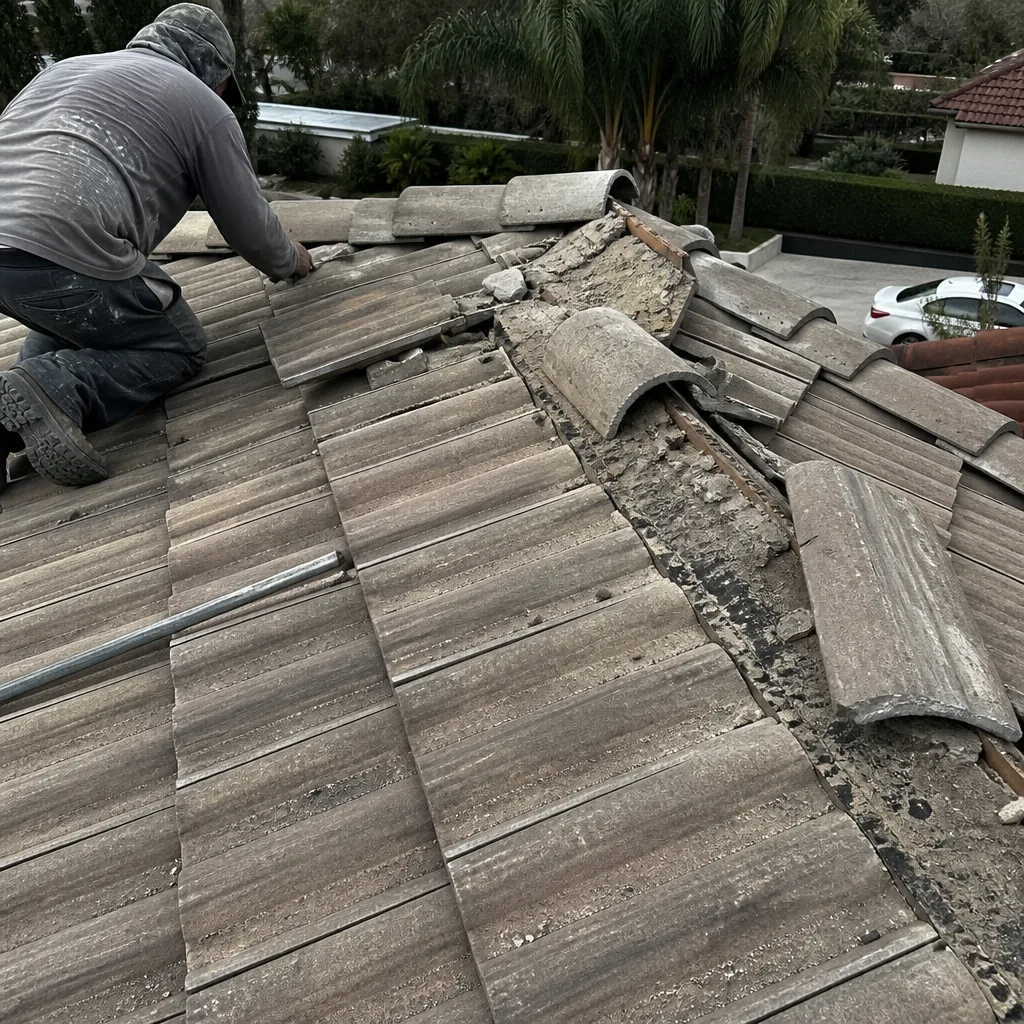 Before
 After
 Before
 After
 Before
 After