
Last updated October 31, 2026
 Metal roofing
 Architectural shingles
 Tile roofing
 GAF
 Owens Corning
 Flat & low-slope
Free roof inspection with deck photos before we talk money - GAF and Owens Corning certified installation
Seasonal Roofing Care for Temecula: Year-Round Homeowner’s Guide
Temecula roofs age faster in summer than they do in winter. That statement surprises most homeowners, but it holds up under the data: sustained UV exposure, attic heat buildup, and thermal cycling do more cumulative damage to asphalt shingles than the occasional rainstorm. This guide explains Temecula’s three real climate phases, what each one does to your roof, and when to act so you’re never caught paying for damage that a $300 maintenance visit could have prevented. For a deeper dive, see The Complete Guide to Roofing in Temecula. By the end, you’ll have a maintenance calendar that actually matches Temecula’s weather patterns, not some generic four-season template written for New England.
Quick Answer
Seasonal roof care in Temecula, CA works best as a three-phase calendar: a May thermal-stress check before summer heat peaks, a September pre-Santa Ana wind checklist, and a December rain-readiness pass before the winter wet season. Schedule inspections in late spring and early fall, clear debris before the Santa Ana window, and address drainage before December rain. The single highest-ROI maintenance action is a September inspection that catches tab adhesion failures before the wind season turns them into full tear-offs.
Styles & brands we work with
Table of Contents
- Temecula’s Three Real Seasons: A Maintenance Calendar That Fits the Climate
- What Temecula UV Does to Shingles at 3, 7, and 12 Years
- The Pre-Santa Ana Checklist: September Tasks That Prevent October Claims
- Managing Drainage During Temecula’s Brief, Intense Rain Events
- Why Attic Ventilation Is a Summer Maintenance Item in Temecula
- How Material Choice Affects Seasonal Resilience
- Common Mistakes to Avoid
- When to Call a Professional
- Frequently Asked Questions
- The Bottom Line
Temecula’s Three Real Seasons: A Maintenance Calendar That Fits the Climate
Temecula doesn’t do four seasons. What we get is one long thermal stress season from May through October, one wind event window from September through November, and one rain exposure window from December through March. A useful maintenance calendar follows those three phases, not calendar quarters. Here’s what that looks like.
Phase 1: Thermal Stress Season (May – October)
This is when your roof does most of its aging. Temecula regularly sees summer days above 95°F, and roof surface temperatures on dark shingles can hit 160°F or higher. The shingles expand during the day and contract at night. Over a single summer, that’s roughly 150 thermal cycles. Over five summers, that’s 750 cycles of expansion and contraction working on every nail, every seal strip, and every flashing joint.
The maintenance focus during this phase is monitoring, not repair. You’re watching for the early signs of heat-related breakdown: curling at shingle edges, granule loss that leaves dark patches, and seal strip failure where shingle tabs start lifting. If you catch these in June, a targeted repair usually solves it. If you miss them, the Santa Ana season in September will find them for you.
One Temecula-specific note: homes in the Redhawk and Paseo del Sol areas sit on hillside exposures with little afternoon shade, which means their west-facing roof planes run hotter than the valley average. Those planes typically show UV damage two to three years earlier than the rest of the roof. When we inspect homes in those neighborhoods, we budget extra time for the western exposures.
Phase 2: Wind Event Window (September – November)
Santa Ana winds are Temecula’s most predictable roof threat. They arrive every fall, they gust 40 – 60 mph in exposed areas, and they punish any shingle that lost its seal during summer. The wind window is short, usually six to eight weeks, but it generates more repair calls than the other eleven months combined.
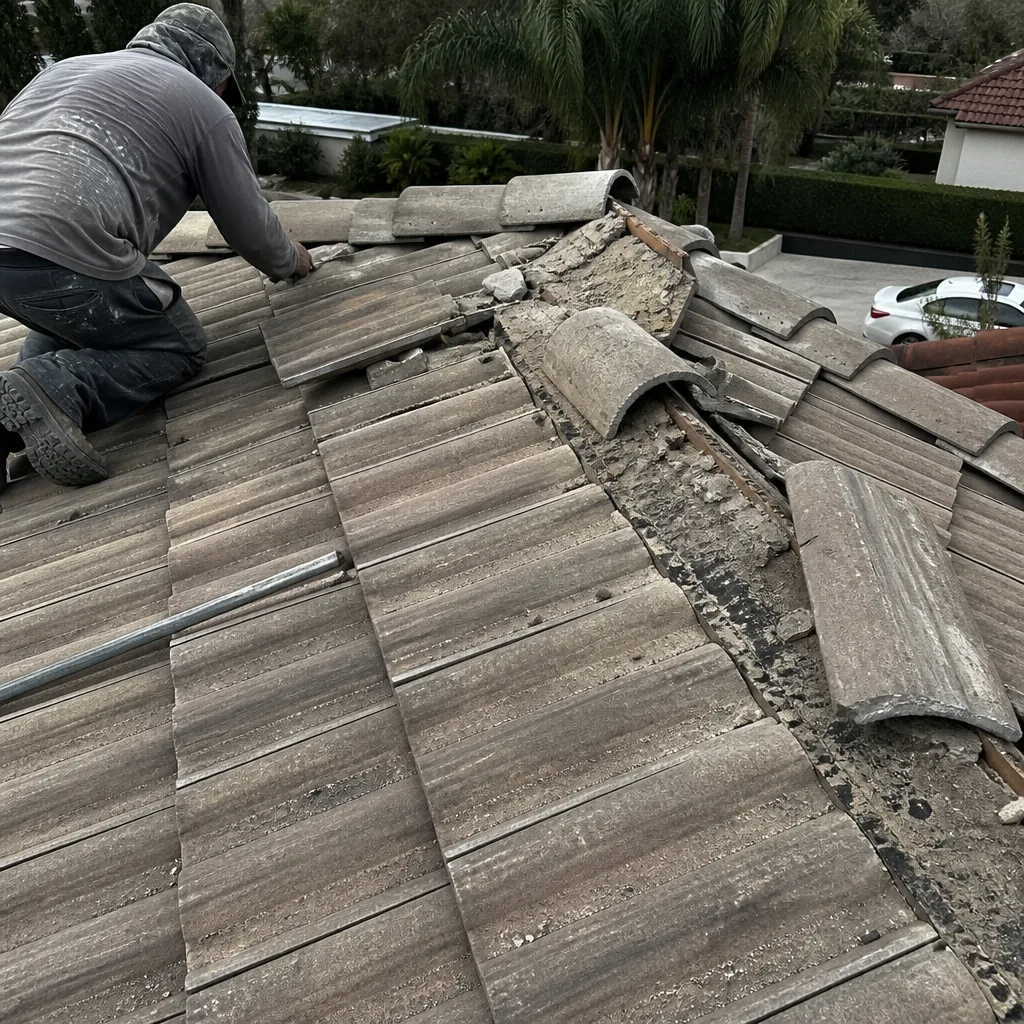
Maintenance during this phase is proactive. A September inspection that checks tab adhesion, re-seals any lifted shingles, and clears debris away from valleys and flashings will prevent most of what would otherwise become October emergency calls. After the first major wind event of the season, a quick visual check from the ground is worth doing: look for lifted shingles, shifted tiles if you have a concrete or clay roof, and any flashing that’s peeled back.
Phase 3: Rain Exposure Window (December – March)
Temecula’s average annual rainfall is around 12 to 14 inches, but it arrives in concentrated bursts. A single atmospheric river event can drop two inches in 24 hours, which is more water than a compromised roof can shed if its drainage is partially blocked. The December maintenance pass is about water management: confirming downspouts are clear, valley flashing is intact, and the roof’s path-to-ground is unimpeded.
Rain in Temecula rarely causes roof failure on its own. What it does is expose failures that already existed: a nail pop, a broken tile, a dried-out pipe boot. The December pass is your last chance to find those before the water does.
What Temecula UV Does to Shingles at 3, 7, and 12 Years
Homeowners in coastal cities can get 25 years out of an architectural shingle. Temecula is not coastal. Our UV index peaks above 10 in summer, and that solar load changes the aging curve entirely. Here’s what we see at three specific milestones.
Year 3: The Granule Bloom
At the three-year mark, most Temecula roofs still look fine from the street. Up close, though, you’ll see the first signs of UV work. The granules on south and west-facing planes start loosening. You’ll notice fine granule accumulation in gutters, a slight color lightening on the hottest planes, and the first small bare spots on shingle edges where the ceramic coating has thinned.
None of this is urgent yet. But this is the moment when attic ventilation problems start showing their effects. If your attic runs hot because soffit vents are blocked or ridge venting is inadequate, the shingles on the hottest planes will age faster. Year three is when that divergence first becomes visible.
Year 7: Seal Strip Fatigue
By year seven, the heat-activated seal strips that bond shingle tabs together have been through roughly 1,000 thermal cycles. In Temecula’s heat, that’s enough to start degrading the adhesive. This is when tab lifting begins, especially on windward edges. Single tabs start curling. You might see a shingle lift here or there after a gusty afternoon.
This is the point where a roof inspection in Temecula does its best work. The roof is repairable. Seal strips can be re-adhered, individual shingles can be replaced, and ventilation corrections can slow the aging curve. Left unaddressed, year seven problems become year nine failures.
Year 12: The Decision Point
At 12 years of Temecula sun, most asphalt shingles have lost significant granule coverage on exposed planes. The underlying asphalt and fiberglass mat are increasingly visible. Tab curling is widespread on southern exposures. Seal strip failure is no longer isolated. The roof still sheds water during normal conditions, but its margin for error is thin.
This is typically when homeowners face the inspect-first question: does this roof have a repairable life left, or is replacement the honest call? Sometimes a 12-year Temecula roof can go three to five more years with targeted repairs and ventilation improvements. Sometimes the curling and granule loss are too advanced. The only way to answer the question accurately is to inspect the roof from above and below: shingle condition on top, deck and attic condition underneath.
In our experience, the 12-year mark is where material quality starts separating roofs. Premium architectural shingles from manufacturers like Owens Corning or CertainTeed hold up visibly better at this stage than value-tier three-tab products. The premium shingle’s heavier mat and higher granule embedment simply survive Temecula’s UV load longer. That doesn’t mean the value products are bad. It means a 12-year inspection is doing its job when it tells you honestly which end of the spectrum you’re on.
The Pre-Santa Ana Checklist: September Tasks That Prevent October Claims
Every year, the first strong Santa Ana event produces a predictable pattern of insurance claims: lifted shingles, blown-off ridge caps, and valley flashing that peeled loose. What most of these claims share is a simple root cause: a maintenance issue that existed in September and was discoverable by anyone who looked. Here’s the checklist that prevents most of those October calls.
- Check tab adhesion on windward planes. Walk the roof (safely) or have it walked, and test shingle tabs on the planes that face the prevailing wind. In Temecula, that’s usually the northeast and east exposures. Any tab that lifts with gentle pressure is unsealed. Re-seal it now, before a 50 mph gust turns a lifted tab into a missing shingle.
- Clear debris from valley flashings. Temecula’s fall winds deposit leaves, twigs, and seed pods in roof valleys. That debris catches more debris, forms a dam, and sends water sideways under shingles during the first rain. A 20-minute valley cleanup in September prevents the most common October leak pattern.
- Inspect the valley flashing itself. This is the single highest-value check on the list. Valley flashing endures more stress than any other roof component except the ridges: wind uplift during Santa Anas, water funneling during rain, thermal expansion during heat. Look for rust perforation, separation at seams, and fastener pull-through. A compromised valley flashing is a claim waiting to happen.
- Verify ridge cap shingles are sealed. Ridge caps sit on the roof’s highest point, directly in the wind stream. Unsealed ridge caps become projectiles during Santa Anas. Check the full length of every ridge and hip.
- Check all penetrations: pipes, vents, and flashings. Pipe boots crack in UV heat. Vent flashings loosen in wind. Penetration leaks account for a disproportionate share of Temecula rain claims because they’re small, slow, and easy to miss. Check the rubber boot on every plumbing vent. Re-seat any loose flashing.
- Trim overhanging branches. A tree limb that’s three feet from your roof in September is one gust away from a roof strike in October. Temecula’s oaks and eucalyptus are particularly brittle after the dry season. Trim anything within striking distance before the wind season opens.
If climbing onto the roof isn’t something you’re comfortable with, this is work you hire out. A professional Roof Inspection in Temecula covers every item above and documents what was found in writing. For a few hundred dollars, you buy certainty that the October winds will pass over a roof that’s ready for them.
Managing Drainage During Temecula’s Brief, Intense Rain Events
Temecula’s rain problem isn’t volume. It’s intensity. The city gets about 12 to 14 inches annually, but that total often arrives in fewer than a dozen rain days, with single events dropping an inch or more in hours. A roof with partially blocked drainage handles a steady drizzle without complaint. That same roof sends water over the eave, under the shingles, and into the fascia during a Temecula downpour.
The Partially Blocked Gutter Problem
Homeowners don’t typically think of gutters as a roofing maintenance item. They’re a separate system, installed by a different trade. But roofer experience says otherwise: the gutter is the roof’s exit route, and when it’s partially blocked, water backs up into the roof edge, wets the fascia and rafter tails, and shortens the life of both. In Temecula, that blockage happens fastest in fall, when the first Santa Anas strip leaves and fill gutters before the first real rain arrives.
The seasonal answer is a pre-rain gutter pass, ideally in late November. It doesn’t need to be exhaustive. You’re looking for the obvious: leaf accumulation, granule buildup, and branches. Clear the downspouts by running a hose through them. Water should exit freely at ground level, not trickle.
The Scupper and Valley Check
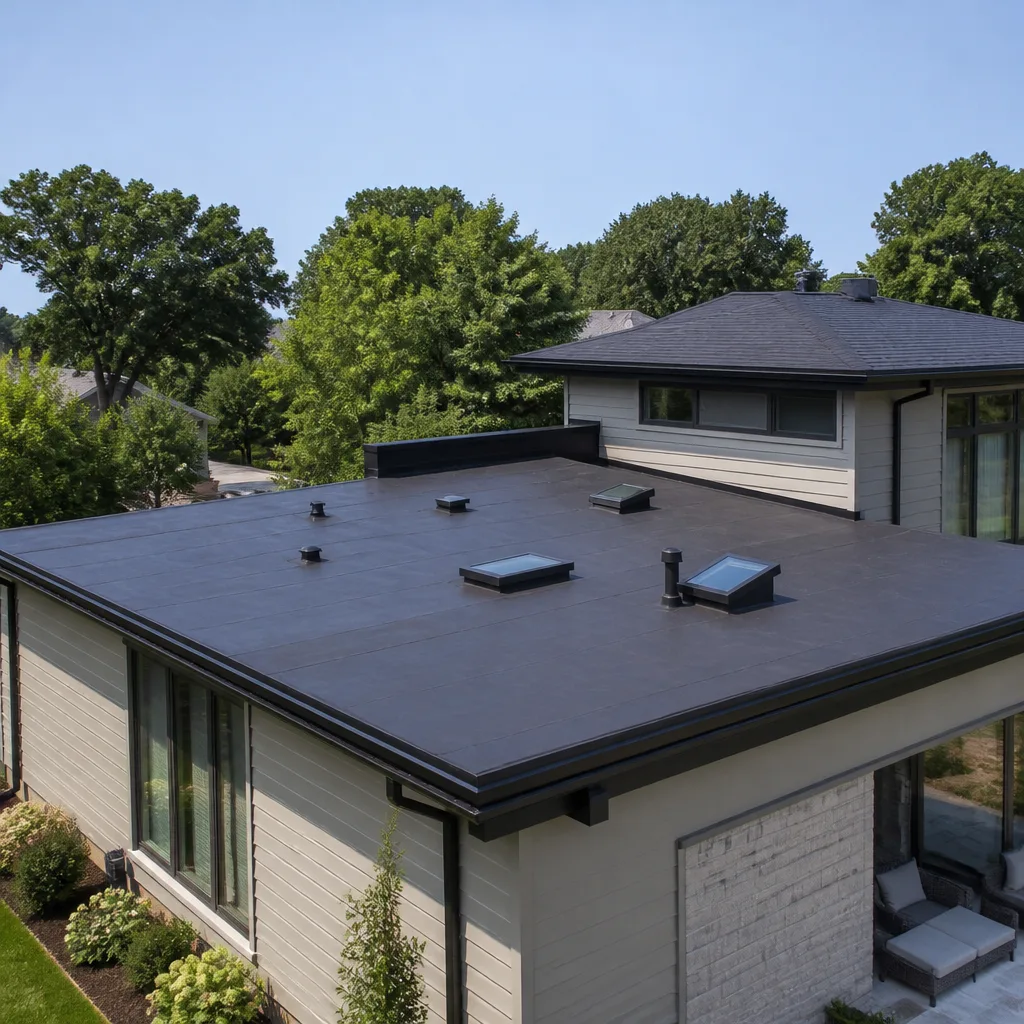
On homes with built-in or parapet-scupper drainage, the scuppers themselves need a look before the winter wet season. A small object can block a scupper opening, and then the roof holds water instead of shedding it. Standing water on a flat or low-slope section of a Temecula roof accelerates every failure mode: granule loss, seam separation, and deck saturation. The scupper check takes five minutes and requires no tools.
Downspout Extensions and Ground-Level Management
Finally, walk the ground level. Downspout extensions should carry water at least three feet from the foundation. Disconnected extensions, crushed pipes, or extensions that dump water against a slope that channels it back toward the house are all common Temecula findings. This is a two-dollar repair that often prevents a five-figure drainage problem.
Why Attic Ventilation Is a Summer Maintenance Item in Temecula
Attic ventilation shows up on almost every national roofing maintenance checklist as a year-round item. In Temecula, it’s specifically a summer item, and here’s why: our roof failure mechanism is heat, not moisture. A poorly ventilated attic in July traps heat below the roof deck, raising shingle temperature by 10 to 20 degrees above what the ambient conditions would produce. That accelerated heat means accelerated aging. Soffit blockage in summer literally shortens shingle life from below.
The mechanism is simple. Your attic needs a flow path: intake air enters through soffit vents, rises as it warms, and exits through ridge, gable, or roof vents. When the soffit vents are blocked (by insulation, by paint, by debris, or because they were never adequate in the first place), that path collapses. The attic holds heat. The roof deck holds heat. The shingles above it bake from both sides. This is why two identical Temecula homes, same shingle product, same install year, can show visibly different roof aging: one has working soffit-to-ridge ventilation and the other doesn’t.
What to Check Each Summer
- Clear soffit vent openings. From the attic, confirm daylight is visible through the soffit vents. If insulation has drifted over them, pull it back and install baffles. If painted over from the outside, the fix is more involved but still worthwhile.
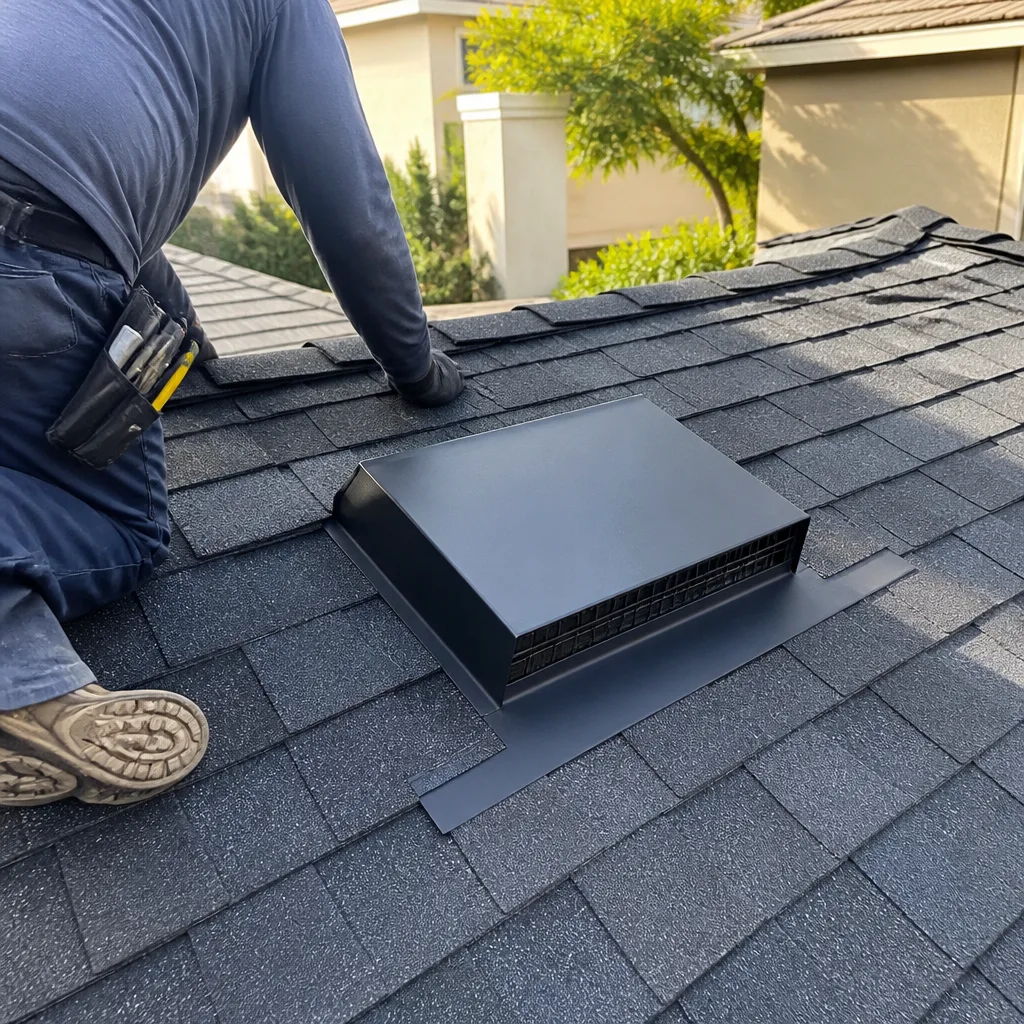
- Confirm ridge or roof vent operation. The upper exhaust vents need to exist and be unobstructed. Ridge vents are popular and effective, but only if they run the full ridge length and none of the fabric or mesh is compressed.
- Measure the attic temperature delta. On a 90°F Temecula afternoon, a well-ventilated attic should run within 10 to 15 degrees of outdoor ambient. If it’s 40 degrees hotter in the attic than outside, the ventilation system needs work.
This is not a cosmetic issue. An attic that runs 130°F instead of 110°F during Temecula’s June-to-September window shaves years off an asphalt roof. Ventilation correction is one of the few maintenance actions that actually slows the aging curve, rather than just managing its effects.
How Material Choice Affects Seasonal Resilience
Seasonal maintenance is only half the picture. The other half is what’s on the roof to begin with, and Choosing the Right Roofing Brand: A Buyer’s Guide for Temecula can help you decide. Temecula’s climate punishes asphalt shingles more severely than most Southern California cities, and the product you choose matters more here than it does in San Diego or Newport Beach. Because Baycrest Roofing installs across seven manufacturer lines, including GAF, CertainTeed, Owens Corning, IKO, Atlas, Tamko, and Boral, we recommend based on what your specific roof and budget need, not what earns the best dealer margin.
For a Temecula home with heavy west-facing exposure and marginal attic ventilation, a premium architectural shingle like Owens Corning Duration or CertainTeed Landmark typically buys a longer service life than a value-tier alternative, simply because those products use heavier mats and denser granule embedment. The UV resistance is materially better. For a home with moderate exposure and good ventilation, a value-tier architectural shingle from IKO or Atlas often delivers the right balance of performance and price. The honest answer is that different roofs call for different products. We match the material to your roof, not your roof to our inventory.
This is also a maintenance consideration. Premium shingles tend to reach the 7-year seal strip fatigue point later than value products. Value-tier shingles often show earlier tab lifting on windward planes, making the September pre-Santa Ana check even more important. Knowing which product you have tells you which failure modes to watch for. A roof inspection in Temecula that identifies the existing product gives you a meaningful baseline.
If the existing roof is aging and you’re weighing repair versus replacement, the brand question becomes central. Seven brands, one right answer is not marketing. It’s an accurate description of how a material-agnostic inspection process works. You pay for the roof your home needs, not the roof your contractor happens to sell.
Common Mistakes to Avoid
- Waiting until spring for the annual inspection. Spring is the wrong time to schedule in Temecula. By March, the rain season has ended, the damage is done, and any water intrusion has had months to work into the deck. A September inspection catches the problems before the rain, not after. If you only inspect once a year, make it September.
- Skipping the post-Santa-Ana visual check. The first big wind event of the season leaves evidence. Lifted shingles, shifted tiles, and peeled flashings are all visible from the ground with a pair of binoculars. A five-minute check after the first Santa Ana catches small wind damage before it becomes a leak at the next rain.
- Assuming the attic is fine because the house is cool. Your air conditioner does not tell you anything about attic temperature. Many Temecula homes with inadequate attic ventilation still maintain comfortable living spaces because the AC is simply working harder. The shingles are still aging faster than they should. Summer attic checks need to happen regardless of indoor comfort.
- Ignoring the west-facing plane. On a Temecula home, the west exposure gets hammered by afternoon sun while running hotter than any other plane. West planes show curling and granule loss first. When homeowners inspect only the street-facing side (usually east or north), they miss the plane most likely to fail.
- Deferring the valley flashing check. Valley flashing is the most claim-producing failure point on a Temecula roof during winter rain. It’s also one of the easiest things to inspect in September. Deferring it until water is actively entering the house turns a $400 flashing repair into a $4,000 water damage remediation plus roof repair.
- Clear-cutting the drainage system from the maintenance plan. Roof maintenance and gutter maintenance are treated as separate disciplines, but on the house itself they’re one system. A roof that can’t drain is a roof that can’t perform. Include gutter, downspout, and scupper checks in every seasonal pass.
When to Call a Professional
Most of the checklist work in this guide is doable by a competent homeowner with a ladder and basic tools, and you can find more guides & resources on our blog. But some situations call for professional involvement. If you see water staining on ceilings or walls during the winter rain window, don’t wait. A leak tells you the roof already failed in at least one location, and the interior damage compounds daily. If post-Santa-Ana checking reveals lifted or missing shingles, get them addressed before rain arrives. If your roof is at the 10-to-12-year mark in Temecula’s UV environment and you’re unsure whether repair or replacement is the right call, bring in someone who will inspect first and recommend second. And if you’re not comfortable working on a roof, that’s fine. Baycrest Roofing offers free estimates in Temecula. Call (866) 412-5697 and we’ll walk the roof and tell you what we find.
Frequently Asked Questions
Twice a year is ideal for Temecula’s climate: once in September before the Santa Ana wind season begins, and once in late May before summer heat peaks. If once a year is your budget, make it September. The fall inspection catches the wind-season risks and the rain-season risks in a single visit. Baycrest Roofing offers roof inspections in Temecula with written findings and photos, so you know exactly what was checked and what was found. Call (866) 412-5697 to schedule.
Most basic maintenance visits, including a full inspection, debris clearing, and minor tab re-sealing, run between $250 and $500 in Temecula depending on roof size, slope, and accessibility. Valley flashing repair and ridge cap re-sealing add cost. The typical maintenance visit pays for itself several times over if it prevents one wind-damage claim or one rain leak. For an exact number on your roof, call (866) 412-5697 and we’ll quote the work.
Yes, most homeowners can handle ground-level and ladder work: gutter clearing, downspout checking, soffit vent inspection from the attic, and visual roof checks with binoculars. Walking the roof itself, re-sealing tabs, inspecting valleys, and checking flashings require working at height and are best left to a professional, especially on steep Temecula hillside homes where roof pitches routinely exceed 6/12. Safety matters more than saving a service call.
Seal strip failure during summer heat, followed by wind damage during the September-to-November Santa Ana season. The pattern is consistent year after year: summer temperatures degrade the heat-activated seal strips, then the first strong wind event lifts the unsealed tabs and converts a repairable shingle problem into torn-off shingles and water intrusion. The September pre-wind check exists specifically to interrupt this sequence.
Yes. Temecula’s UV index and summer heat load accelerate asphalt shingle aging compared to coastal California. A 25-year architectural shingle in San Diego might realistically reach 22 to 24 years. The same shingle in Temecula, on a west-facing plane with average ventilation, typically reaches the replacement decision point at 15 to 18 years. Good ventilation and premium materials can add years. Bad ventilation and value products subtract them.
Repair when the damage is localized and the underlying roof structure is sound. Replacement when the aging is systemic: widespread tab curling, granule loss on multiple planes, or deck saturation. The honest call requires an inspection that looks at both the shingle surface and the deck underneath. We repair when repair is honest and replace when replacement is necessary. If you’re deciding, call (866) 412-5697 and we’ll tell you what the roof needs, not what we’d prefer to sell.
The Bottom Line
Seasonal roof care in Temecula comes down to three windows: monitor heat stress from May to October, storm-proof for wind from September to November, and water-proof for rain from December to March. The most important action is a September inspection that catches seal strip failure before the Santa Anas find it. The most overlooked factor is attic ventilation, which quietly accelerates shingle aging from below all summer. And the most consequential decision is material choice, which is why Baycrest Roofing carries seven manufacturer lines and matches the product to your roof’s actual exposure, pitch, and budget. Whether you need a Roof Repair in Temecula or are weighing a full Roof Replacement in Temecula, start with an inspection. The calendar is your guide. Call Baycrest Roofing home at (866) 412-5697 to schedule yours.
Written by the team at Baycrest Roofing, serving Temecula since 2013.
See the difference
 Before
 After
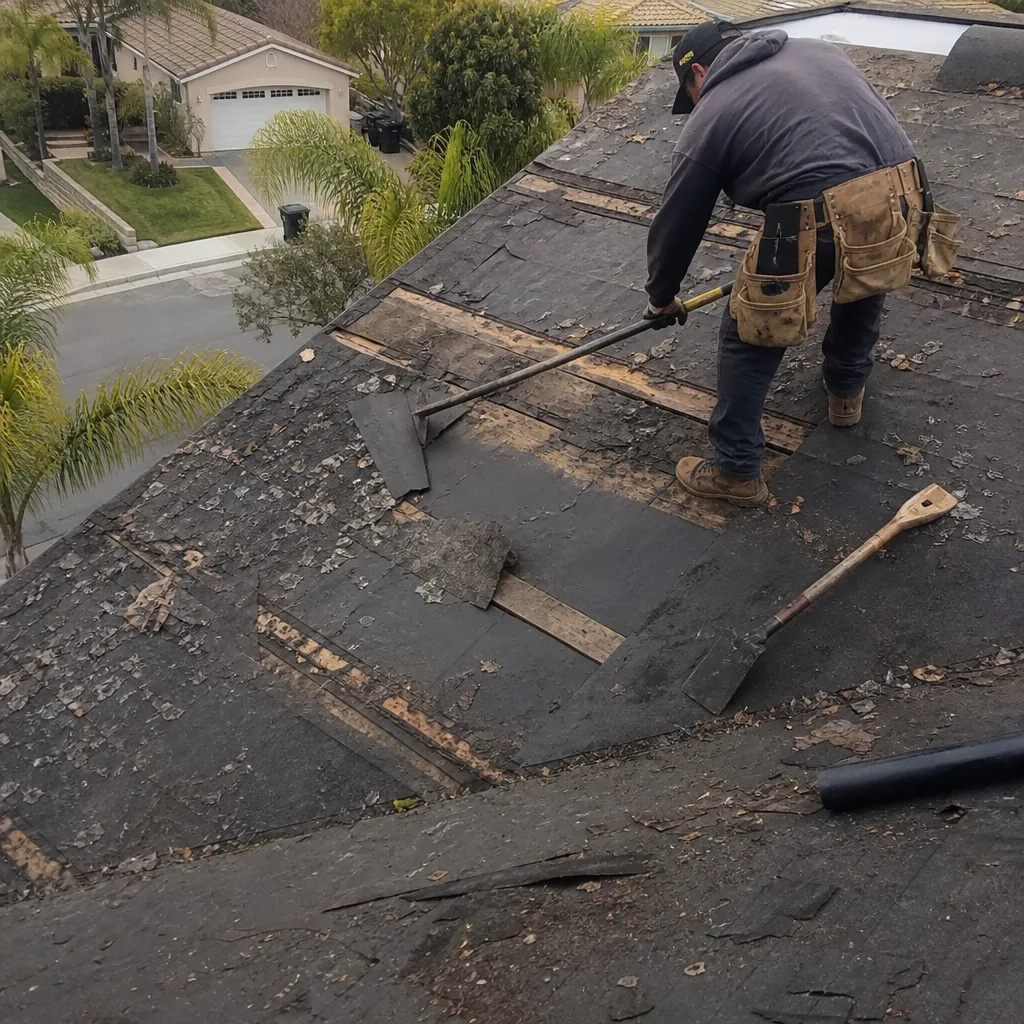 Before
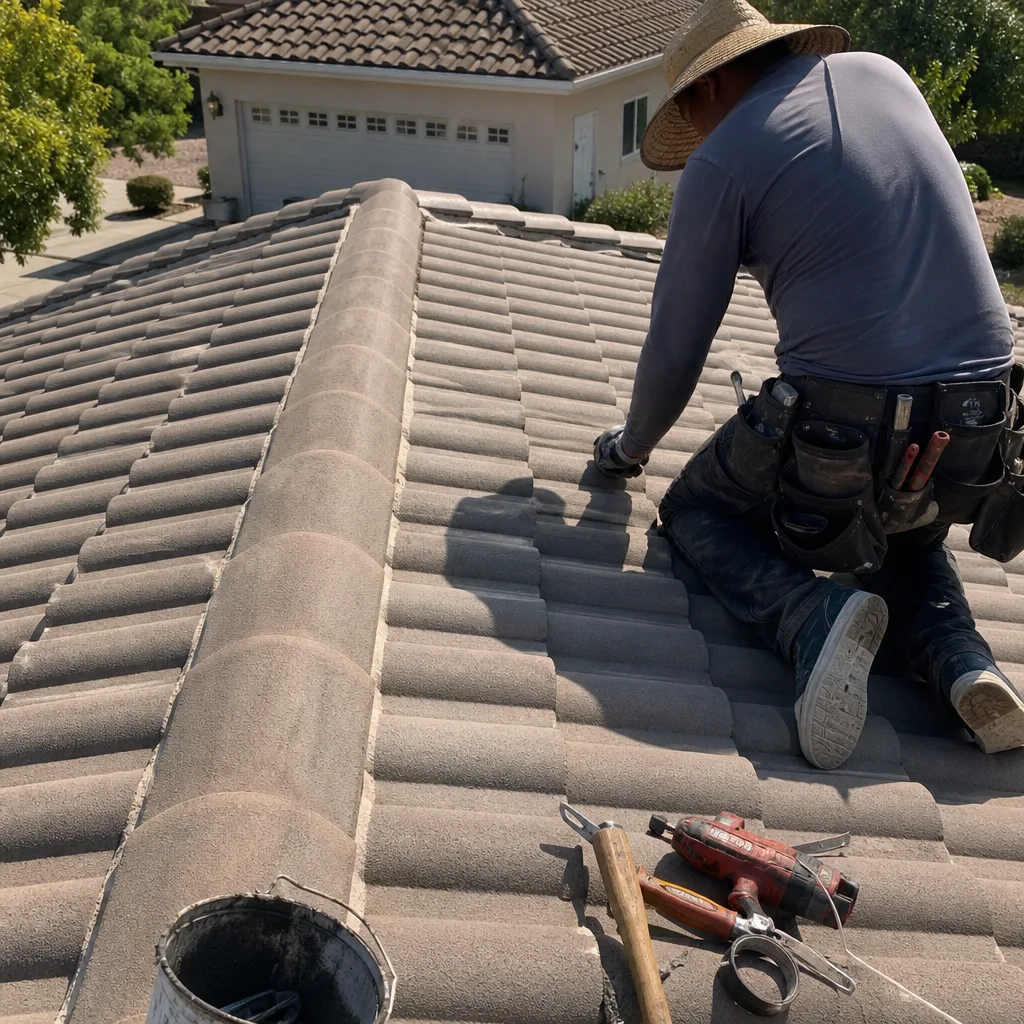 After
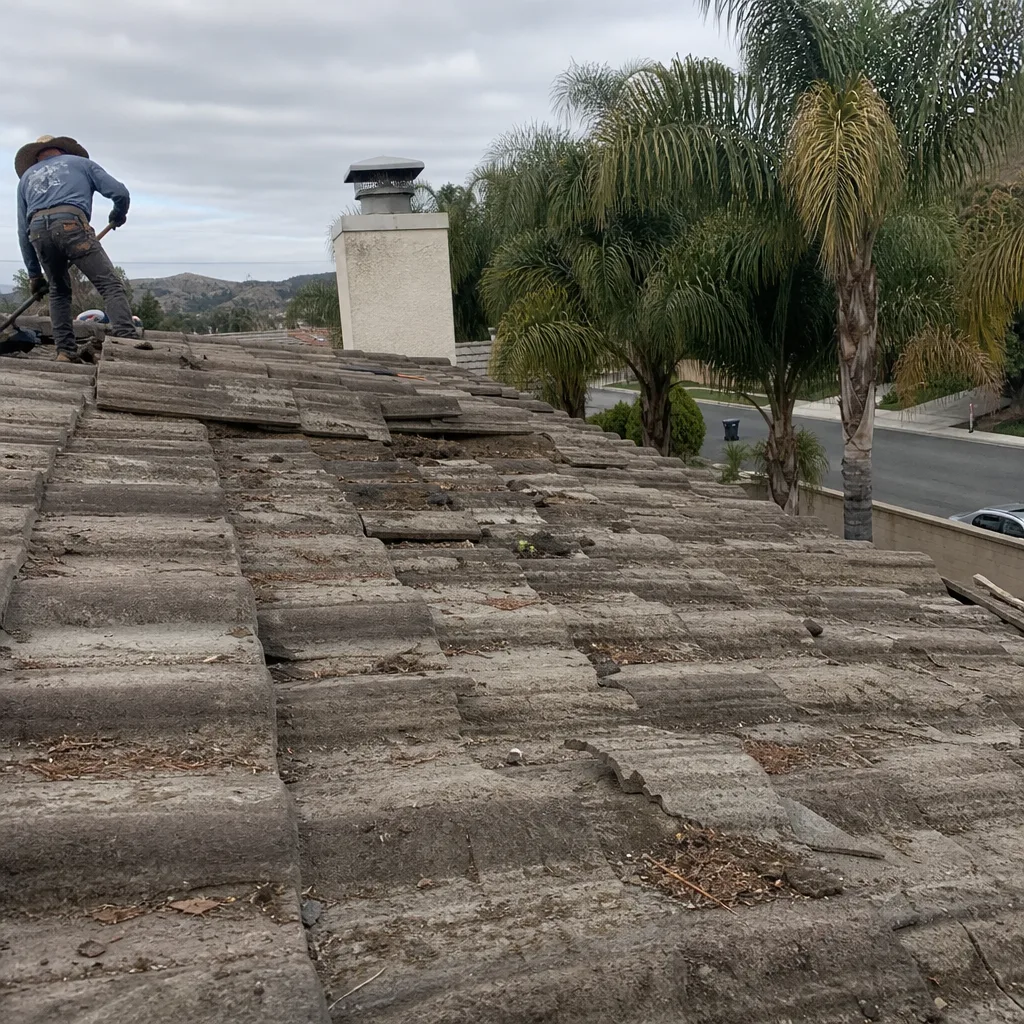 Before
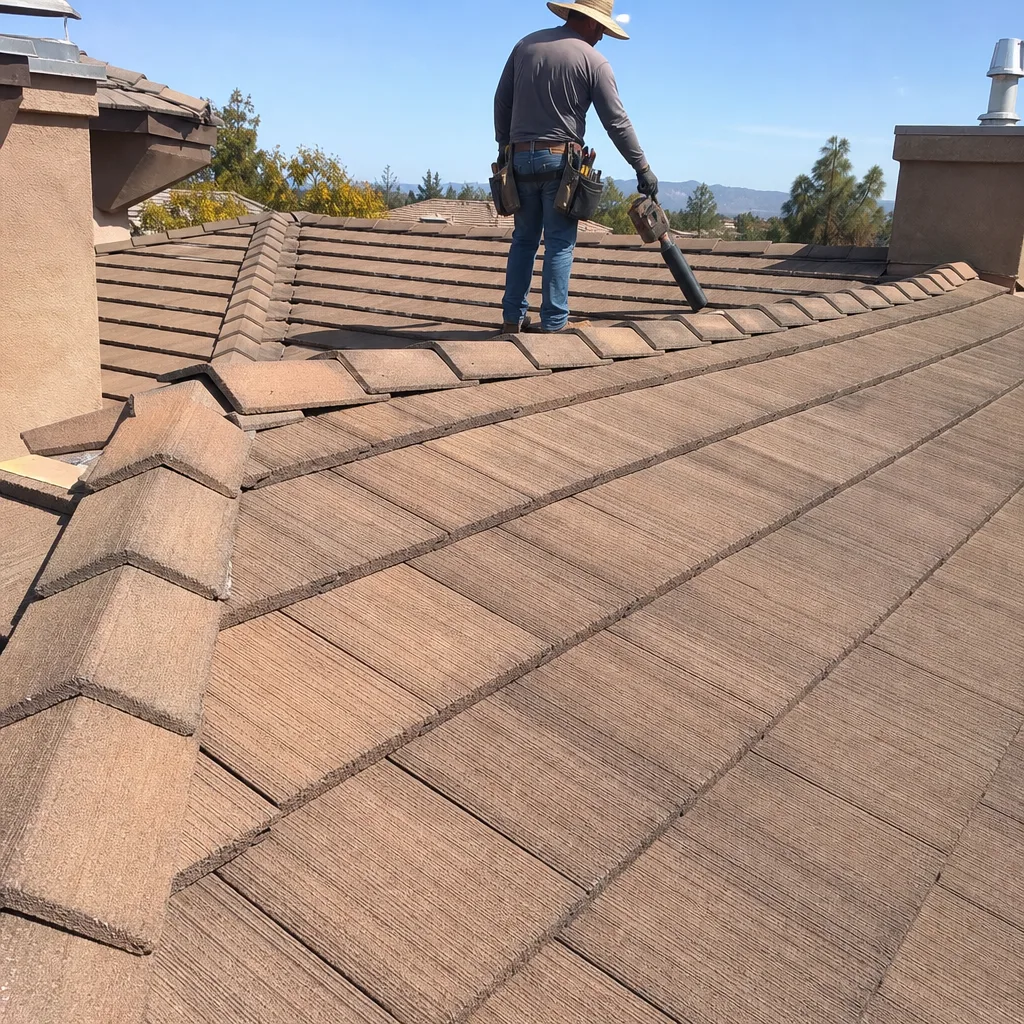 After