 Metal roofing
 Architectural shingles
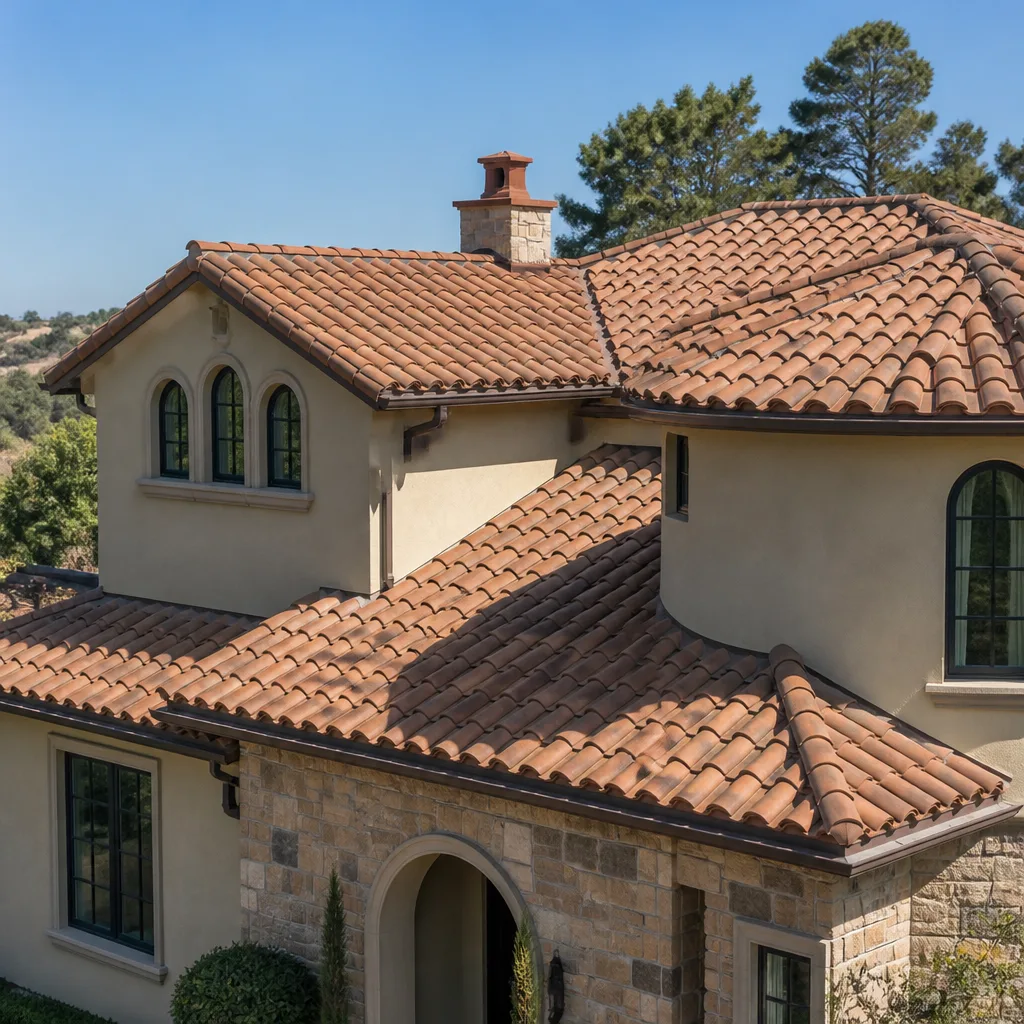 Tile roofing
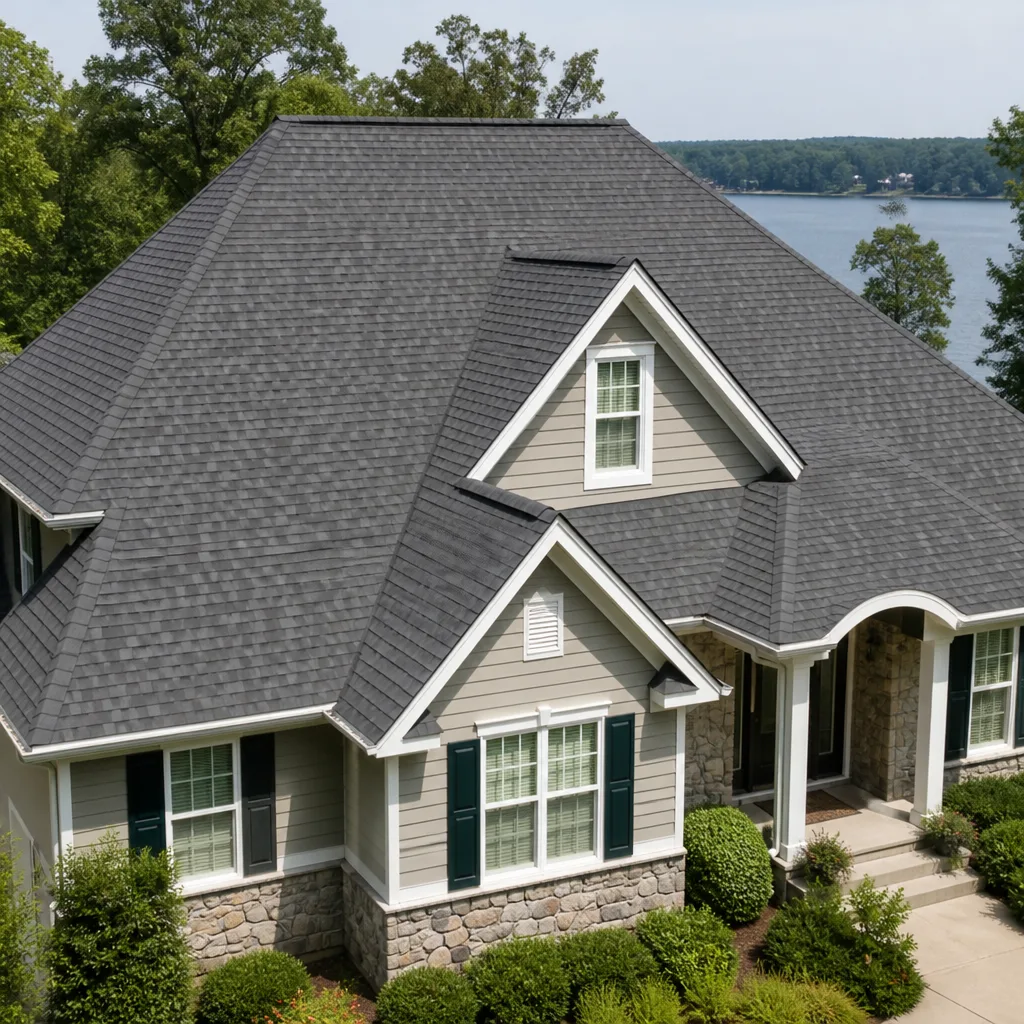 GAF
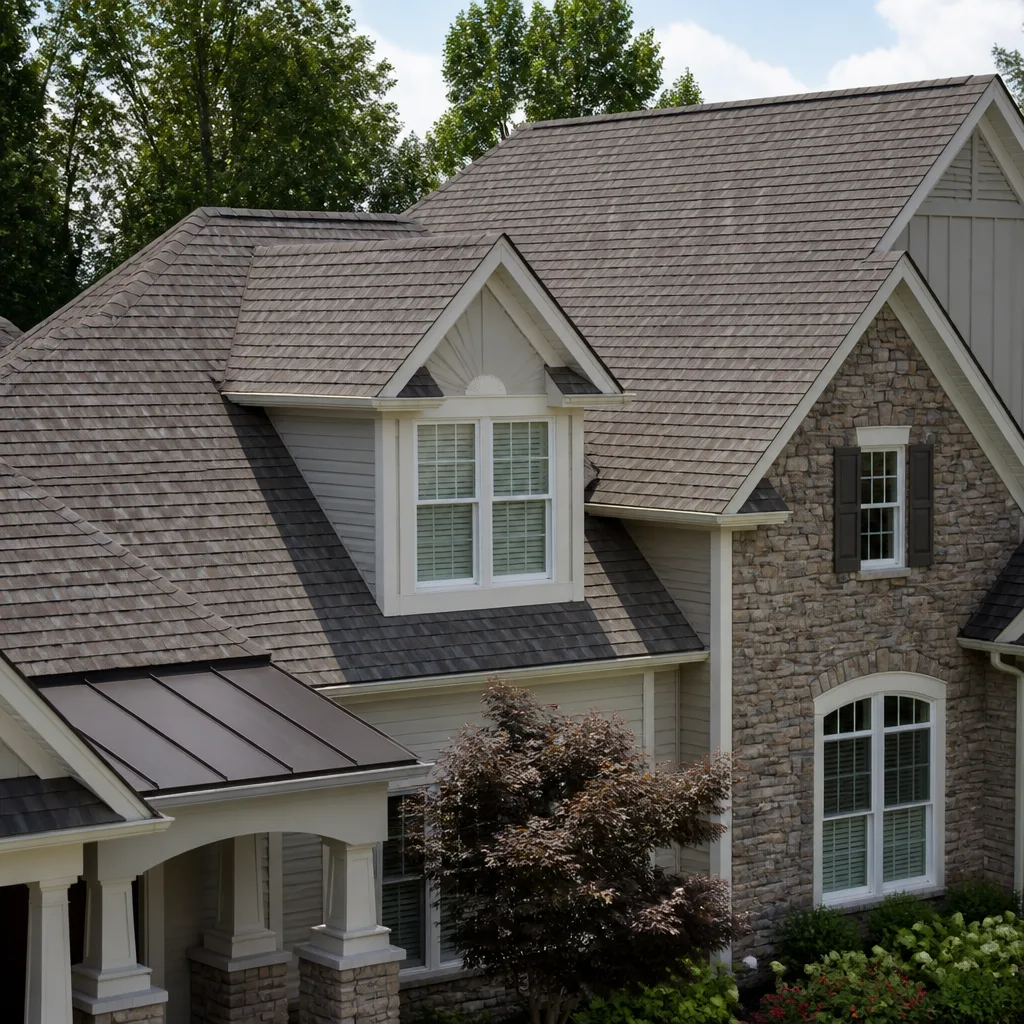 Owens Corning
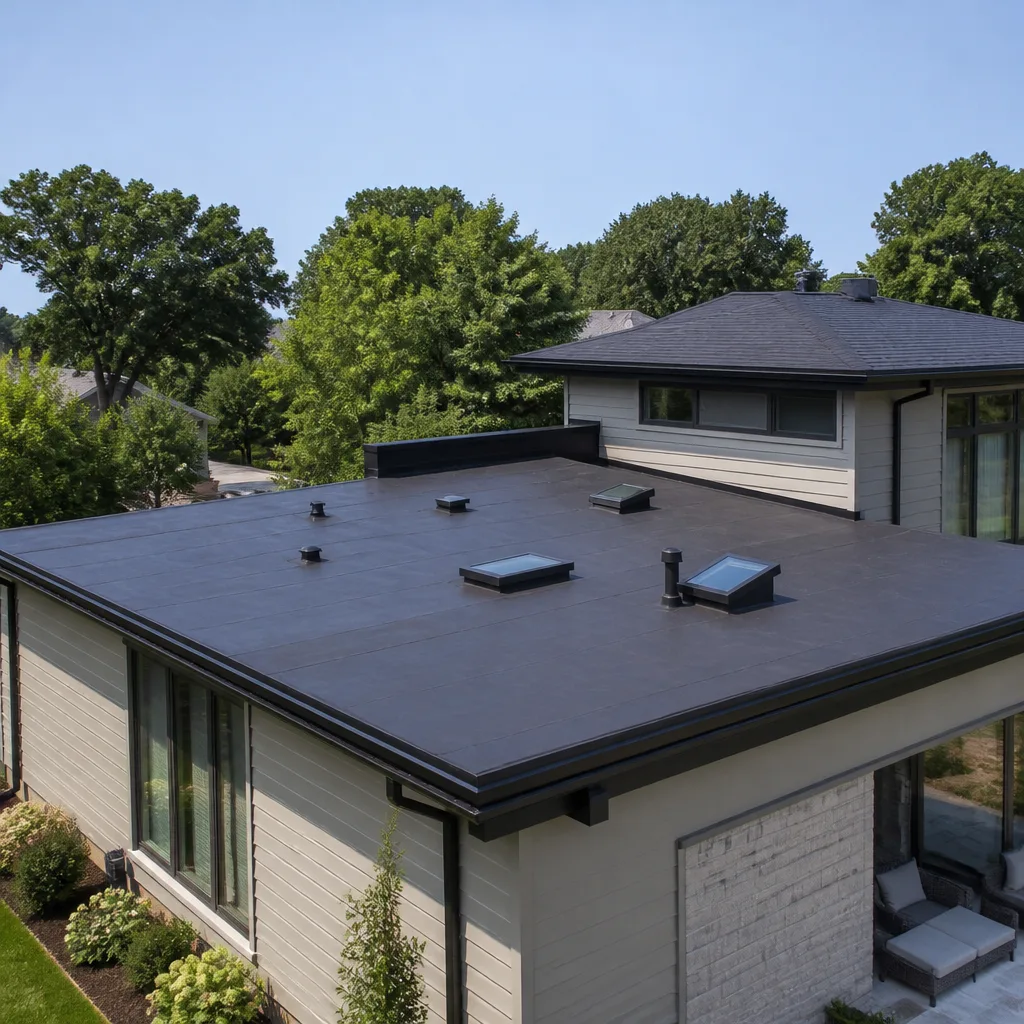 Flat & low-slope
Free roof inspection with deck photos before we talk money - GAF and Owens Corning certified installation
Roof Replacement in Upland, CA: What It Costs and What Actually Fails Here
A full roof replacement in Upland typically runs $11,500 to $19,800 for a standard single-story ranch with asphalt shingles, and $19,000 to $34,000 when concrete tile, steep foothill pitches, or extensive decking repair are involved. The spread is wider here than in most Inland Empire cities because Upland is two different roofing environments on one slope. The northern 91784 foothill tracts face concentrated Santa Ana downslope wind that eats edge metal and ridge caps first, while the flatland 91786 neighborhoods mostly fight UV bake and aging tile mortar. Neither failure mode responds well to a generic tear-off-and-replace bid.
This page explains what actually drives replacement cost in Upland, why slope position matters more than shingle color, and how to compare bids without getting burned. If you want a straight answer on your specific roof, call (866) 412-5697 and we’ll inspect it before we quote it.
Fast, Reliable Roof Replacement Across Upland
Baycrest Roofing handles Roof Replacement across all three Upland ZIP codes: 91784, 91785, and 91786. We know the difference between a 1960s ranch off Euclid Avenue with original concrete tile and a newer foothill build in the Colonies with steep pitches and ridge vents that the Santa Anas work like a crowbar. That local knowledge changes what we specify.
We don’t sell a replacement from a satellite photo. Every Upland job starts with an on-roof inspection, because a roof that looks worn from the street might only need edge metal, while one that looks fine might have underlayment turning to dust under the tile. Call (866) 412-5697 and we’ll tell you which one you have.
Styles & brands we work with
Why Baycrest Roofing Is Upland’s Preferred Roof Replacement Company
Upland homeowners tend to be skeptical of contractors who email a quote before they’ve walked the roof. We work the same way. Nolan Cafferty leads our crews, and the rule on every job is inspect first, recommend second. No one pays for a new roof because we guessed from a driveway.
Our edge in Upland is material range plus honest diagnostics. We’re authorized to install products from GAF, CertainTeed, Owens Corning, IKO, Atlas, Tamko, and Boral. That’s seven manufacturers under one contractor relationship, which means we match the material to your roof and your slope position, not to whatever we have the deepest dealer margin on. On a windward 91784 foothill home, we’ll typically spec GAF architectural shingles with a six-nail pattern and heavier edge metal. On a south-side flatland tract in 91786, a value-tier IKO or Tamko line often does the job at a better price. That’s the point of having seven brands: repair when repair is honest, replace when replacement is necessary, and never push a premium product where a mid-range one performs identically.
Asphalt Shingle Roof Replacement in Upland
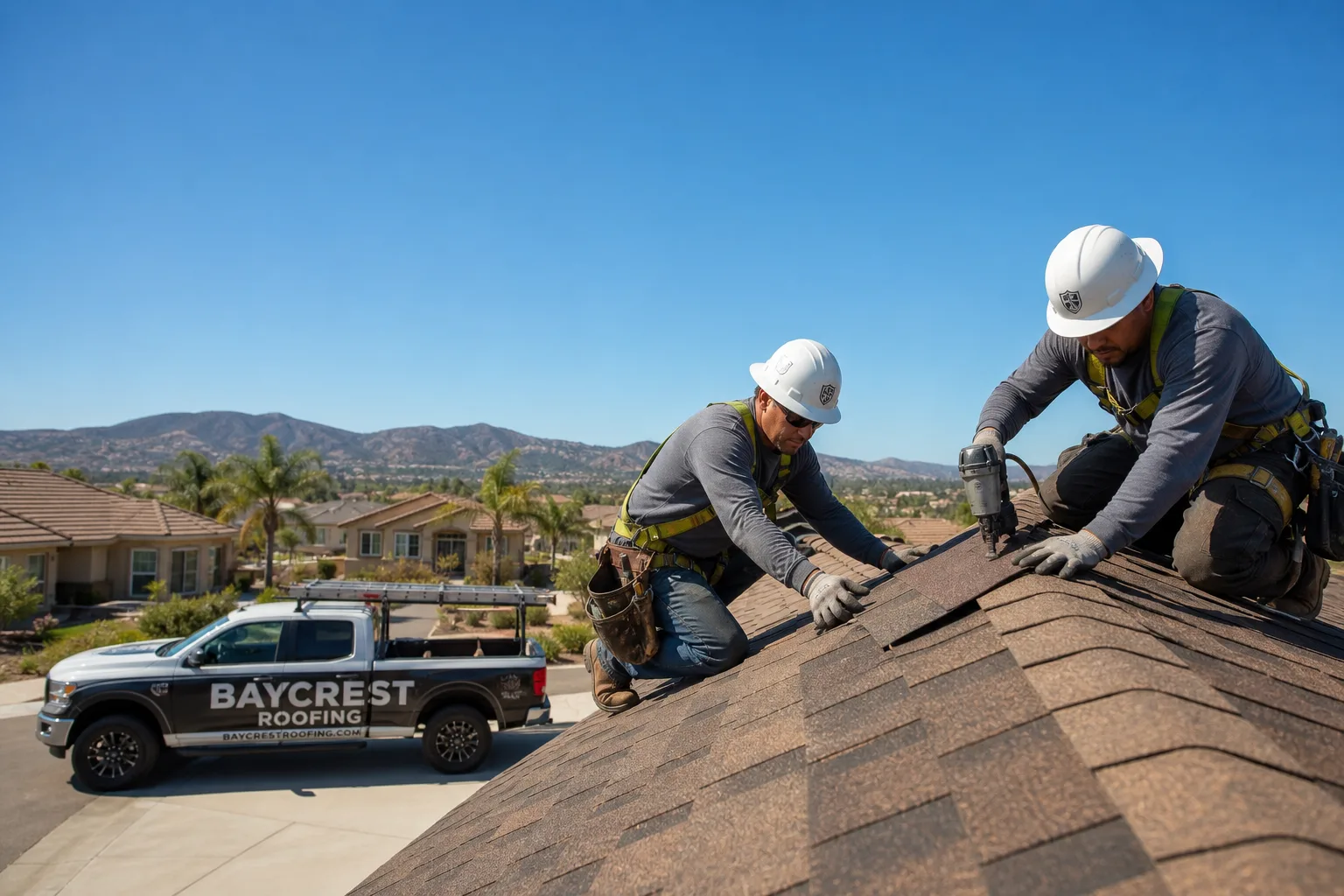
Asphalt Shingle Roof Replacement in Upland is the most common project we do, especially on the mature 1960s and 1970s ranch tracts where the original wood shake or three-tab shingle has been past end of life for a decade. These homes have low-pitch roofs that bake hard in the inland sun, and the failure mode is predictable: shingles curl, granules end up in the gutters after every wind event, and water finds the nail lines. On the north-side 91784 homes, we see something different: shingles on the field might look fine while the starter strip and ridge caps are scoured thin by downslope Santa Ana gusts. Edges fail first, not the middle. That’s a Upland-specific failure, and it changes what we quote.
What Replacement Involves Here
On a typical Upland asphalt replacement, we tear off the old layer, inspect the decking for dry rot or nail fatigue, and replace any compromised sheathing before it ever sees a new shingle. Then we run a peel-and-stick ice and water shield through every valley and around every penetration, not just along the eaves. In a wind-driven microclimate like the foothills, that’s the difference between a roof that survives the next Santa Ana and one that leaks through the chase pipe flashing after two seasons.
Architectural Shingles vs. Three-Tab
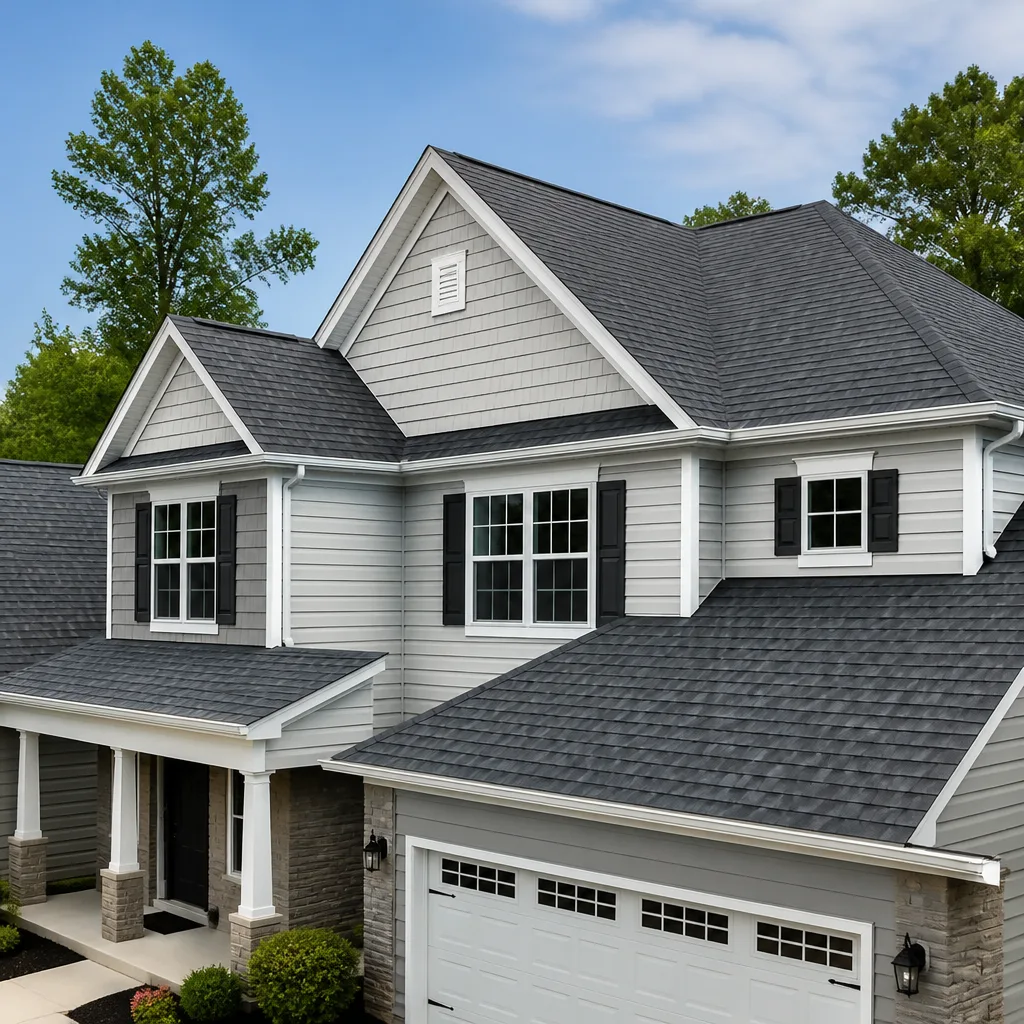
Architectural shingles are the upgrade that makes sense on most Upland homes. They carry a higher wind rating than three-tab, which matters on the north-side slope, and they have a thicker nailing pattern that resists the constant thermal cycling of inland summers. For a 1,600-square-foot ranch in 91784, architectural shingle replacement typically runs $12,500 to $17,800. Three-tab comes in lower, around $11,500 to $14,200, but it’s a product we’ll sometimes talk a homeowner out of if their home sits in a wind-exposed position.
New Roof Installation in Upland
New Roof Installation in Upland is a different animal than replacement, and it covers everything from additions and teardown rebuilds to the newer foothill homes that sat with the builder’s original roof for twenty-five years. Upland has a lot of 1990s and early-2000s construction in the north-end neighborhoods, and those homes are now starting to show the first signs of failed underlayment and loose tile mortar. A new installation on an existing structure often means the same scope as a replacement: full decking inspection, new underlayment, new flashings, and the shingle or tile choice matched to the wind and UV exposure of the specific lot.
The Wind-Exposed Foothill Build
For a new installation on a north-side 91784 lot facing the canyon mouths, we’ll specify heavier hot-dip galvanized drip edge and edge metal all the way up the rakes, not just the eaves. The thin builder-grade metal that comes with most installations will scour through in five seasons of Santa Ana wind. This is where the small material upgrades that cost $400 or $600 on installation day pay back ten times over the life of a roof.
Tile vs. Shingle for New Construction
Newer foothill developments lean toward concrete tile for fire and HOA reasons, but tile demands more from the underlayment than shingles do. Dry inland heat bridges tile and turns the mortar and underlayment brittle, so the waterproofing layer fails even while the tiles still look brand new from the street. On a new tile installation, we specify a high-temp underlayment rated for at least 30 years and a two-part mortar bed for the ridge and hip caps. That’s the difference between a roof that drains and a roof that leaks in the fourth season.
Trusted Brands We Service in Upland
Baycrest works across seven major shingle manufacturers, and we carry local stock for the lines Upland homeowners actually use. On most Upland replacements to date, we’ve installed GAF architectural shingles on wind-exposed foothill roofs and Tamko or CertainTeed products on flatland replacements where mid-range performance makes sense. Boral and the premium tiers come in on tile and fire-rated builds. Having all seven lines means we don’t stretch any one brand beyond where it performs. The right answer for a 1963 ranch on a tree-lined 91786 block isn’t automatically the same as the right answer for a 2003 terrace build facing the San Gabriels. We match the material to your roof, not your roof to our inventory.
See the difference
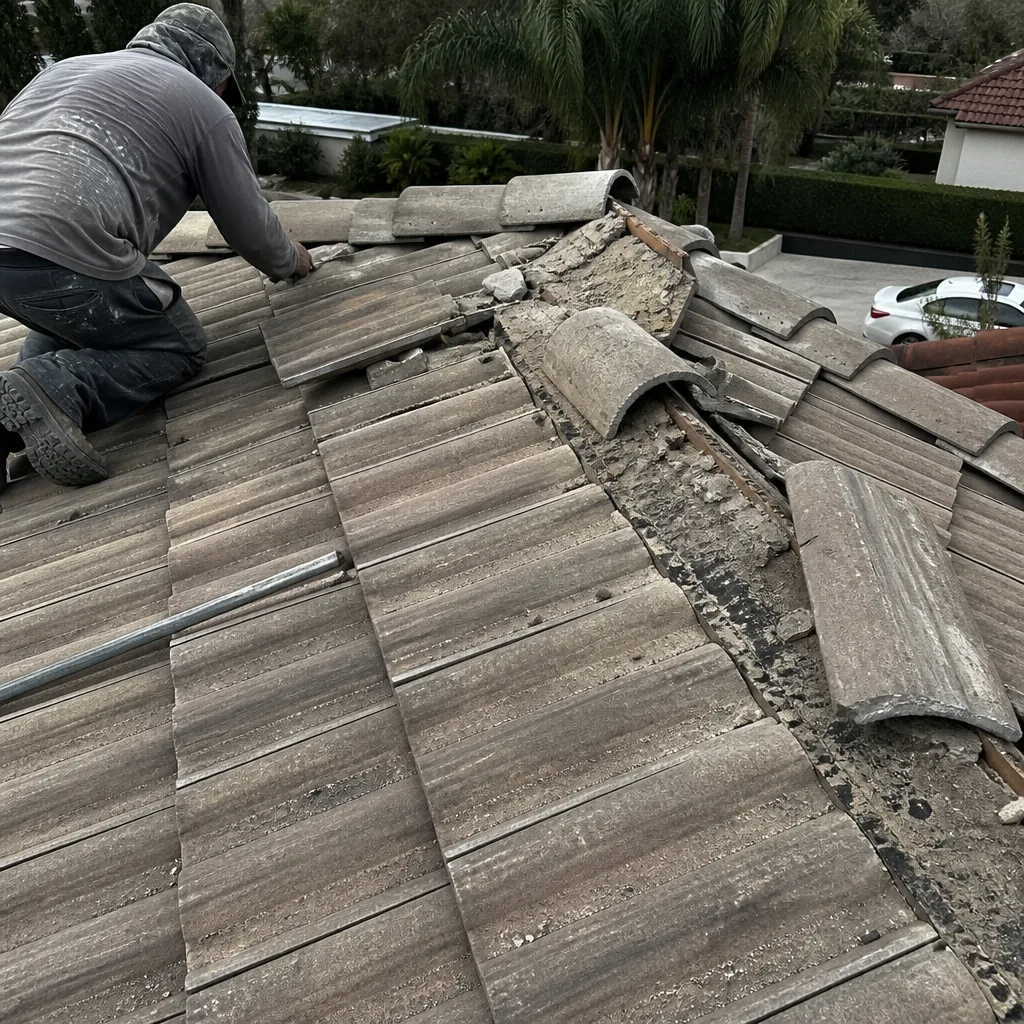 Before
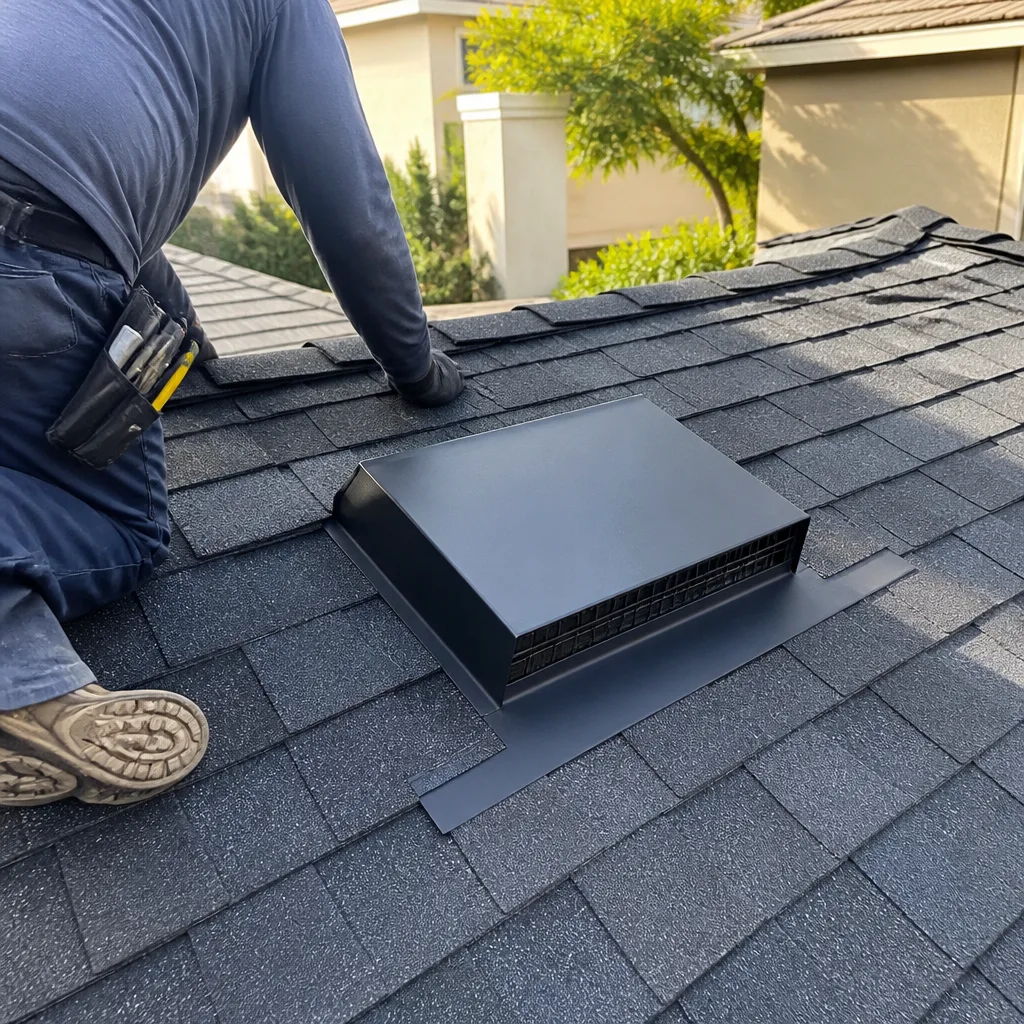 After
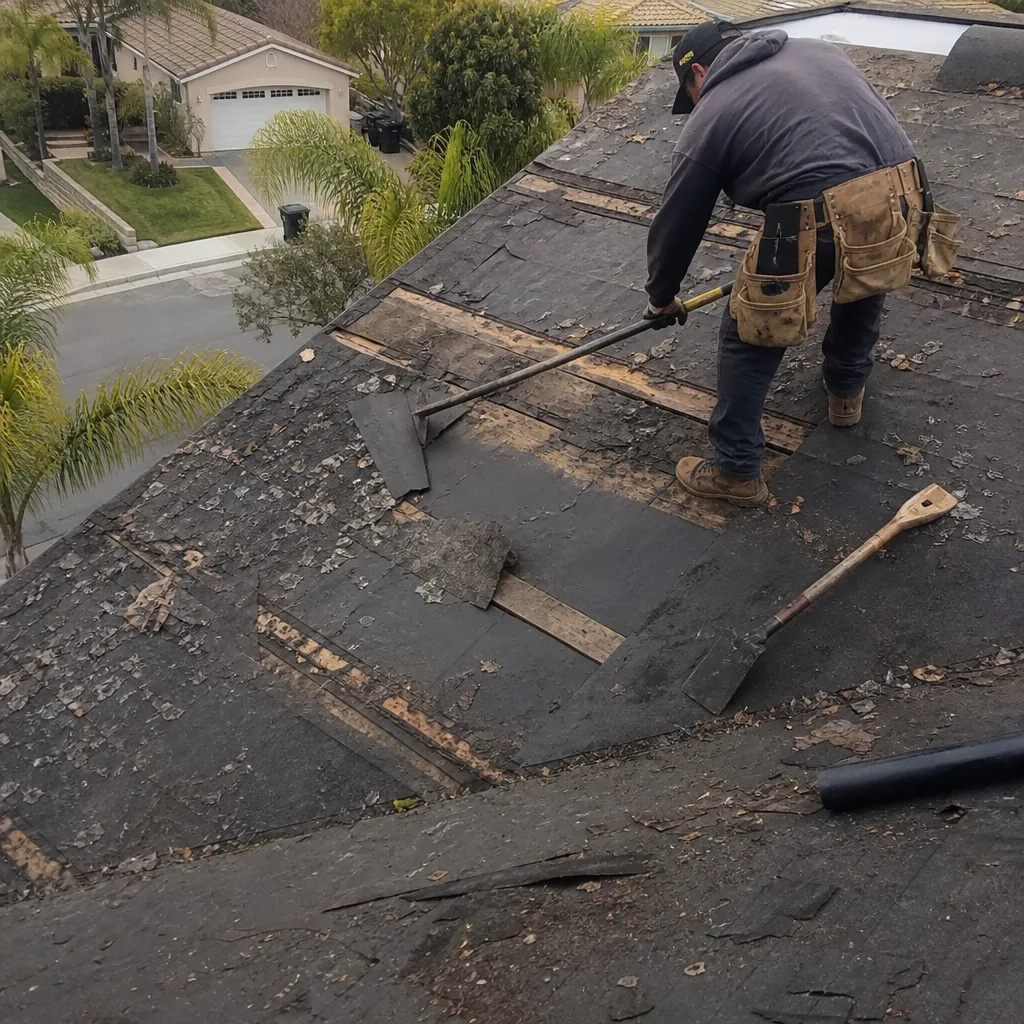 Before
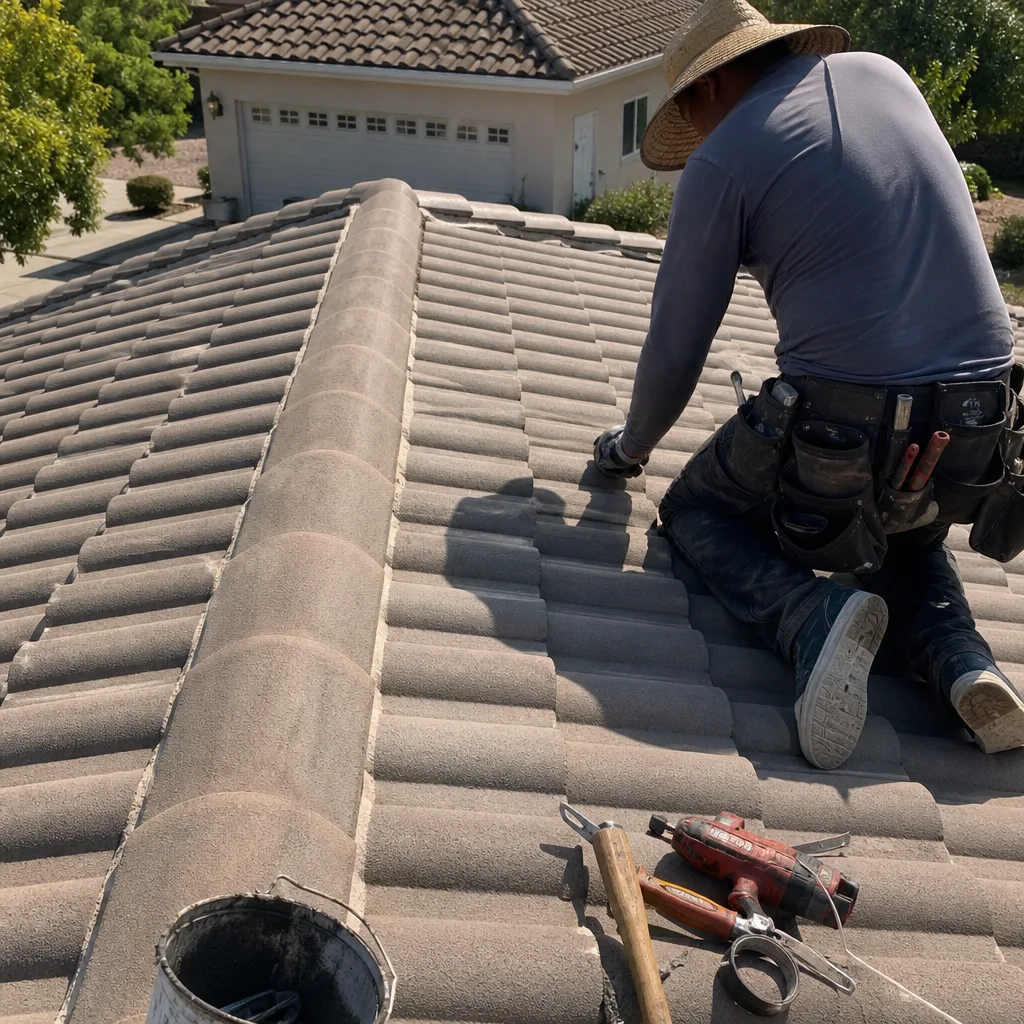 After
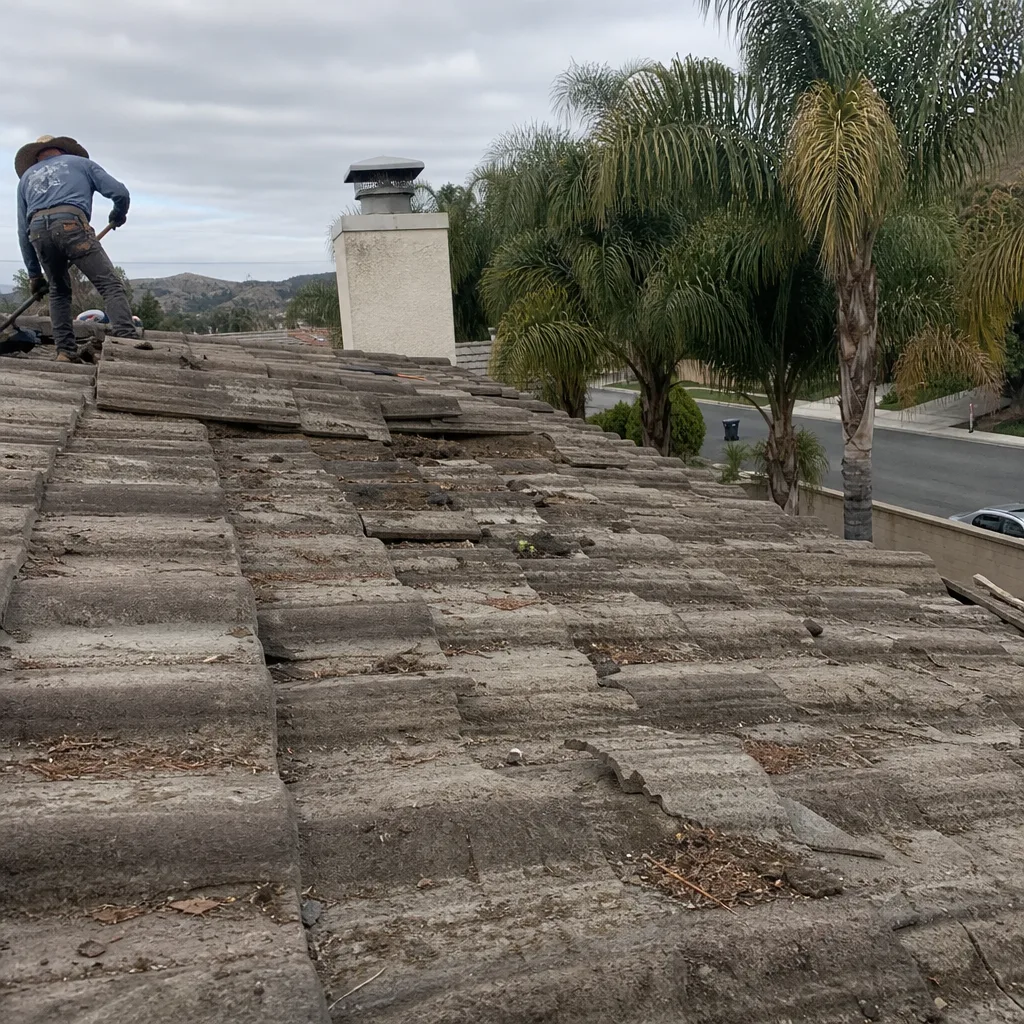 Before
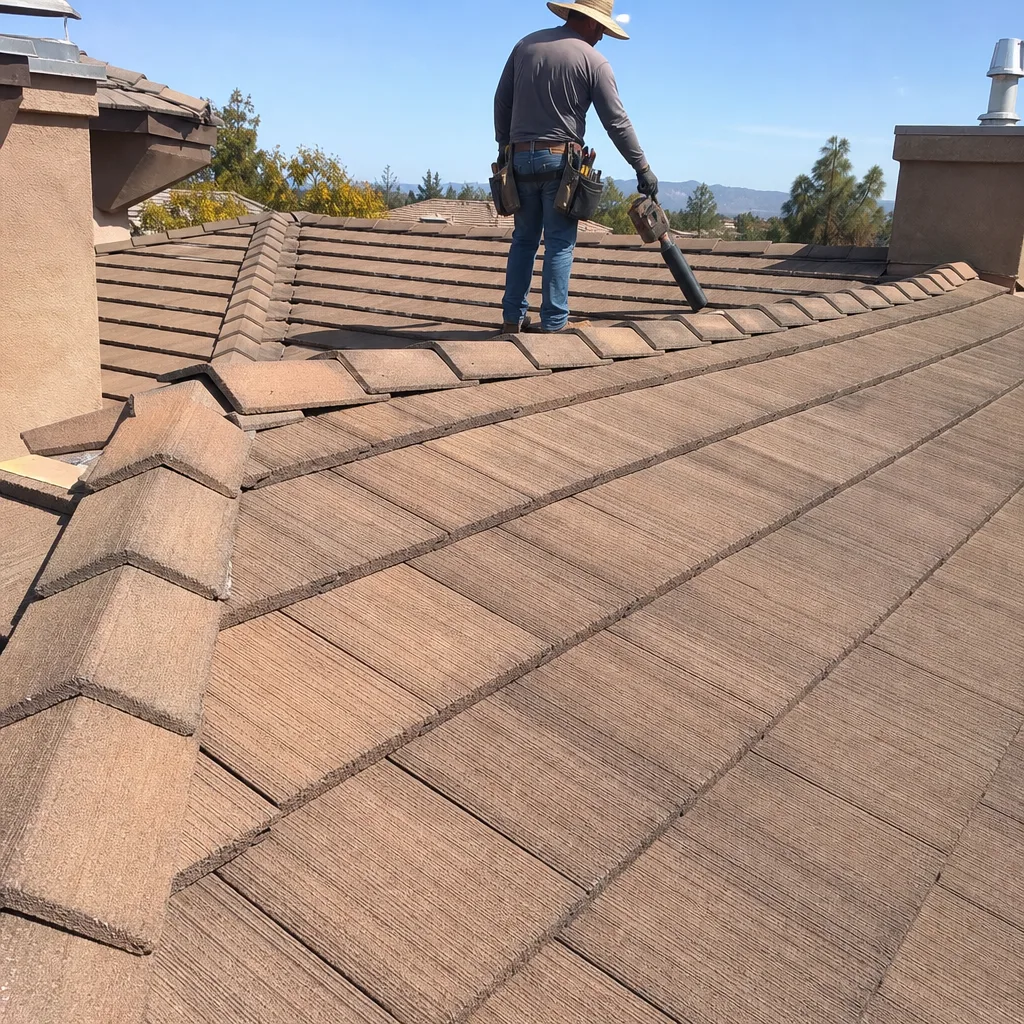 After
Common Roof Replacement Problems We See in Upland Homes
Upland’s position as the first major city north of the 210 at the foot of the San Gabriels creates a distinct failure profile. These are the four patterns we see most consistently:
- Edge wear on north-side foothill roofs. Santa Ana wind accelerates down the canyon mouths and hammers the rake edges, ridge caps, and starter strip on 91784 homes. The field shingles often look fine while the windward edges lift and abrade. A replacement here needs edge metal and fastener upgrades, not just new shingles.
- Crumbling tile mortar with leaks nobody sees. On mature mid-century homes with original concrete tile, the intensely dry inland heat dries out the bedding mortar and cracks the underlayment below. The tiles still look sound from the street, but the waterproofing layer is gone. Tile replacement, not shingle overlap, is often the right call for the 91785 and older 91786 tracts.
- Debris and ember packing in valleys and flashings. Wind-driven debris piles into valleys, around pipe collars, and at the base of chimneys. Foothill homes are particularly exposed during red-flag Santa Ana periods. Regular debris removal and sealed flashings are essential maintenance before a full replacement, and the failure to do so is often what forces the replacement early.
- Cheap builder-grade fasteners rusting early. On 1990s and early-2000s foothill builds, the original galvanized fasteners and edge metal were often specified for inland flatland exposure, not the concentrated wind and heat of the slope. Fasteners rust, edge metal lifts, and the roof fails at the metal, not the shingles. We replace with hot-dip galvanized or stainless throughout.
Pricing for Roof Replacement in Upland, CA
We Also Serve Cities Near Upland
Baycrest works throughout the foothill and flatland communities around Upland, including Claremont, Montclair, Rancho Cucamonga, and Ontario. If your home sits in one of those cities but faces the same Upland exposure patterns, the same material logic applies. Call us at (866) 412-5697 and we’ll let you know what we’re seeing in your specific area.
Serving Upland, CA — Our Local Coverage Area
We’re based in the Upland area and know this community well. Use the map below to see our service coverage — if you’re nearby, we can almost certainly help.
FAQs About Roof Replacement in Upland
Does an Upland roof really need different hardware than a Rancho Cucamonga roof?
Yes. A north-side Upland roof in 91784 that faces the San Gabriel canyon mouths takes concentrated downslope Santa Ana wind that a flatland Rancho Cucamonga roof never sees. The drip edge, ridge caps, starter strip, and fastener spec all need to be heavier on that Upland slope position. We specify hot-dip galvanized edge metal and a six-nail shingle pattern on windward Upland roofs, while a flatland Rancho home often performs fine with standard gauge metal and four nails. It’s a $500 to $900 difference that prevents a five-year edge failure.
My concrete tile roof looks fine but the mortar is crumbling – do I need a full replacement?
Often yes, but not always. The dry inland heat in Upland desiccates tile mortar and underlayment faster than the tiles themselves wear out. If the mortar has turned to dust and the underlayment is cracking, the waterproofing layer is already gone even though the tiles look sound from the street. Sometimes a mortar re-bed and underlayment replacement can save the tile, but if the underlying decking has been leaking for multiple seasons, a full replacement is usually cheaper than repeated patchwork. Call (866) 412-5697 for an inspection before you spend on either direction.
How do I compare two roof replacement bids in Upland fairly?
Compare the line items, not the total. Two Upland bids can look identical at the bottom line while one specifies standard galvanized edge metal and four nails per shingle and the other specifies hot-dip galvanized edge metal on the rakes, peel-and-stick shield through every valley, and six nails per shingle. On a wind-exposed 91784 home, the second bid is the honest one. Ask both contractors which wind rating they’re installing to and what gauge metal they’re using. The answers tell you everything.
What wind rating should shingles carry on an Upland foothill home?
An Upland foothill home in 91784 that faces the canyon mouths should carry shingles rated for at least 110 mph, and the nailing pattern should be six nails per shingle, not four. The concentrated Santa Ana downslope gusts on the north-side slope are the strongest wind load in the Inland Empire. A standard architectural shingle installed to 110 mph wind rating with a six-nail pattern is the minimum we’ll spec on that position. Flatland 91786 homes can often go with 90 mph and four nails.
Why do granules keep showing up in my gutters after wind storms?
On Upland foothill homes, granules in the gutters after every wind event usually mean the shingles are losing their granular surfacing early because the wind is abrading the edges and nail lines. On a 1960s ranch off the foothill side of 91784, we pulled the original concrete tile and found the drip edge scoured thin and the underlayment curling where Santa Ana gusts had been working the ridge for years. The homeowner’s complaint wasn’t leaks; it was granules after every wind. We replaced the edge metal with heavier stock and set GAF architectural shingles with a six-nail pattern, and the granule loss stopped. If you’re seeing granules, it’s not a cosmetic issue; it’s an edge failure in progress. Call (866) 412-5697 for a free inspection.
Contact Baycrest Roofing for Roof Replacement in Upland
If your Upland roof is showing edge wear, granule loss, crumbling tile mortar, or you’re not sure what you need, start with an inspection. Baycrest Roofing will assess your roof honestly and recommend replacement only when replacement is necessary. We work across seven shingle manufacturers so we can match the right material to your slope position and your budget, not to our inventory. Call (866) 412-5697 to schedule your free estimate today.
Written by Nolan Cafferty, Owner at Baycrest Roofing, serving Upland and the surrounding foothill communities.