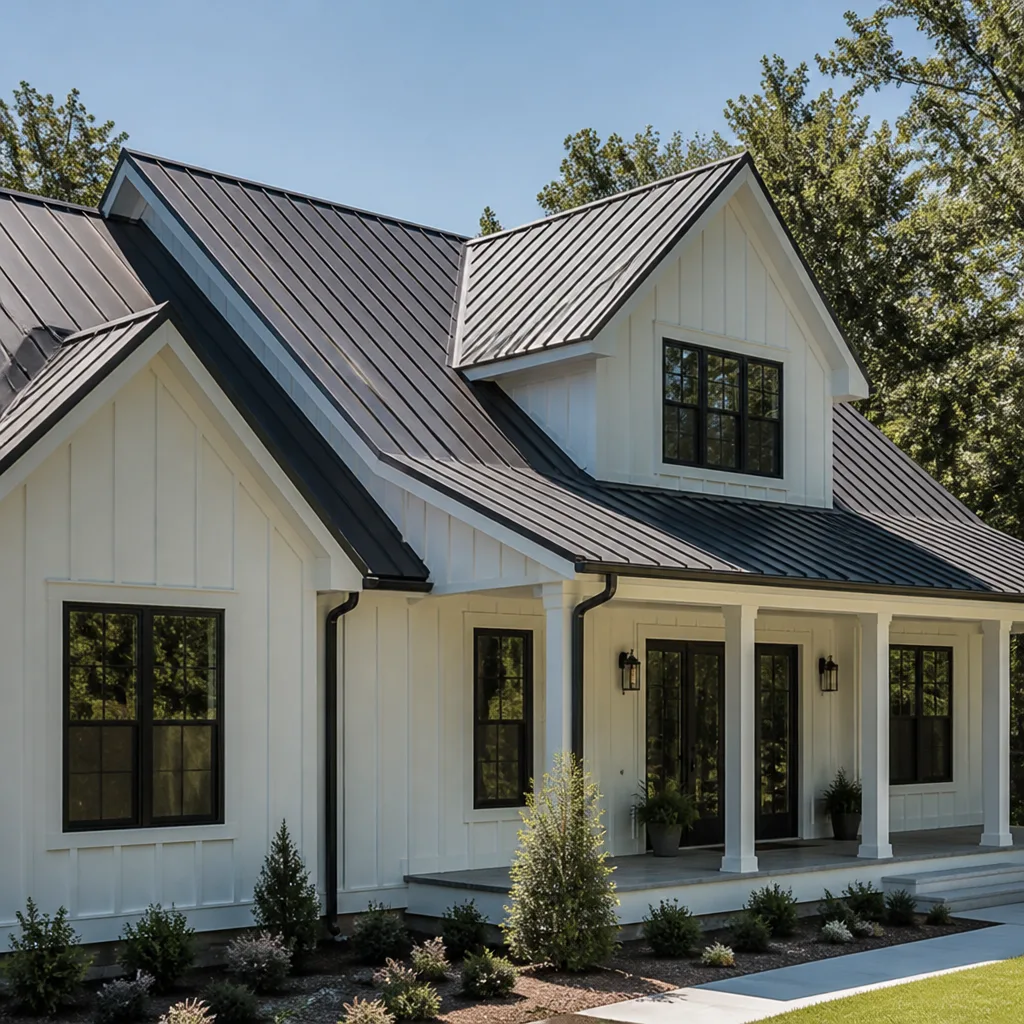
 Metal roofing
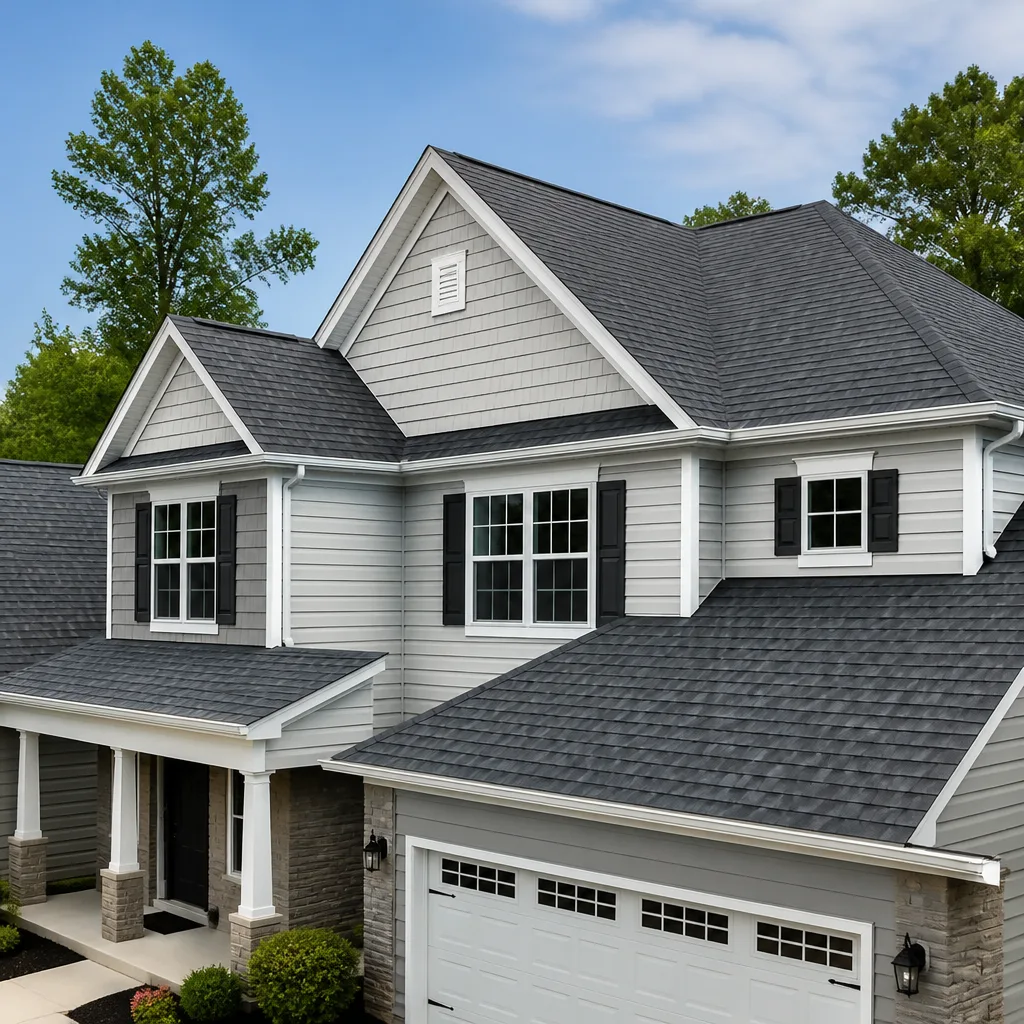 Architectural shingles
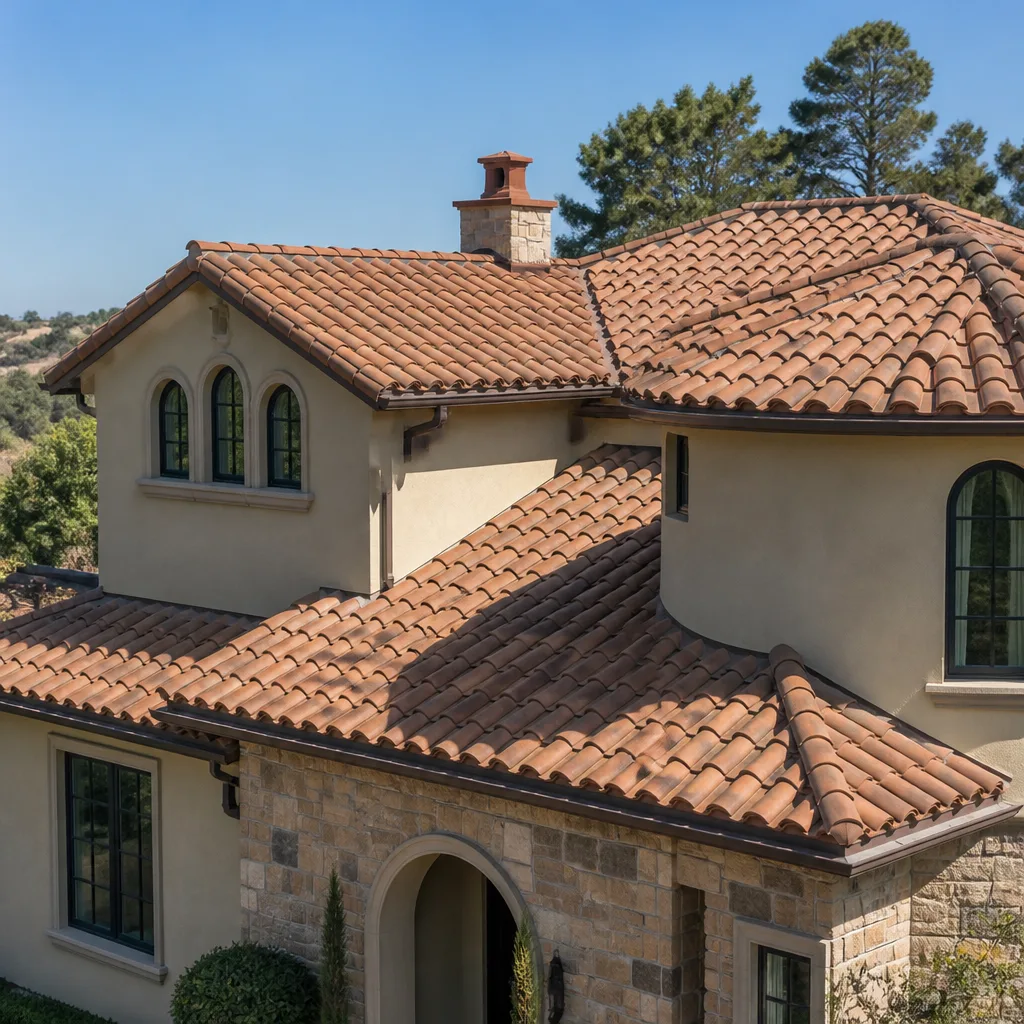 Tile roofing
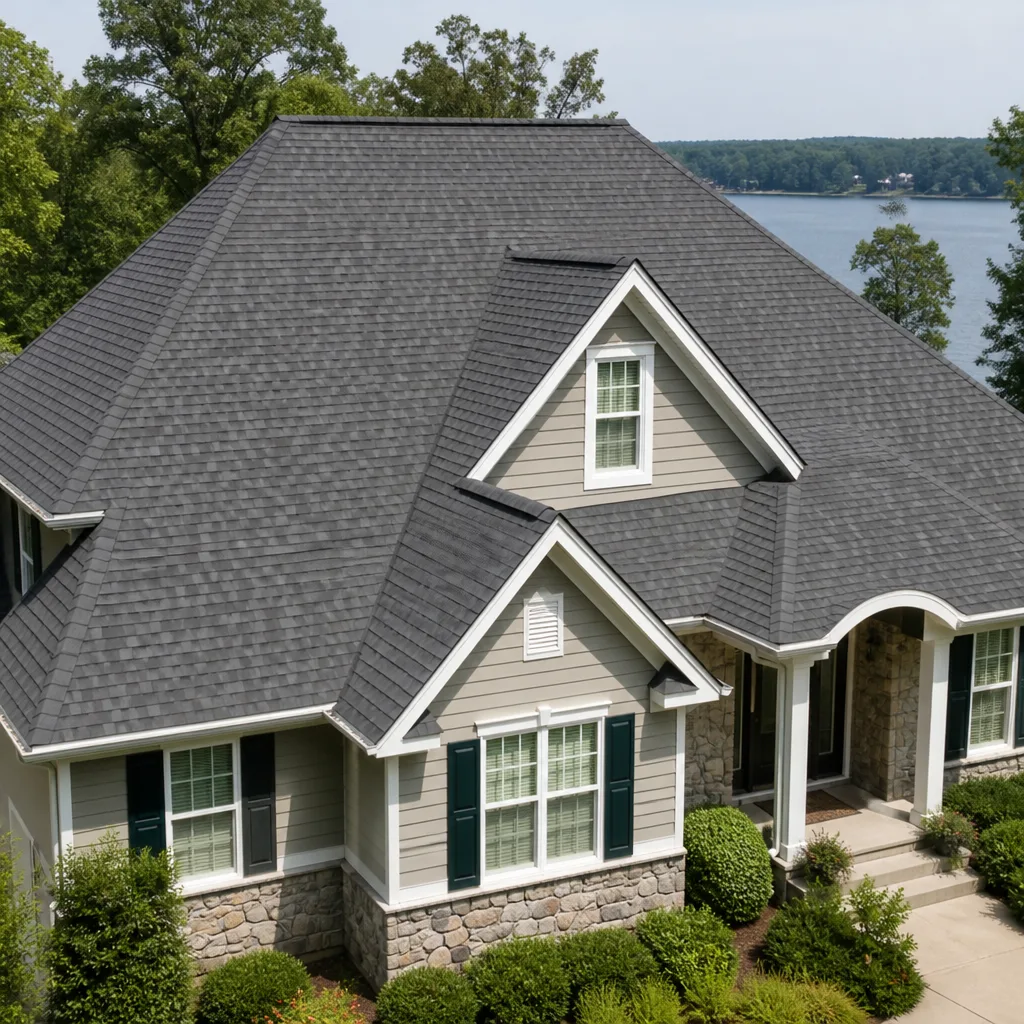 GAF
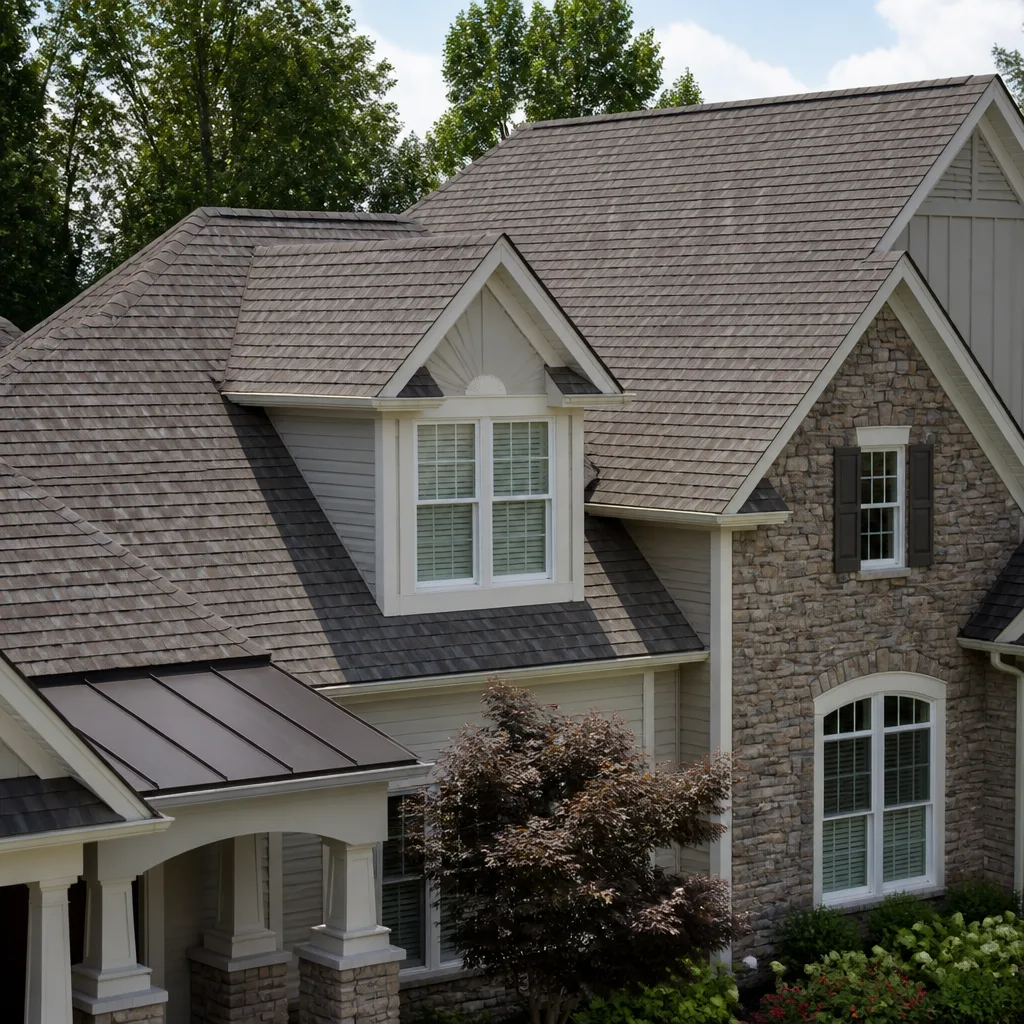 Owens Corning
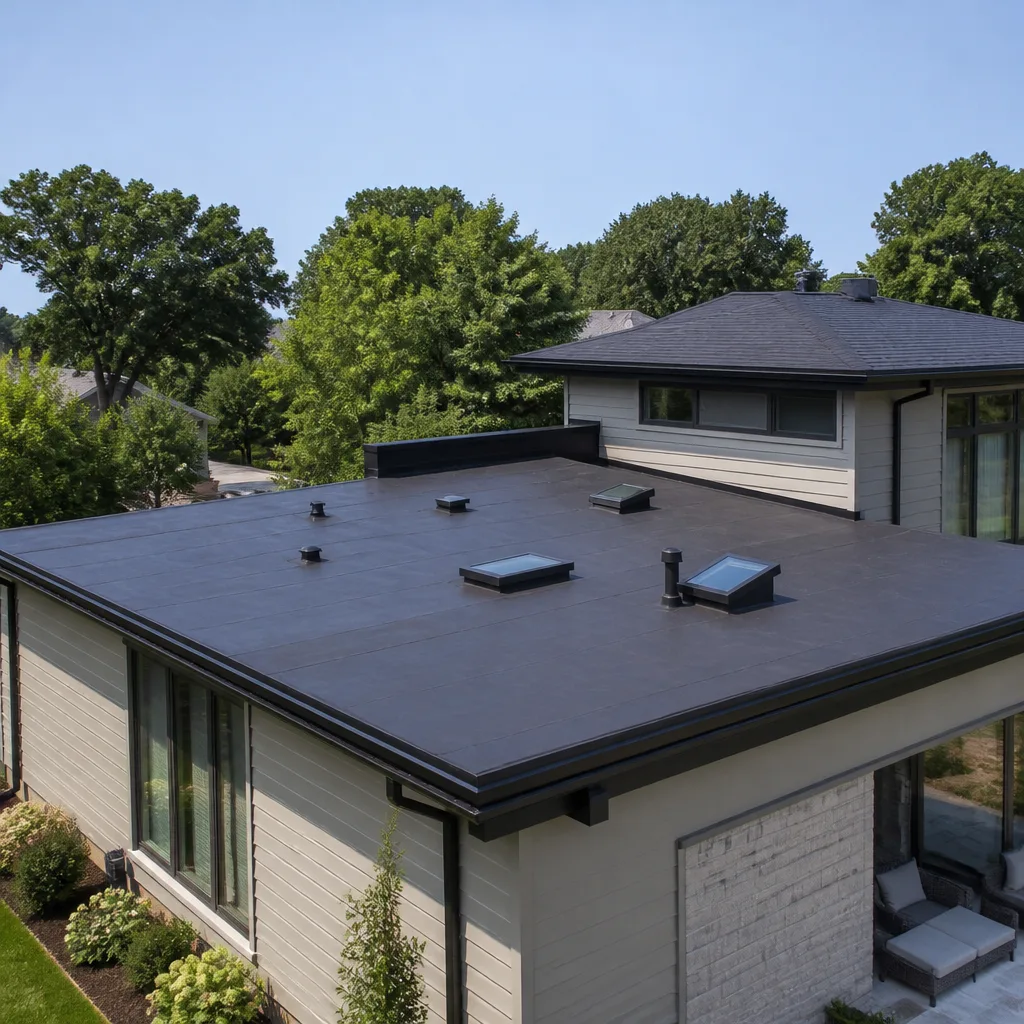 Flat & low-slope
Free roof inspection with deck photos before we talk money - GAF and Owens Corning certified installation
Fast, Reliable Roof Repair Across Newport Beach
Roof repair in Newport Beach usually costs between $450 and $2,800 depending on what failed. A simple vent boot replacement runs $450 – $650, a flashing repair along a chimney or parapet wall typically lands between $800 and $1,800, and a leak repair on a flat or low-slope section often comes in at $1,200 – $2,800 once decking and underlayment get involved. The salt air here changes the math, and we’ll explain exactly why below. If you need someone on the roof this week, call (866) 412-5697 and we’ll schedule an inspection before anyone quotes you a dollar figure.
We’re not a franchise dispatch line. We’re Roof Repair specialists who work the Newport Beach coast from Balboa Island to Corona del Mar, and we know what the marine layer does to a roof over twenty years. That local knowledge is the difference between a patch that lasts two seasons and a repair that survives the next decade of salt spray and Santa Ana winds.
Why Baycrest Roofing Is Newport Beach’s Preferred Roof Repair Company
Nolan Cafferty founded Baycrest Roofing on a principle that sounds obvious but isn’t industry standard: inspect first, recommend second. In Newport Beach, that means we don’t quote a reroof when the real problem is six corroded nails at a parapet flashing. We carry seven shingle manufacturers, GAF, CertainTeed, Owens Corning, IKO, Atlas, Tamko, and Boral, so our recommendation follows your roof’s actual condition, not our inventory. We’re authorized installers for all seven lines, which matters when a homeowner on Lido Isle needs a specific match for their existing architectural profile.
Our Newport Beach customers tend to find us after a leak has already stained a ceiling or a home inspector flagged exposed fasteners during escrow. They want an honest diagnosis before any dollar figure comes up. We give them one. Nolan has built the company around material-specific expertise across all seven brands, so the crew that shows up understands the failure points of Atlas versus GAF versus Boral, instead of installing whatever the distributor had on the truck that week.
Styles & brands we work with
Commercial Roof Repair in Newport Beach
Commercial Roof Repair in Newport Beach usually involves low-slope built-up roofs or modified bitumen on retail pads, office buildings, and mixed-use structures along West Coast Highway and the commercial corridors off Jamboree Road. These roofs fail differently than residential pitches. Standing water after marine-layer drizzle, ponding near clogged drains, and seam splits at parapet walls are the common culprits. A commercial repair in Newport Beach typically runs $1,500 – $6,000 depending on membrane type and the size of the compromised area, with hot-air welded TPO patches landing on the lower end and full drain replacements pushing toward the upper end.
Low-Slope Membrane Patching
We repair TPO, EPDM, and modified bitumen membranes using manufacturer-specified adhesives and heat welding, not caulk from a tube. On ocean-facing commercial roofs in the 92660 and 92663 ZIP codes, we check seam integrity first because salt-laden moisture works into unwelded overlaps faster than on inland buildings.
Coastal Decking and Drain Repair
Commercial flat roofs in Newport Beach collect marine-layer condensation that never fully dries. That moisture saturates insulation board and rots plywood decking beneath the membrane. When we open a commercial repair, we inspect the decking before patching the surface, because a seal over rotted substrate fails within a season.
Roof Leak Repair in Newport Beach
Roof Leak Repair in Newport Beach starts with finding the actual entry point, which is rarely directly above the water stain. Wind-driven rain off the Pacific finds gaps that inland roofs never see: corroded nail heads, dried-out pipe boot seals, step flashing separated from stucco walls. A leak repair here runs $650 – $2,800 depending on whether we’re replacing a few components or opening the decking to address trapped moisture. Our leak diagnostics are priced separately from the repair itself, so you always know what we found before we recommend spending anything.
Flashing and Valley Repair
Valleys and wall flashings carry the highest volume of water on any Newport Beach roof, and they’re the first places salt corrosion shows. We commonly find step flashing along chimney sides where the original galvanized coating has oxidized to powder. We replace it with stainless or hot-dip galvanized stock rated for marine exposure, then reseal the counterflashing to the masonry.
Vent Boot and Pipe Collar Replacement
The small rubber boot around a plumbing vent or exhaust pipe is one of the most common leak sources in Newport Beach. UV from the intense coastal sun plus salt spray breaks down the neoprene in five to seven years, long before the shingles around it show wear. Replacing a vent boot is a $450 – $650 fix that beats a $1,500 ceiling repair, and it’s one we do the same visit we diagnose it.
Trusted Brands We Service in Newport Beach
Because Baycrest is authorized across seven shingle manufacturers, we’re not locked into one brand’s color palette or profile. When a Newport Beach homeowner needs a repair on an existing Atlas or Tamko roof, we source matching components rather than convincing them to accept a close-enough substitute. Boral tile repairs are common on the Spanish Colonial Revival homes off Cliff Drive, where original clay tiles crack and the underlayment beneath them fails. We keep fast-moving components in stock for GAF and CertainTeed systems so a simple repair doesn’t wait on a distributor’s delivery schedule. Match the material to your roof, not your roof to our inventory.
Common Roof Repair Problems We See in Newport Beach Homes
- Corroded galvanized fasteners and flashing at bay-facing parapets. Salt air eats galvanized metal faster here than anywhere inland. On Balboa Island, the original nails from a 1940s roof are often the first thing to fail, not the shingle surface itself.
- Wind-driven rain penetration through original underlayment. Homes on Balboa Peninsula and Lido Isle face horizontal rain off the Pacific. The original felt or built-up layers from the 1940s and 50s were never designed for that kind of water pressure, and we find moisture intrusion at wall junctions that stay dry on inland roofs.
- Marine-layer moisture trapped under multiple reroof layers. Newport Beach roofs often carry two or three layers of old roofing. Moisture gets trapped between them, rots the decking, and turns what looks like a small leak into a tear-off job once we open it up.
- Cracked clay tile and failed underlayment on low-slope parapet roofs. The Spanish Colonial and Mediterranean homes in Corona del Mar and Dover Shores have complex parapets and low-slope sections where water ponds. Tile cracks let water reach the underlayment, which fails silently underneath.
See the difference
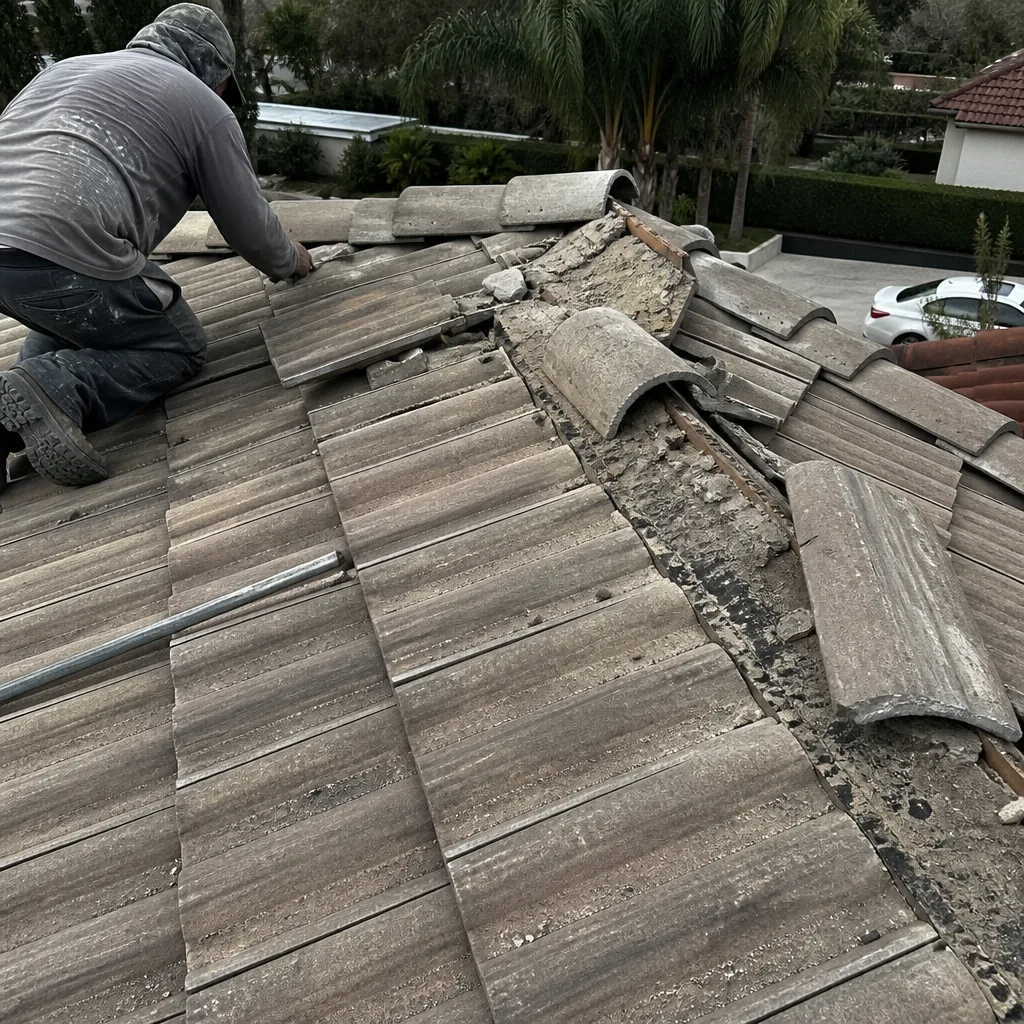 Before
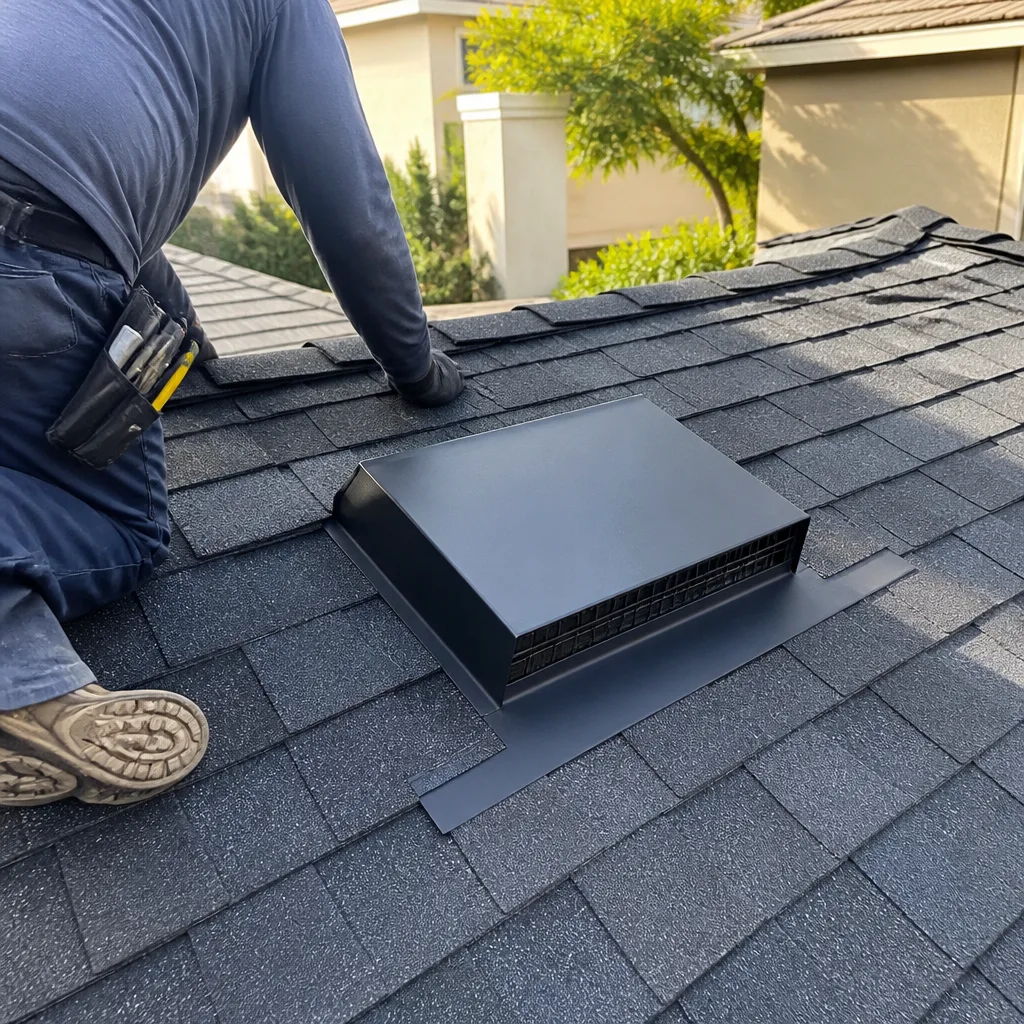 After
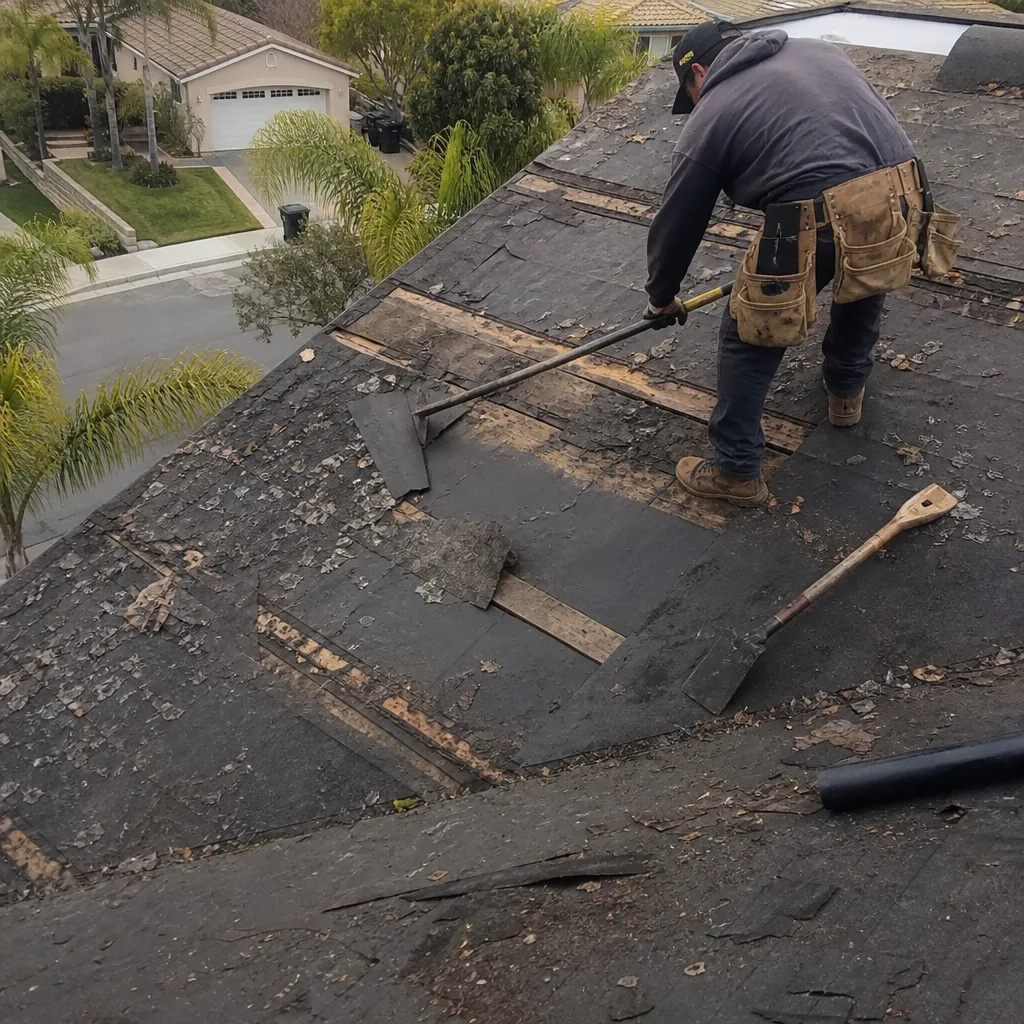 Before
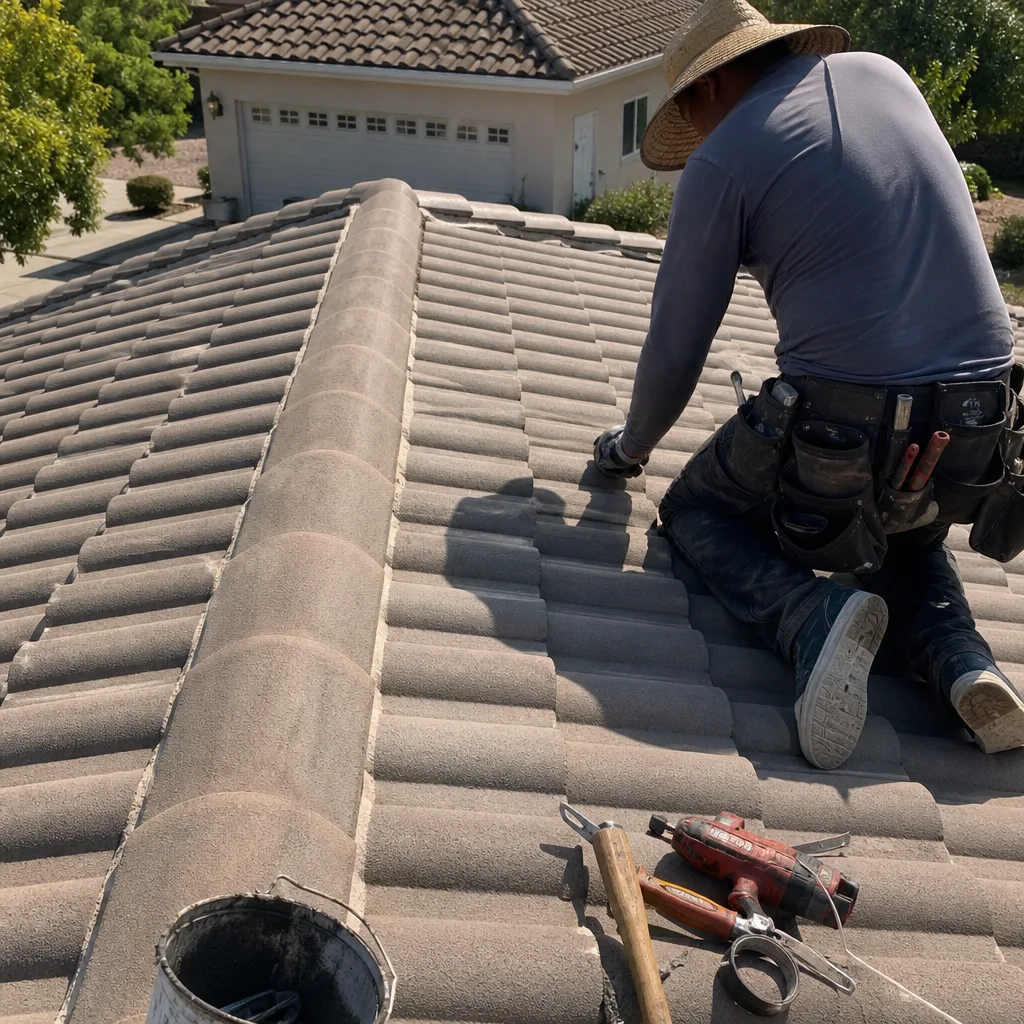 After
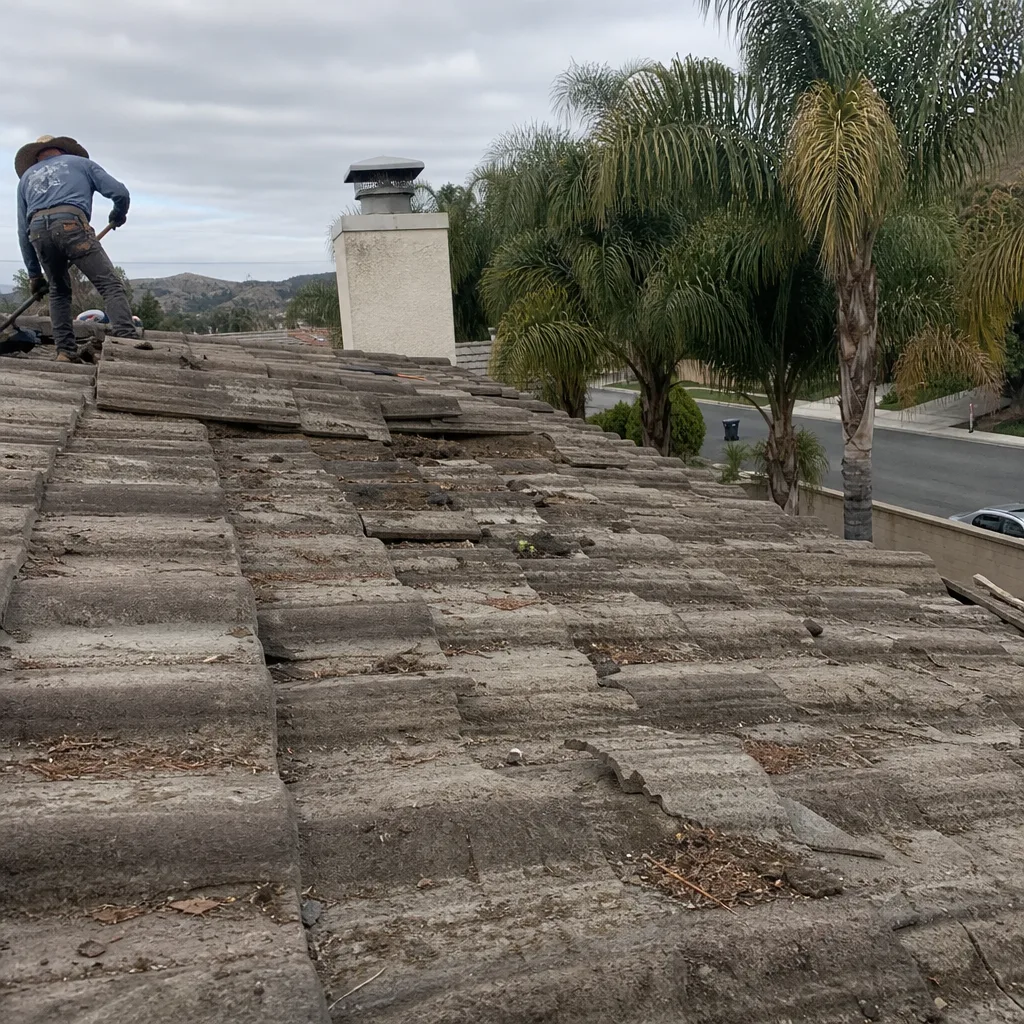 Before
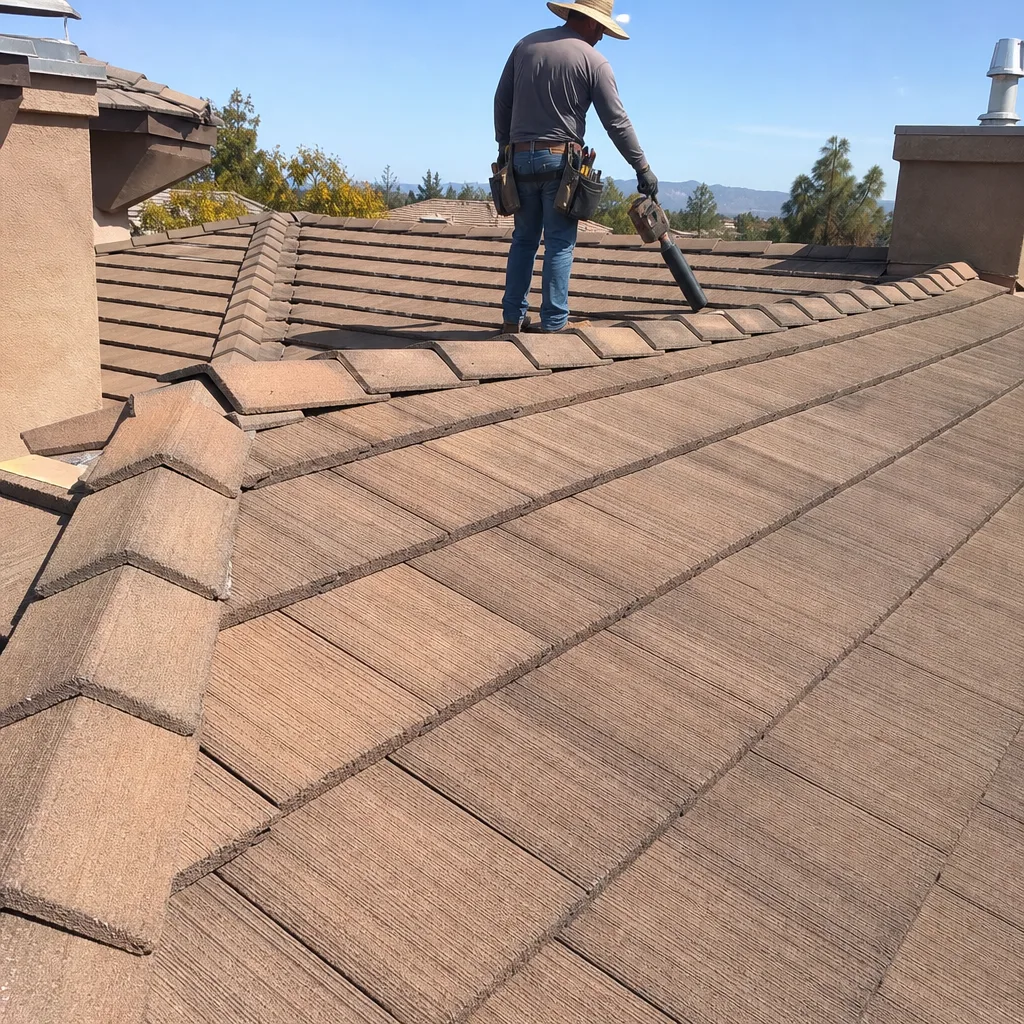 After
Pricing for Roof Repair in Newport Beach, CA
Here’s the honest version: a roof repair in Newport Beach costs more than the same repair would in Irvine, and the salt air is the reason. A vent boot replacement here is $450 – $650, a valley or flashing repair lands between $800 and $1,800, and a leak repair involving decking replacement runs $1,200 – $2,800. The coastal-spec version of any repair uses stainless or hot-dip galvanized hardware and marine-grade sealants, which adds 15 – 25% to material cost but prevents a redo within a decade. We write every quote as a line item, and estimates are free. Call (866) 412-5697 for an inspection-based quote.
On Balboa Island and the Peninsula, we routinely find three layers of 1940s – 50s wood shingles or built-up roofs buried under corroded galvanized flashing at bay-facing parapets. The salt air has eaten the fasteners long before the shingles fail, so every tear-off here starts with a metal audit, not a shingle count. On one bay-front cottage, our crew pulled off two layers of original 1940s wood shingles and found the galvanized flashing at the parapet had corroded through, letting marine-layer moisture wick into the decking. We replaced it with stainless-steel flashing and hot-dip galvanized nails, then set new underlayment and architectural shingles rated for 130 mph wind-driven rain. The homeowner avoided a full roof replacement because we caught the corrosion at the flashing before it reached the valleys.
Roof Repair in Newport Beach: The Coastal-Spec Difference
Here’s what actually happens to a roof in Newport Beach, and why the cheap inland spec costs you more within a decade. Salt spray from the Pacific condenses in the marine layer and settles on every exposed metal surface: nail heads, flashing, vent collars, valley metal. Standard electro-galvanized nails, the kind used on most inland reroofs across Costa Mesa or Fountain Valley contracts, start oxidizing within three to five years here. The rust expands, lifts the shingle slightly, and creates a channel for wind-driven rain. Once that channel opens, water gets under the field of shingles and travels laterally before it shows up as a ceiling stain two rooms away from the actual breach.
We specify hot-dip galvanized or stainless fasteners on every bay-facing elevation and within 500 yards of the water. Flashing at parapets, chimneys, and sidewalls gets upgraded from standard 26-gauge galvanized to stainless or marine-grade aluminum. Pipe boots get replaced with UV-stabilized neoprene rated for coastal exposure, not the basic rubber boot an inland crew would carry. The price difference is real, roughly 15 – 25% on materials, and it’s the difference between a fix that outlasts the shingles around it and a redo in seven years when the cheap hardware fails again.
Newport Beach’s housing stock makes this more complicated. From the 1920s – 50s beach cottages on Balboa Island to the mid-century and contemporary custom homes in Dover Shores, many roofs have low-slope or flat sections, clay tile, and complex ocean-facing valleys and parapets. Water doesn’t shed off these roofs the way it does on a steep pitch in Irvine. It sits, finds the low spot, and works into any seam that’s lost its seal. The Roof Repair in Newport Beach work we do is, more than anything, a materials decision. Salt air decides which fasteners, which flashing, which sealants, and which underlayment actually belong on your roof.
We Also Serve Cities Near Newport Beach
We work throughout the Newport Beach area and the surrounding coastal corridor. If you’re in Costa Mesa, San Joaquin Hills, Fountain Valley, or Irvine, we can handle your roof repair with the same inspection-first process we use on Balboa Island and the Peninsula. Call (866) 412-5697 and we’ll send someone out.
Serving Newport Beach, CA — Our Local Coverage Area
We’re based in the Newport Beach area and know this community well. Use the map below to see our service coverage — if you’re nearby, we can almost certainly help.
FAQs About Roof Repair in Newport Beach
Because salt air in the Newport Beach marine zone requires coastal-spec materials: stainless or hot-dip galvanized fasteners, marine-grade flashing, and UV-stabilized sealants. Those materials cost 15 – 25% more than the standard inland hardware used in Irvine, and they’re what prevent a redo within a decade. Also, Balboa Island tear-offs often require alley access or barge service for debris removal, which adds logistics cost. Call (866) 412-5697 for an exact quote, the estimate is free.
You usually don’t until someone lifts a shingle or opens a section. In Newport Beach, many beach cottages and Spanish Colonial homes carry two or three reroof layers over original wood shingles or built-up roofing. We find them by checking at eaves, rakes, and parapet edges where layers are visible. If your home hasn’t had a full tear-off in decades, assume the hidden layers are there. During an inspection, we’ll tell you what’s under the surface before recommending any repair or replacement.
Yes, if the decking beneath the membrane is intact and the leak is localized. In Newport Beach, flat roof leaks on parapet sections, garages, or mid-century modern homes often come from seam splits, ponding at drains, or failed flashing at the wall junction. We repair those by opening the membrane, drying and inspecting the decking, and heat-welding or adhesively bonding new membrane per manufacturer spec. If the decking is rotted from trapped marine-layer moisture, a patch won’t hold, and we’ll show you what we found before recommending the larger fix.
Salt air from the Pacific corrodes standard electro-galvanized nails and flashing within three to five years in bay-front and ocean-facing locations in Newport Beach. The rust expands, lifts shingles, and creates water channels that wind-driven rain exploits. We use hot-dip galvanized or stainless fasteners and marine-grade flashing on any elevation within about 500 yards of the water. The material cost is higher, but it’s the difference between a repair that lasts and one that fails early. For a fastener audit on your roof, call (866) 412-5697.
Often, yes. Balboa Island and parts of the Peninsula have tight lot lines where a standard dumpster can’t be dropped. We coordinate debris removal through the alley when it’s accessible, and on bay-front properties where the rear elevation faces the water, barge service is sometimes the only option. We handle all of that as part of the job, and we’ll tell you upfront if your property requires special logistics. The repair or tear-off price reflects it, and there are no surprises when the work starts.
Ready to get eyes on your roof? Call Baycrest Roofing at (866) 412-5697. We’ll schedule an inspection, show you exactly what’s failing, and give you a line-item repair estimate based on what your roof actually needs, not what we’d prefer to sell you. Serving all Newport Beach ZIP codes: 92663, 92658, 92659, and 92660.
Written by Nolan Cafferty, Owner at Baycrest Roofing, serving Newport Beach and the surrounding coastal communities.